Deepavali lands in Singapore on Sunday 8 November 2026, and since it's a public holiday, Monday 9 November becomes a holiday in lieu. If you're visiting around then, expect temples, bazaars and a serious light-up — plus a few surprises if you think you already know the festival.
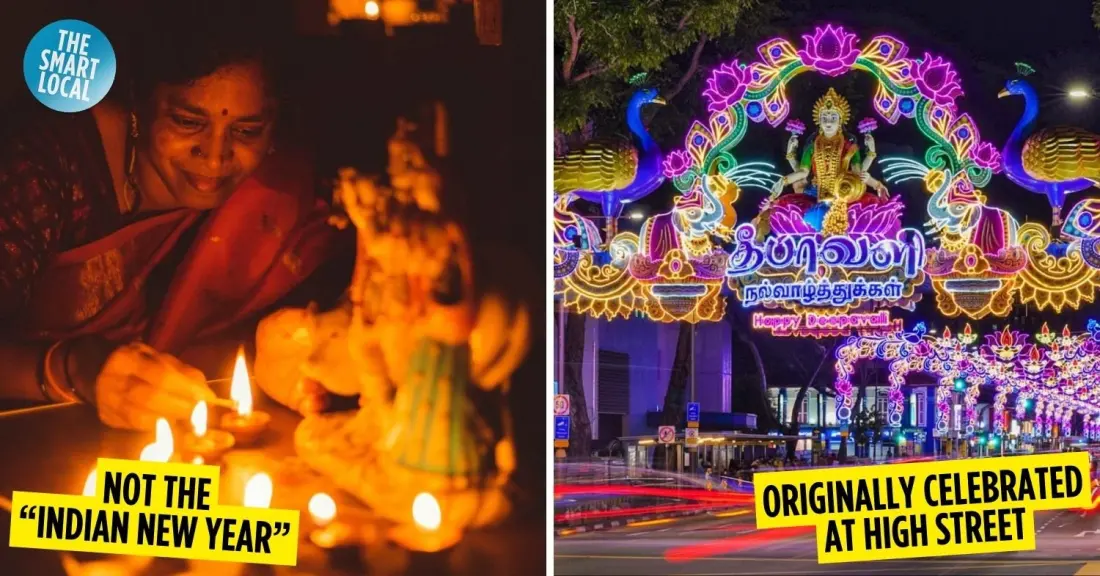
First, a common mix-up: Deepavali is not the Indian New Year. Tamils mark that around 14 April each year. The festival itself is about light beating darkness, good beating evil and knowledge winning over ignorance. Its date follows the Indian Lunar Calendar — the 15th day of Kartik, the holiest month — and it traditionally runs across five days, with the main Lakshmi-focused festivities on day three. That's the day Singapore observes.
The name changes depending on who you ask. Deepavali and Diwali both come from the Sanskrit "Dipavali", meaning "row of lights". Singapore says Deepavali because its early Indian settlers were mostly Tamils from South India; North Indians using Hindi tend to say Diwali. Same festival, different word.
It's not exclusively Hindu, either. Sikhs call it Bandi Chhor Divas — "prisoner release day", marking Guru Hargobind's release from a Mughal prison — while Jains commemorate it as the day Lord Mahavir attained nirvana. The shared tradition of lamp-lighting carries different meanings for each faith, but the lamps themselves symbolise the sun, cutting through the darkness of a new-moon night. Legend has it Ayodhya lit thousands of lamps to guide Lord Rama and Sita home, and devotees today leave lamps out to guide Lakshmi through the door. Watch for rangoli — the colourful floor art at entrances — which serves the same welcoming purpose and wards off evil spirits. A Singaporean, Vijayalakshmi Mohan, even held a Guinness World Record after drawing a 2,756sqft rangoli in seven hours at Whampoa Community Club in 2003.
Singapore's connection to the festival runs deep. Indian immigrants have called the island home since the early 1800s, and the colonial government declared Deepavali a public holiday back in October 1929. The celebrations weren't always in Little India, though — they used to centre on High Street, near today's Supreme Court, where Sindhi and Sikh jewellery and textile traders clustered. Now the action is along Serangoon Road in Little India, with festivities spilling into Chinatown near the Sri Mariamman Temple.
For travellers, the timing is generous. The Deepavali Open House and annual light-up are the headline events, and the Indian Festival of Arts (Kalaa Utsavam) at the Esplanade runs from 20-29 November 2026 if you miss the day itself. The Indian Heritage Centre's permanent exhibition traces 2,000 years of links between South and Southeast Asia — worth an hour even outside festival season.
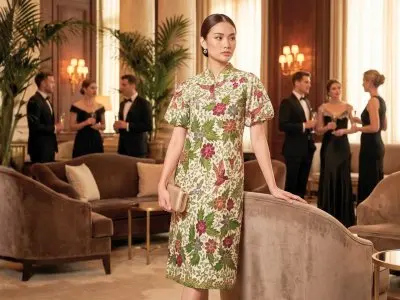
If you're invited to a celebration, keep it comfy and conservative. A kurta works for men, a sari for women, and shops in Singapore can sort you out quickly if you want to dress the part. New sarees and Punjabi suits are traditional wear for those marking the day, so you won't look out of place going festive.
Story sourced from The Smart Local.