When floods cut off entire neighbourhoods, one of the biggest problems is not water — it's food. That was clear last November in Hat Yai, where days of relentless rain triggered flash floods across Songkhla and other southern Thai provinces. Among the stranded was Assoc Prof Saowaroj Chuangcham of Prince of Songkla University (PSU), stuck on the 19th floor of her condominium as rising water sealed off the area. Five days trapped in her own home gave her a fresh appreciation for a project she has spent over a decade building: ready-to-eat meals designed for disaster relief.
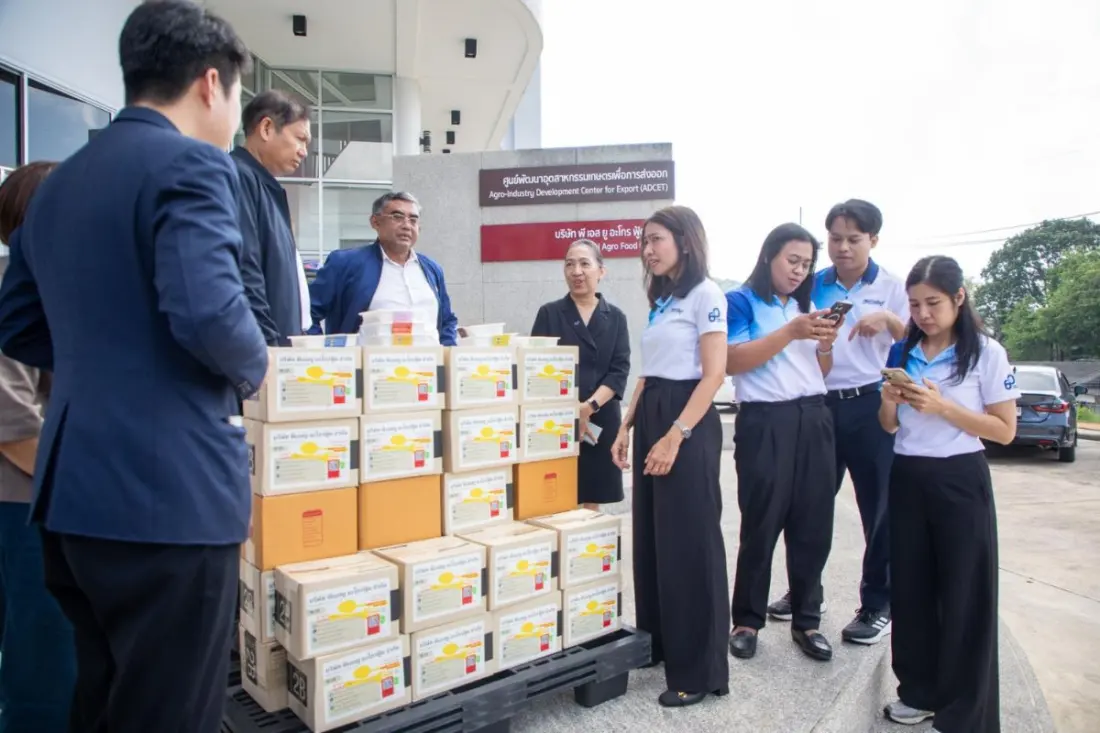
Her work stretches back to 2013, when, backed by the Thailand Research Fund, she developed chicken biryani and larb in retort pouches — a sterilisation technique that lets food sit at room temperature and stay safe for up to 18 months without preservatives. Production, once permitted only on an emergency basis at a pilot plant, got a permanent home in 2024 when PSU set up its own company, AgrO Food Co. The brand name Garb Aorg is a nod to the university's home province — Songkhla's old nickname, the 'garbage dump of agriculture' — a wry badge the dean wears with pride given her agri-industry roots.
The system has been stress-tested by real disasters. When heavy downpours submerged Bangkok in September, with all 50 districts declared emergency zones, AgrO Food donated 3,000 items to Kasetsart University for distribution. Then came November 2025: PSU handed out 2,000 boxes of ready-to-eat meals to flood victims in Hat Yai. Each 55-baht pouch contains two compartments — rice and a curry — and holds Halal certification plus approval from Thailand's FDA. Because the food is already cooked, it can be opened and eaten immediately, even in areas without electricity or when shops are shuttered and government aid can't get through.
The science behind the shelf life is interesting. Unlike pasteurisation, sterilisation uses temperatures above 100C, and in Thailand it relies mainly on steam and water spray. Refrigeration, by contrast, simply slows microbes down. Preserving the shape of cooked rice is the hardest part — leave it too long and it softens, though it remains edible. The team keeps refining recipes so the meals work beyond emergencies: hikers, students and Muslim travellers can all eat them, and the rice holds up at odd hours. Future plans include vegan dishes and special formulas for older adults with swallowing difficulties, while production aims to ramp up from 1,000–10,000 boxes a day for export.
For travellers, the story is a useful one. Southern Thailand, Hat Yai included, floods regularly — most severely around the November monsoon — and Saowaroj's advice applies to anyone caught in a disaster: keep bottled water, carbohydrates like biscuits and crackers, protein such as eggs and canned fish, and avoid high-salt, high-sugar products. Knowing which local foods are built to survive a flood — and how Thai universities and agencies respond when the water rises — is genuinely practical context for anyone visiting the region during rainy season. As climate change makes weather less predictable, on-the-go meals like these are quietly becoming part of food security, ready when things get tough. (Credit: Bangkok Post Life)