Australia spent years watching H5N1 creep closer — through Asia, South America and even Antarctica — and in June 2025 it finally arrived on the mainland. The first case was a migratory brown skua washed up on a remote beach near Esperance, Western Australia. Since then, authorities have confirmed roughly 700 'positive events' across every Australian state, with the true death toll likely far higher. Terns, gulls, pelicans, owls and magpies have died, along with dolphins, seals and endangered Australian sea lions.
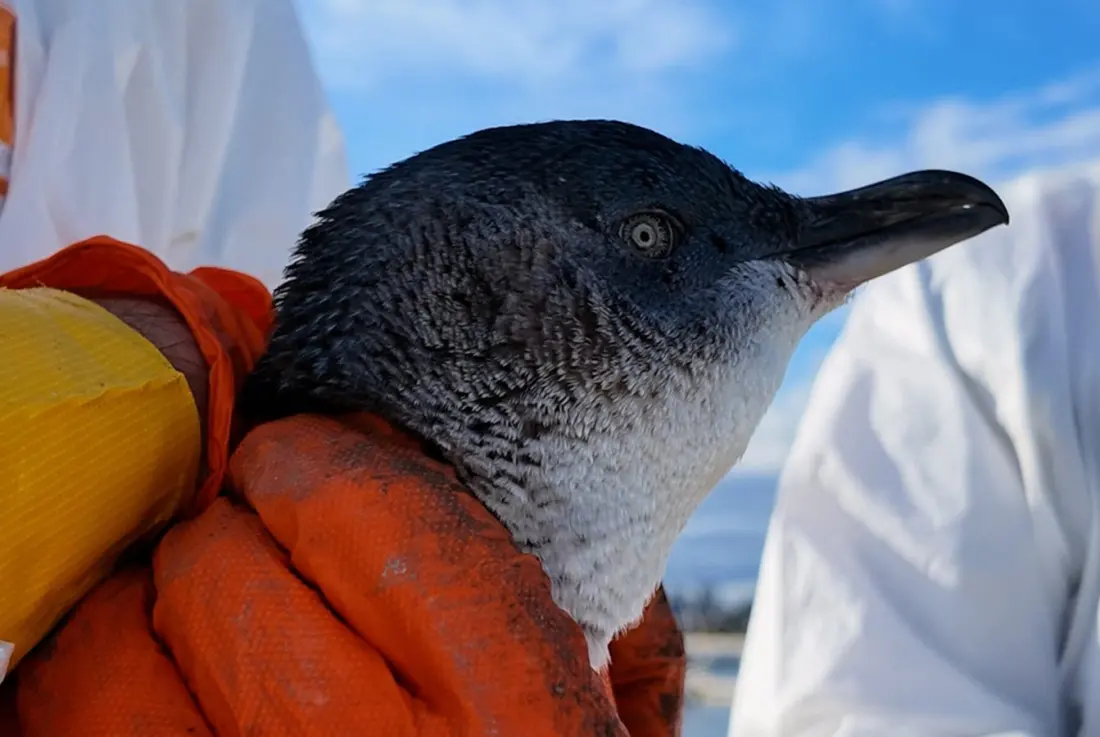
One of the most closely watched responses is happening on Phillip Island, Victoria, home to the famous little penguin colony. Wildlife manager Stuart Murphy and his team spent more than a year preparing a mass-vaccination program, building shade-cloth funnels to corral the feisty birds as they waddled ashore each evening. A pilot study on eight captive penguins showed strong short-to-medium-term immunity. In the end, 1,940 penguins on Phillip Island plus the smaller St Kilda colony in Melbourne were vaccinated across August and September — short of the 5,000 target, but done in time for the late-spring breeding season. A penguin death just before the program began nearly made it all too late.
Vaccination, though, is the exception rather than the rule. It's labour-intensive, stressful for wild animals and only practical for closely managed populations like Phillip Island's penguins or critically endangered orange-bellied parrots in zoos. BirdLife Australia argues the real protection for wild species lies in habitat protection and threat control, and conservationists have slammed a federal government risk assessment — which lists hundreds of native birds and mammals at high or extreme risk, including black swans, quolls and Tasmanian devils — as a 'list of doom' without serious funding behind it.
Scientists at CSIRO's Australian Centre for Disease Preparedness in Geelong, the country's highest-level biocontainment lab, have sequenced thousands of samples and traced the outbreak to a first arrival from subantarctic islands — most likely Heard Island — with multiple incursions since. A new worry is mutation: the return of migratory shorebirds this spring could let virus strains swap genetic material and spawn new subtypes, potentially spreading further and dodging existing immunity.
Why should travellers care? Nature and wildlife are among Australia's biggest draws for international visitors, and the tourism industry is already feeling the strain. Operators face access restrictions, new biosecurity rules and uncertainty at coastal and nature-based destinations, and poultry farm outbreaks have already prompted flock lockdowns in Victoria. If you're planning trips built around penguin parades, seabird islands or wildlife parks, expect possible changes to visitor arrangements and check operator updates before you go. Citizen scientists are part of the response too: in South Australia, a new Bird Observers Network is training amateur birdwatchers to spot infection signs and report them fast.
The bottom line for visitors: Australia's wildlife spectacles are still on, but the outbreak is a reminder of how fragile they can be — and how much depends on biosecurity, funding and travellers doing the right thing at nature sites.
Reporting: Australian Geographic