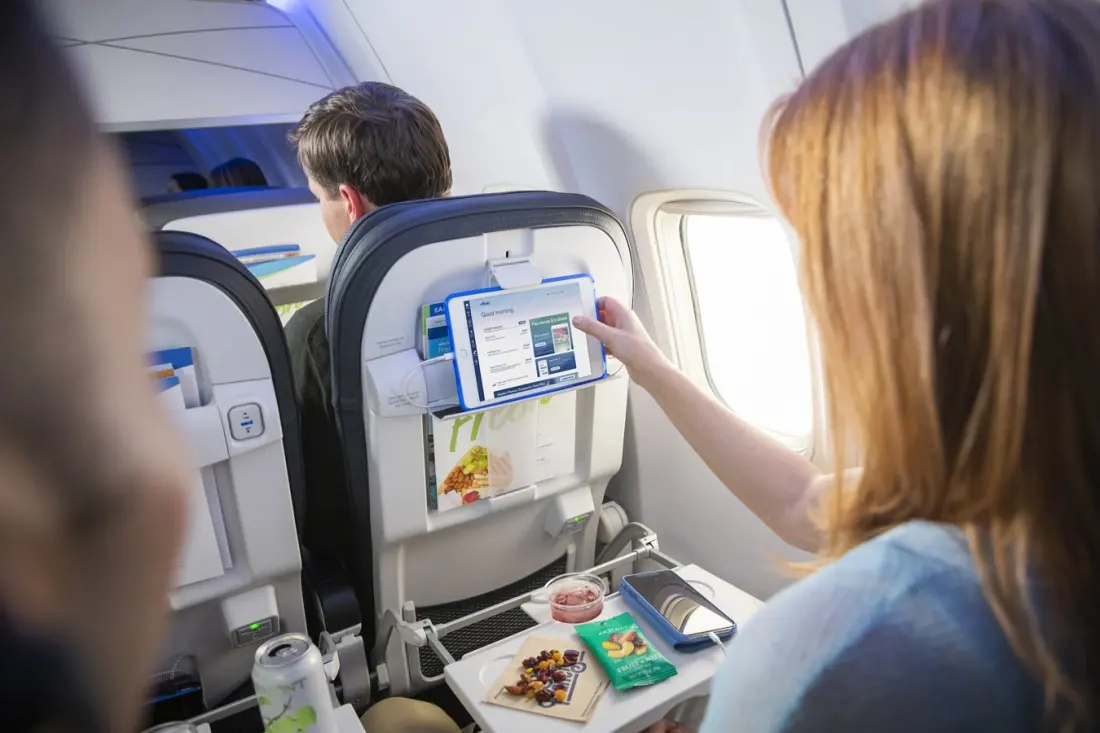
Alaska Airlines is finally putting seatback screens on its Boeing 737s — but only at the very front of the plane. At its Media and Investor Day in Seattle, the carrier confirmed that its incoming premium 737 MAX 10 aircraft will have entertainment screens in the two top cabins, while everyone else, including passengers who pay extra for extra legroom, will stream on their own devices.
The details: from 2028, Alaska plans to operate at least 25 of these aircraft, each fitted with 12 lie-flat "Aurora Suites" and 12 "Premium Reserve" seats. Suites get 19-inch Panasonic Astrova screens, Premium Reserve gets 16-inch ones. Behind that? Nothing mounted anywhere. Premium Class — Alaska's paid extra-legroom economy section — and standard Main Cabin passengers are expected to use phones, tablets or laptops, aided by the airline's fast, free Starlink Wi-Fi.
Alaska's reasoning has two parts. First, certification: according to Runway Girl Network, concerns around head and neck injury requirements and tricky front-row seat configurations factored in, and the airline was keen not to add delays to an aircraft type that has already been years in the waiting. Second, passenger behaviour: president and CFO Shane Tackett said feedback shows travellers most want "immediate access to my own content."
Critics aren't convinced, and it's hard to blame them. Fast Wi-Fi is genuinely useful, but streaming a two-hour film on a phone is a poor substitute for a screen — it drains your battery, hogs your device, and a laptop eats the tray table you might want for a meal. A tablet works better, but plenty of people don't own one. For families with kids on a five-hour transcontinental flight, the gap is even more obvious. And there's a symbolic issue: screens are the first thing you notice when you board, and their absence sends a message about where the investment stopped.
The contrast with American Airlines is striking. After years of removing screens from domestic aircraft, American is bringing them back on new Airbus and Boeing deliveries from 2028 and via retrofits — while also rolling out Starlink. It has concluded that offering both is the winning combination.
Why should travellers care? If you're eyeing Alaska's new premium transcontinental product, the front cabins look genuinely impressive. But if you're in economy — or paying a premium for Premium Class legroom — you'll be boarding a brand-new aircraft in 2028 with less built-in entertainment than many competitors' older planes. Screens rarely decide a booking on their own; schedule, price and seat matter more. But when those are equal, small visible upgrades sway choices, and polling suggests entertainment ranks higher than airlines like to admit. For an airline explicitly trying to charge a premium and build a reputation above its weight class, skipping screens for the majority of passengers looks like a false economy.