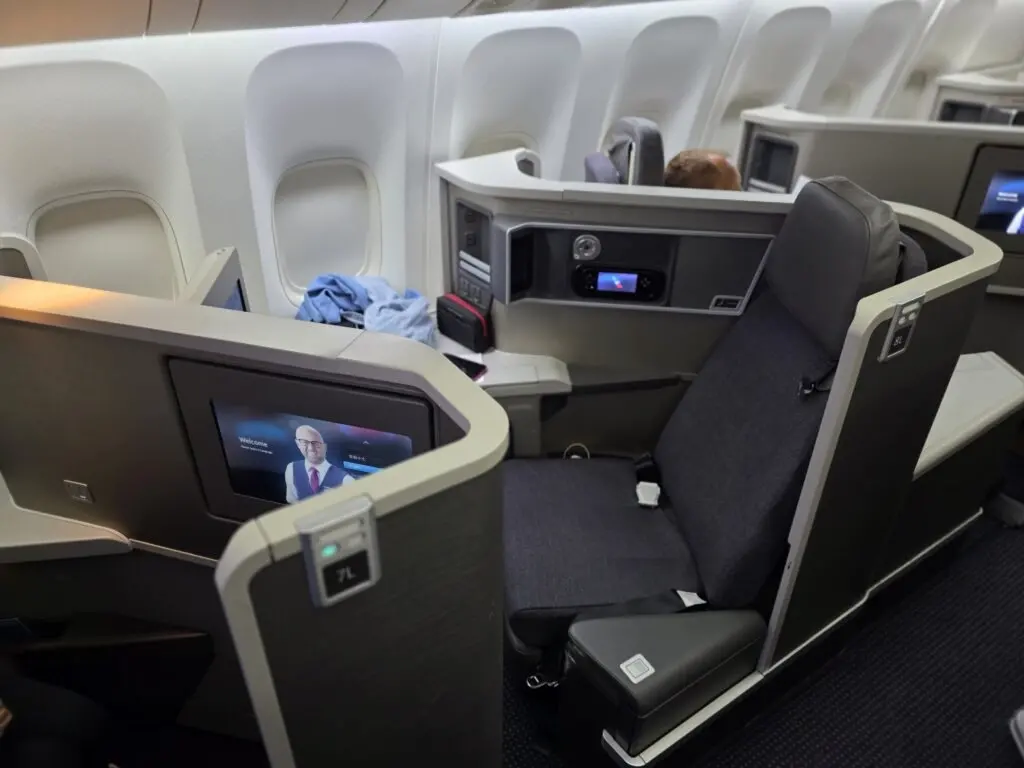
Steven and Pamela Taylor paid American Airlines $8,166 for business class from Nashville to Edinburgh, via Charlotte and London. Their June 2024 trip fell apart when the first leg was delayed: they were rerouted through Boston in premium economy on British Airways, losing the cabin they'd actually paid for. When they asked for their money back, American first offered expiring trip credits, then dug in. The couple sued, and won a judgment of $7,158.98 in September 2025 — which the airline is now appealing, with another hearing expected in early 2027.
American's core legal defence is the Montreal Convention, the international treaty governing airline liability on cross-border trips. Courts have repeatedly treated it as overriding state contract and negligence claims — and since it sets no remedy for downgrades, airlines have used it to defeat lawsuits entirely. Cases like Sobol v. Continental, David v. United and Adegoke v. Delta all went the same way: downgrade claims dismissed, sometimes with only hotel costs for delays surviving. So a carrier can sell you a premium cabin, hand you a cheaper one, and lean on a treaty gap to avoid paying damages.
That doesn't mean the money simply vanishes. The US Department of Transportation's position is that a passenger who accepts a downgrade and flies is owed the fare difference, and American's own contract of carriage promises exactly that refund for the affected segment. There may also be a UK angle: British rules entitle downgraded passengers on long covered flights to 75% of the affected fare, though that claim normally runs against the operating carrier — here, British Airways — and covers that flight's price, not automatically the whole itinerary.
The messier problem is how American calculates what it owes. Earlier this year the airline was comparing discounted premium tickets against eye-watering full-fare coach prices, producing tiny refunds. It then floated a flat 40% of the affected segment's fare — on a $10,000 business ticket with a $1,000 coach alternative, that means the airline keeps $6,000 for delivering the cabin you could have bought for $1,000. After a formal complaint from researchers Benjamin Edelman and Mike Borsetti, American said it would shift again, this time benchmarking against the average fare paid by passengers who actually bought the lower cabin on that flight. Better, perhaps — but the airline still controls every input, and it hasn't gone back to recompense anyone shortchanged under the 40% rule.
For travellers, the practical lessons are clear. If you're downgraded on an international itinerary, document the cabin you bought and what you were flown in, press for the fare difference rather than trip credits, and consider a DOT complaint — it may work better than a lawsuit, given how courts have treated downgrade claims under the Montreal Convention. And if British Airways operated the affected leg, UK compensation rules could offer a second route. Anyone booking premium cabins across the Atlantic should screenshot the fare rules at purchase; if American's track record here shows anything, it's that the refund formula tends to be written after the fact, by the party owing the money.