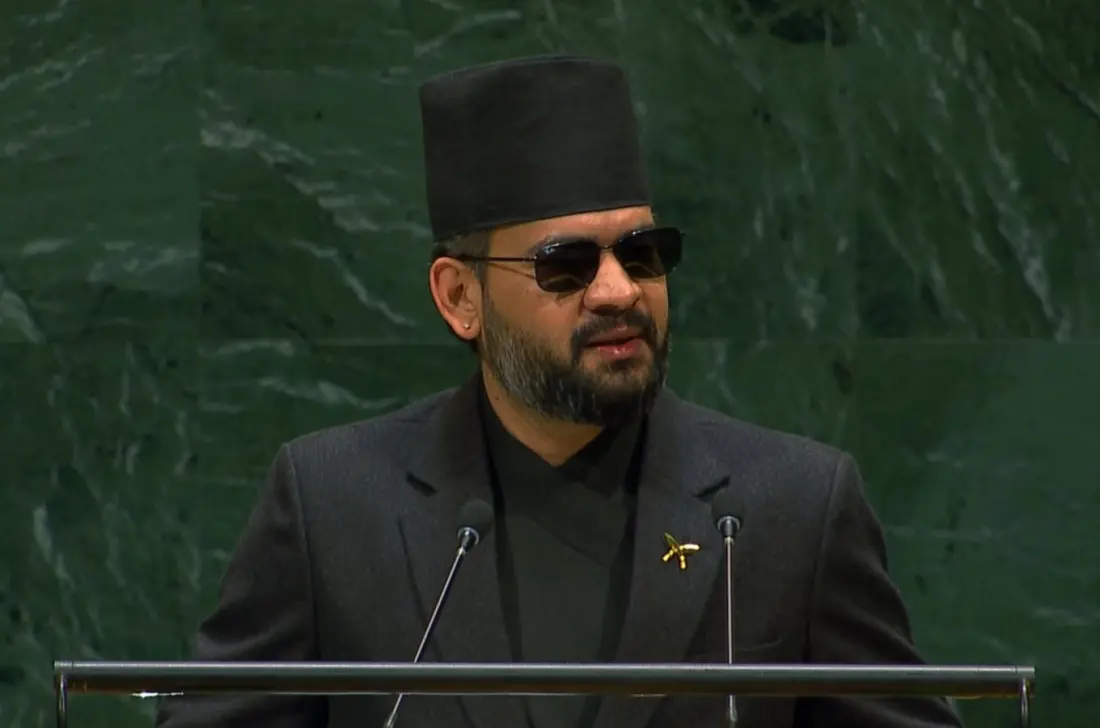
Speaking at the UN General Assembly, Nepal's prime minister described last month's Bhote Kosi-Trisuli floods as a 'mountain tsunami' — and said the world has yet to take the warning seriously.
The numbers are stark. At least 1,400 people are dead and more than 6,000 remain missing after floodwaters tore through mountain communities, washing away bridges, roads, schools and homes in minutes. A rapid assessment puts physical recovery costs at roughly 10% of Nepal's GDP — a crushing bill for one of the world's poorest countries. The destruction stretched across the Nepal-China border and the floodwaters carried on downstream into India.
The PM framed the disaster as a direct consequence of a warming climate destabilising the Himalayas: melting permafrost, fracturing slopes beneath glaciers, and a rising risk of ice-rock avalanches, glacial lake bursts and landslides. Nepal, he pointed out, produces less than 0.1% of global greenhouse gas emissions but is absorbing the damage — and often borrowing to do it. The Hindu Kush Himalaya region supports nearly two billion people downstream, which is why he called the mountains 'part of the planet's life support system'.
His proposals went beyond appeals for sympathy. Nepal wants a new Himalaya Climate Resilience Mechanism, led jointly with India and China, to share satellite data, monitor dangerous glacial lakes and build cross-border early warning systems. He also pushed for grant-based climate finance rather than loans, arguing that countries facing a disaster shouldn't be trapped in bureaucratic funding mazes — 'when the house is burning, we do not ask families to complete 50 forms'. A Sagarmatha to Seaside event at the UN followed the speech, with Nepal positioning itself as a leader of the climate conversation.
There's a broader economic frustration too: the PM contrasted flawless global logistics for weapons with supply-chain failures that left Nepali farmers without fertiliser and households without cooking gas. 'A world that can deliver a weapon anywhere in 72 hours,' he said, 'has no excuse for leaving a farmer without means of decent livelihood.'
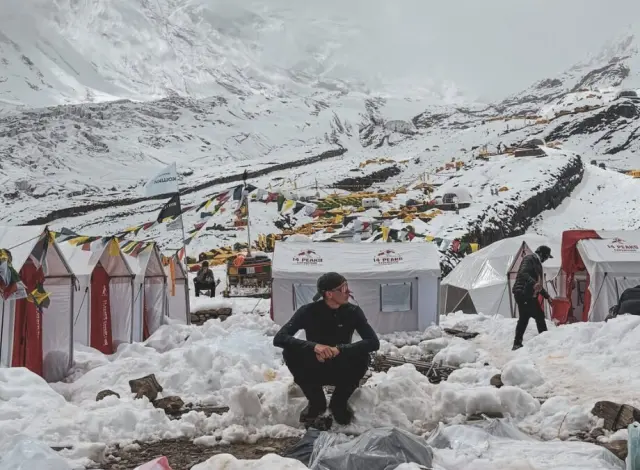
For travellers, the takeaway is twofold. First, Nepal remains open and eager for visitors — tourism is a pillar of an economy now rebuilding again, following the 2015 Gorkha earthquake, and the country has plenty to show for itself: forest cover restored to nearly half its territory, rapidly expanding hydropower, and electric vehicle adoption rivaling parts of Europe. Second, anyone heading into mountain regions should take monsoon-season risk seriously, check route conditions and local advisories, and favour operators with solid safety and evacuation practices. The Himalayas are spectacular, but the climate has made them less predictable — and the Prime Minister's speech is essentially a request that the world stop treating that as someone else's problem.