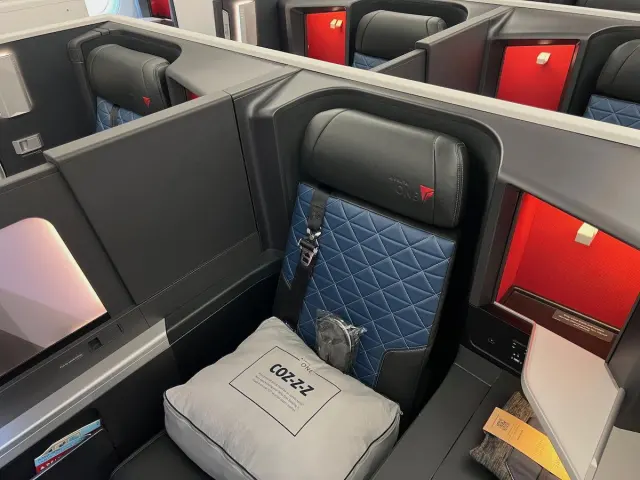
A passenger on American Airlines was still being offered a paid first class upgrade for $242 on a Philadelphia–Los Angeles flight just 28 minutes before boarding. That might sound like a bargain for the traveller who bought it — six hours upfront for a couple of hundred dollars. But the more interesting detail is who was left behind: elite members waiting in line for the same seats.
Examples shared online suggest this is not a one-off. An Executive Platinum member — American's top tier — reportedly bought an upgrade on a LaGuardia–Dallas flight even though he was third on the complimentary upgrade list, jumping ahead of the two people above him. Another flyer paid $640 to move from economy to business on New York–Delhi shortly before departure, despite having waited two months for a systemwide upgrade certificate to clear and sitting third in line with one seat open.
To be clear, this isn't a new announced policy. American's own upgrade rules never promise elites a seat up front — a place on the upgrade list is a conditional perk, not ownership of the cabin. And from the airline's side, the logic is obvious: an unsold seat earns nothing, so selling it for cash until the very last moment maximises revenue. American is also reportedly more aggressive with discounted upgrade offers than Delta, United or Alaska.
The real question is for passengers. Airlines push travellers to concentrate all their flights and credit card spending with one carrier — pick their schedule over a competitor's, hit the next status threshold, earn the certificates. But when the marquee benefit of that loyalty keeps getting undercut by last-minute cash sales, the maths starts looking shaky. A frequent flyer can spend a year and real money chasing status, then watch a casual traveller stroll past them into first class with a $242 tap of a credit card.
That doesn't make status worthless. Priority check-in, extra-legroom seats, baggage allowances, lounge access and hands-on help during delays and cancellations are genuinely useful, especially when things go wrong. And if your flying pattern would earn status anyway, there's little downside to collecting it. The trap is changing your behaviour — paying higher fares, adding connections, funnelling credit card spend — to reach a tier whose headline perk may never materialise.
The alternative is simpler: book the flight that suits you, and treat paid upgrades as they come. Discounted upgrade offers are often cheaper than buying premium cabin outright, and comparing a concrete price against a concrete seat beats paying all year for a maybe. For occasional travellers in particular, buying the upgrade when it's offered is almost always smarter than engineering a year of travel around the hope of a free one.
The lesson for holidaymakers: loyalty programs are worth having, not worth chasing. Pick the best flight, take the cheap upgrade if one appears, and let status be a bonus rather than the goal.
Story first reported by Live and Let's Fly.