A bumper season for conservation news out of Australasia, with scientists and land managers scoring three separate wins for some of the region's most endangered creatures.
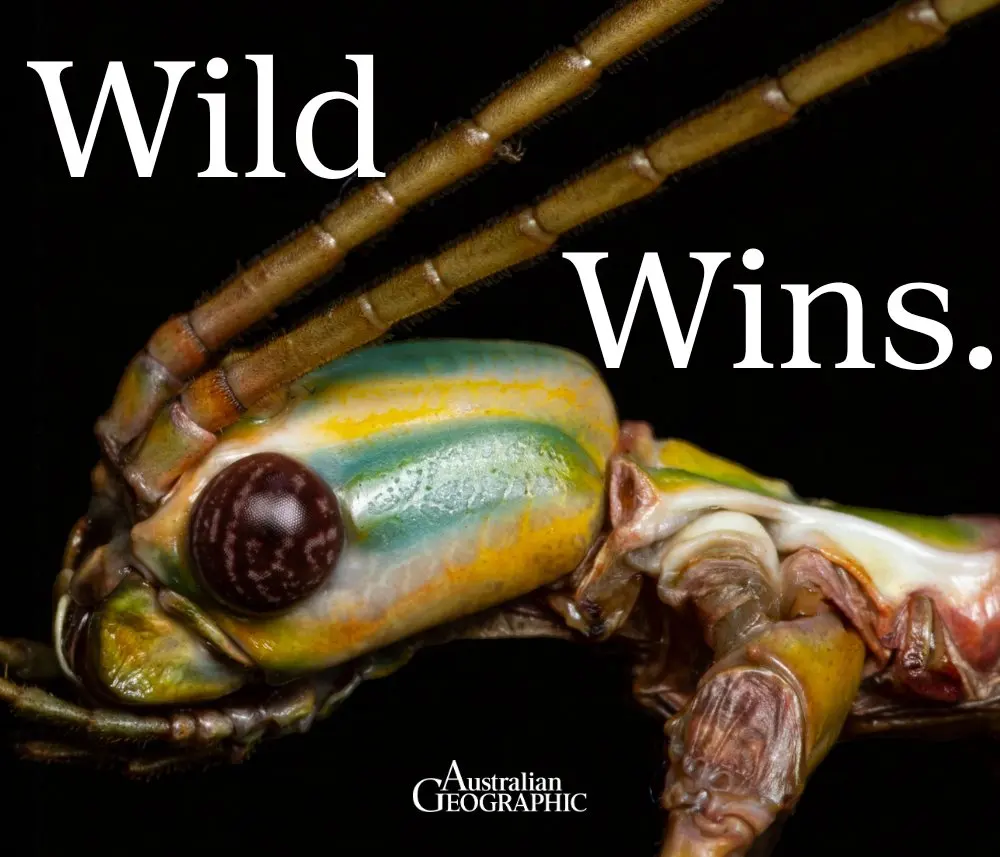
First, the insects. University of Sydney researchers have reworked the family tree of Australia's Anchiale stick insect genus, finding that two long-accepted species are actually five. One, Anchiale robusta, ranges from Tully to Cooktown in north Queensland and had been hiding in plain sight, lumped in with a lookalike found further south until DNA testing, museum specimens and citizen science photos sorted it out. A newly described species, A. mabiensis, turned up in Queensland's critically endangered Mabi rainforest on the Atherton Tablelands — and its eggs have a structural lid never before seen in stick insects or their relatives. A third, A. albopaintata, was reinstated after being wrongly folded into another species over a century ago; look for the white spot on the male's forewing. Australia now counts roughly 133 known stick insect species, and the team suspects a sixth Anchiale species is lurking on Cape York.
Second, land protection. The Australian Wildlife Conservancy has bought 200 hectares on King Island in Bass Strait, its first foothold in Tasmania. The island is a recognised Key Biodiversity Area — 470 native plant species, 164 bird species, and a raft of endemics found nowhere else — but 70 per cent of its native vegetation has been cleared since European settlement. The new Boulder Wildlife Sanctuary will start with feral cat control, weed management and habitat restoration, all aimed at helping the critically endangered King Island scrubtit, a tiny bird down to fewer than 100 individuals in three isolated pockets.
And the headline act: New Zealand's kakapo population has hit 325 birds, up from 235 earlier in the year and a mere 51 in the 1990s. The world's heaviest parrot — a flightless, nocturnal oddball — may not have numbered above 300 for 75 years. A record 90 chicks fledged this season, the first breeding since 2022, thanks to a rimu tree mast (the heavy fruiting event kakapo depend on, which only happens every two to four years). The next mast is tipped for around 2028, so the wait could be much shorter this time.
Why should travellers care? Because these are the animals and landscapes that make trips to Queensland's wet tropics, Bass Strait islands and New Zealand's southern offshore sanctuaries genuinely special. Citizen science records helped crack the stick insect case, King Island welcomes visitors with its patchwork of farms and wild coastline, and kakapo recovery work on islands like Whenua Hou and Anchor Island underpins the eco-tourism draw of southern New Zealand. Conservation wins like these keep the wildlife worth travelling for on the map.
Via Australian Geographic.