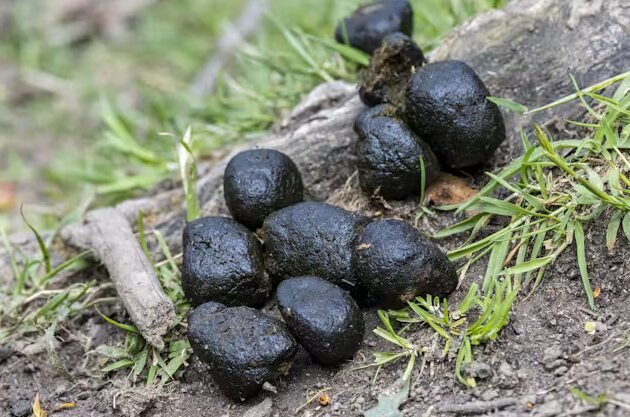
A wildlife researcher wakes at a Tasmanian devil field camp to find her boots shredded and the laces gone. The culprit is soon located in a nearby trap — an older devil whose scat contains several inches of stolen shoelace. It's a funny start, but it makes a serious point from researchers at the University of Sydney's Australasian Wildlife Genomics Group: animal droppings, known to scientists as scat, are one of the most useful tools in conservation.
Scat comes in every form imaginable, from wombat cubes to rabbit pellets, and it can reveal a surprising amount about animals researchers rarely see. Teams traditionally find it by walking systematic transect lines across a study area, but scat detection dogs are increasingly taking over. With their millions of olfactory receptors, trained dogs found roughly 53% more koala scat than humans in one study.
So what's inside a dropping that's worth all this effort? Quite a lot. First, population data: for rare and elusive species, simply confirming presence and estimating numbers is half the battle. Second, diet and gut health. Tasmanian devil scats have contained everything from frogs, fish and wallabies to wetsuit zippers, and comparing wild and captive devils shows captive animals carry significantly fewer gut bacteria — though they pick up wild microbes quickly after release. That helps zoos fine-tune nutrition and lets researchers protect key prey species with measures like exclusion fences.
Third, disease. Checking scat can flag infections without stressful trapping and swabbing — koalas with chlamydia can be identified from droppings alone, with accuracy matching invasive samples. Fourth, genetics: scat carries cells from the gut lining, so DNA extracted from it reveals how genetically diverse an animal is, a key measure of whether a species can adapt to disease and climate change. That approach has already been used on greater bilbies, to trace ghost bat breeding and movement across remote northern Australia, and to show snow leopards on the Tibetan plateau aren't crossing between breeding sites.
There are limits. DNA in scat degrades fast in the elements, so researchers are still working on ways to preserve samples in the field — blood and tissue sampling isn't going away just yet.
For travellers, the takeaway is that the wildlife you might hope to spot in Tasmania or outback Australia — devils, bilbies, koalas, ghost bats — is increasingly monitored without a single animal being handled. Some lodges and conservation volunteering programs let visitors join scat surveys or see detection dogs at work, and understanding why researchers get excited about droppings adds a layer to any wildlife-watching trip. That chewed-boot devil is a reminder that even the cheekiest animals are quietly handing scientists their secrets.