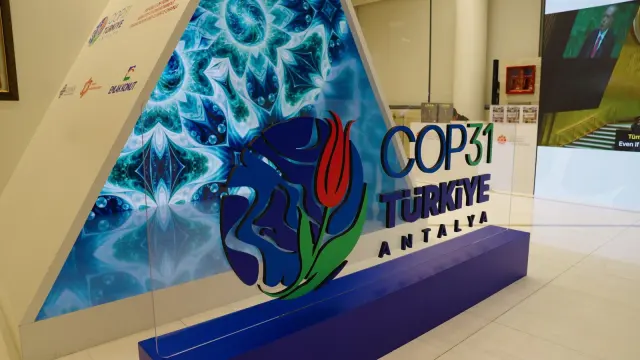
This November, Antalya will welcome the world's climate negotiators for COP31, with Türkiye holding the summit presidency under the compromise struck at last year's talks in Belém, Brazil, while Australia leads the negotiations. It's the biggest stage the country has had yet to make its case on climate — and the scrutiny that comes with it is considerable.
The Mediterranean setting is not incidental. Heat, drought and water scarcity feed off each other around the region, threatening harvests, ecosystems and public health at the same time. The World Meteorological Organization ranked 2025 among the three hottest years ever recorded. For a country whose tourism and agriculture both depend on a stable climate, hosting the summit in Antalya makes the stakes unusually visible.
The numbers give the hosts something to defend. Between 2015 and 2024, Türkiye's fossil carbon dioxide emissions rose by 25.1%, even as the European Union's fell by 20.1%. Emissions per dollar of economic output did decline, but totals are what matter for warming, and those keep creeping upward. Electricity and heat generation remain the biggest source, yet transport and industry drove over 60% of the growth in emissions since 2019 — a pattern familiar to any traveller who has sat in Istanbul traffic or watched construction cranes line the coast.
Industry is a particularly awkward puzzle. Türkiye is one of the world's largest cement exporters, and cement releases CO2 through chemistry itself — heating limestone — so cleaner fuels alone won't fix it. That matters commercially, not just diplomatically: the EU's carbon border tax entered its definitive phase in January 2026, attaching a carbon price to imports of cement, steel and aluminium. With the EU as Türkiye's largest export market, climate policy is now an economic necessity.
There is some momentum. Türkiye has pledged net zero by 2053 and passed its first climate law in 2025, laying the groundwork for a national emissions trading system. Between 2021 and 2024, emissions from power generation and industrial fuel use actually fell — though rising transport emissions cancelled out the gains.
For travellers, COP31 means Antalya in November will see heightened security, busy hotels and possible disruption around the summit venue — worth factoring in if you're planning a late-season Mediterranean trip. But the bigger story is the direction of the country you'd be visiting: cleaner air from reduced fossil fuel burning, and a coastline whose long-term appeal depends on how seriously these commitments are kept.