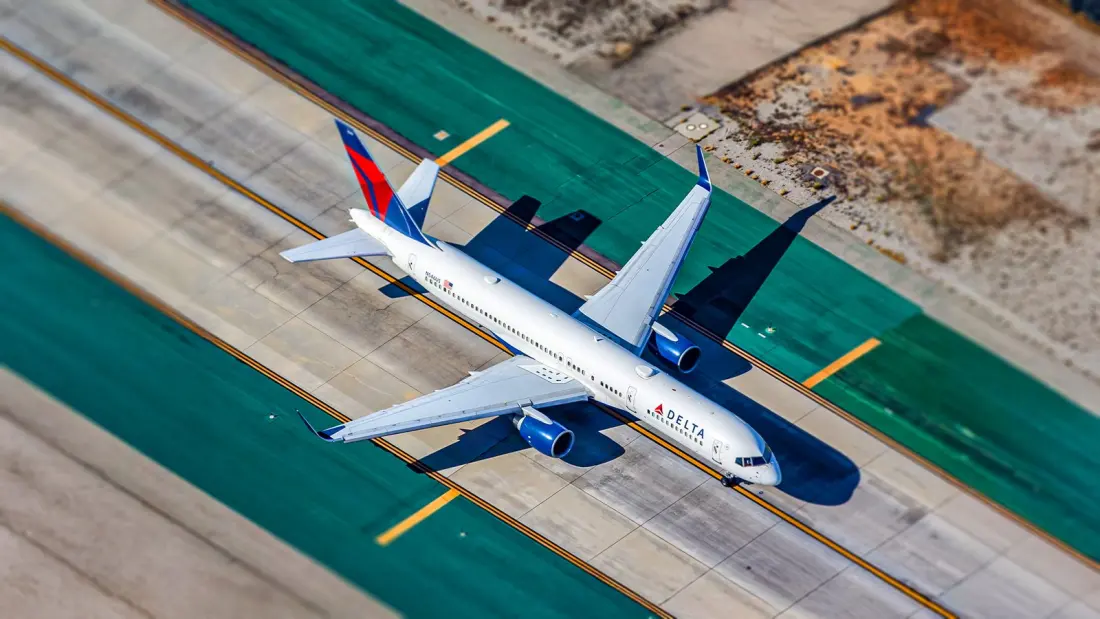
A Boeing 757 doesn't have a window sticker, but the maths is out there. Working from Boeing's own specifications, a fully loaded 757-200 manages roughly 0.36 miles per gallon — about 2.8 US gallons burned per mile. In steady cruise at lighter weights, that improves to around 0.52 mpg. Sounds dreadful next to your car, but the real metric airlines care about is fuel per passenger: a typical two-class 757-200 with 200 seats burns about 1,020 gallons per hour at cruise, which works out to roughly 80.7 passenger miles per gallon. Suddenly the old twin-jet looks a lot more respectable.
Those figures shift depending on the flight. Takeoff and climb are thirsty phases — in the first 20 minutes the engines burn nearly double their cruise rate, so short hops under 500 nautical miles wreck the efficiency maths. On long sectors above 2,000 nautical miles, the jet spends hours at 35,000 to 39,000 feet, and dispatchers use step climbs to nudge it higher as fuel burns off and the aircraft lightens. Retrofitted blended winglets cut total fuel burn by around 5% on long routes, while winter westbound transatlantic headwinds can knock efficiency down by 10 to 12% thanks to all that contingency fuel being carried to carry more fuel.
The stretched 757-300 guzzles about 80 gallons more per hour than the -200, but its extra 43 seats give it a better rating of 88.4 passenger miles per gallon. And when the 757 arrived in 1983 with Rolls-Royce RB211 engines (Pratt & Whitney PW2000s followed), it cut fuel burn per seat by 45% versus the three-engine 727-200 it replaced — revolutionary for its day.
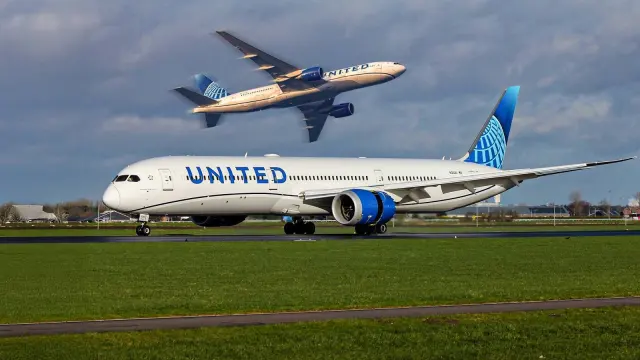
So how does it stack up now? A modern Airbus A321neo burns roughly 680 gallons per hour in typical service — about a third less — and high-density versions of today's narrowbodies hit 105 to 125 passenger miles per gallon. Yet airlines like Delta and United keep flying 757s well past their expected retirement dates, because the airframes are fully paid off. No lease payments means higher fuel bills still beat $120 million in new-metal debt on thin transatlantic routes like Newark to Edinburgh. The 757 also does things modern jets can't: its oversized engines and wings let it lift heavy loads off short runways, hot-and-high airfields, and places like Tegucigalpa where the A321XLR, despite its longer range, simply can't match the takeoff performance.
Rising fuel prices and carbon taxes are steadily pushing the remaining fleets toward retirement, but the 757's legacy is the long, thin transatlantic route — point-to-point flying that was unprofitable for widebodies before it came along. If you've crossed the Atlantic on a narrowbody, there's a decent chance this aircraft made it possible.