
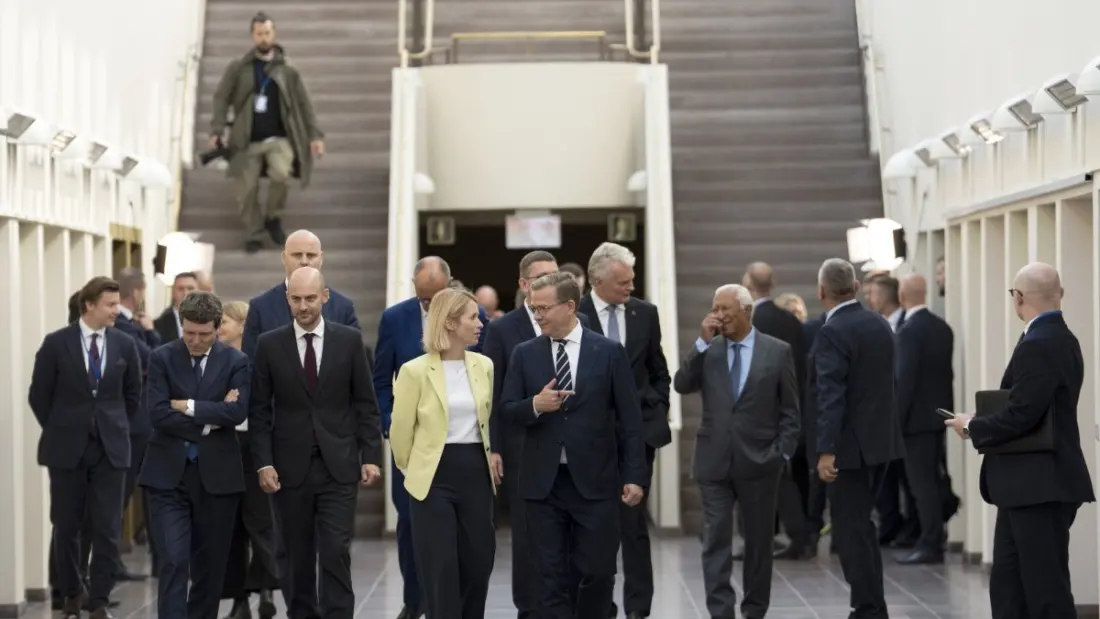
Rovaniemi — the Finnish Lapland town better known for Santa Claus tourism than summit diplomacy — hosted twelve European nations on Monday for a European-Arctic Summit with a pointed message: the EU needs to show up in the far north. Leaders including Germany's Chancellor Friedrich Merz, Denmark's Prime Minister Mette Frederiksen and EU foreign policy chief Kaja Kallas signed a joint statement urging Brussels to take a "more strategic and proactive role" in the European Arctic.
Two forces are driving this sudden attention. The first is Russia, on the other side of Finland's long eastern border, whose Arctic ambitions and hybrid activities were described in the statement as a significant, long-term threat. The second, awkwardly, is the United States: Donald Trump's repeated calls to bring Greenland — a vast autonomous Danish territory — under American control have rattled Washington's own allies, even though he has since ruled out annexation by force. EU Council President Antonio Costa summed up the mood: what happens in the Arctic is a European story, not a regional one.
Money is starting to follow the rhetoric. During a 7 September visit to Greenland, European Commission President Ursula von der Leyen announced a €200 million ($232 million) package, promising the EU would be "more present" in Greenland and the wider Arctic. She has also floated channelling part of Europe's defence spending surge into a European icebreaker capability, and Kallas was blunt about the gap: the bloc simply lacks ships that can handle polar conditions.
No formal decisions were taken in Rovaniemi, but the timing matters. The European Commission is expected to publish a new Arctic strategy within weeks, and officials noted the summit gave members a last chance to shape it. Since the EU's last Arctic policy in 2021, interest has surged — driven partly by climate change, with the region warming roughly four times faster than the global average. Melting sea ice is opening maritime routes: in August, China and South Korea both sent container ships to test the Northern Sea Route through Russian waters.
For travellers, this remote corner of Europe is suddenly a lot more talked about than it was a few years ago. That doesn't change much for a winter trip to Finnish Lapland or a cruise to Greenland — but it does mean more infrastructure investment, more routes and more attention to the region in the years ahead. If the High North is on your list, expect it to get busier, and possibly easier to reach, before it settles down.
Story reported by Daily Sabah Travel.