Atlanta's Hartsfield-Jackson moved 106.3 million passengers in 2025 — the only airport on the planet to crack the 100 million mark. Dallas/Fort Worth, the next US hub down the list, handled 85.7 million, ranking fourth globally behind Dubai and Tokyo Haneda. Both figures dipped slightly year over year, but the real story is what's happening underneath them.
The numbers come from Airports Council International, which also placed Chicago O'Hare and Denver in the world's top ten — giving the US four of the ten busiest airports on Earth. The country as a whole moved 890.1 million passengers, comfortably ahead of China's 776.1 million.
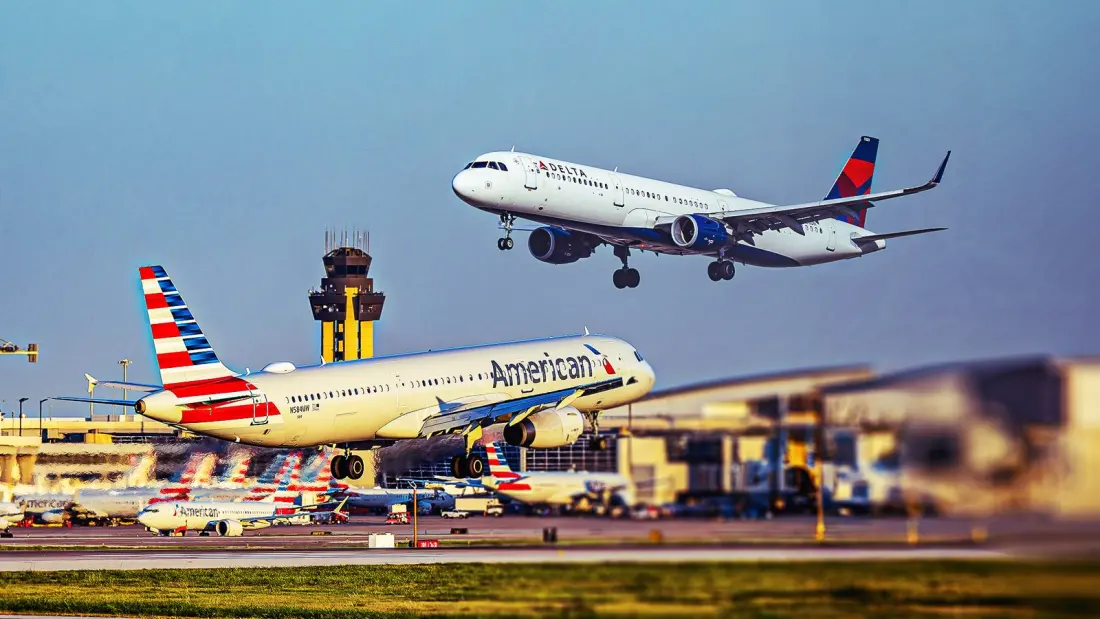
Atlanta's dominance rests heavily on one airline. Delta scheduled 49.2 million seats from the airport last year — about 17% of its entire global capacity and a striking 78% of all departing seats at ATL. Dallas mirrors that dependency with American Airlines, which accounted for 82% of DFW's scheduled capacity, some 42.1 million seats. These are fortress hubs: enormous, efficient, and almost entirely defined by a single carrier's network strategy.
Here's where it gets interesting. On scheduled capacity for October 2026, Atlanta was flat at 5.44 million seats, while Dallas grew 5% to 4.56 million. And Chicago, after an 8% jump, hit just over five million seats — second busiest in the world for that month, roughly 400,000 seats behind Atlanta. Year-to-date footfall through July tells a similar tale: Atlanta led with 61.7 million passengers, Chicago second on 51.3 million (up over 3%), and Dallas third on 49.4 million (down 1%). Chicago is on track to overtake Dallas for second place overall this year.
For travellers, the practical upshot is choice and resilience. All three hubs offer sprawling domestic networks plus long-haul service, so routing through any of them is usually painless — though ATL's sheer size means budgeting extra time for connections. If you're booking through DFW or ORD, you're essentially flying American or United whether you like it or not, so loyalty programmes matter when picking a gateway.
Don't expect a change at the top soon. Atlanta's lead is wide, and Dubai — its nearest global rival — has seen traffic fall amid disruption from the Iran war. But with heavy investment under way at Dallas, Chicago and Denver, the chasing pack is closer than it has been in years.