A boat-shaped bump in the soil near Doğubayazıt, in Türkiye's Ağrı Province, has pulled Noah's Ark back into the news. Known as the Durupınar Formation, the site is now the focus of a research effort called Noah's Ark Scans, which in 2026 carried out officially authorised geological and geophysical work: radar surveys, LiDAR mapping, electrical resistivity measurements, soil sampling and core drilling at 16 locations. Hundreds of samples were collected, with laboratory results expected in spring 2027.
The team has reported intriguing signs — what look like regular structures below the surface and layers unusually rich in organic material. Some researchers suggest these could point to a human-made structure. But no wooden material or archaeological remains linked to the ark have been verified, and the project team itself says any conclusion depends on lab analysis and independent review. In short: interesting, not proof.
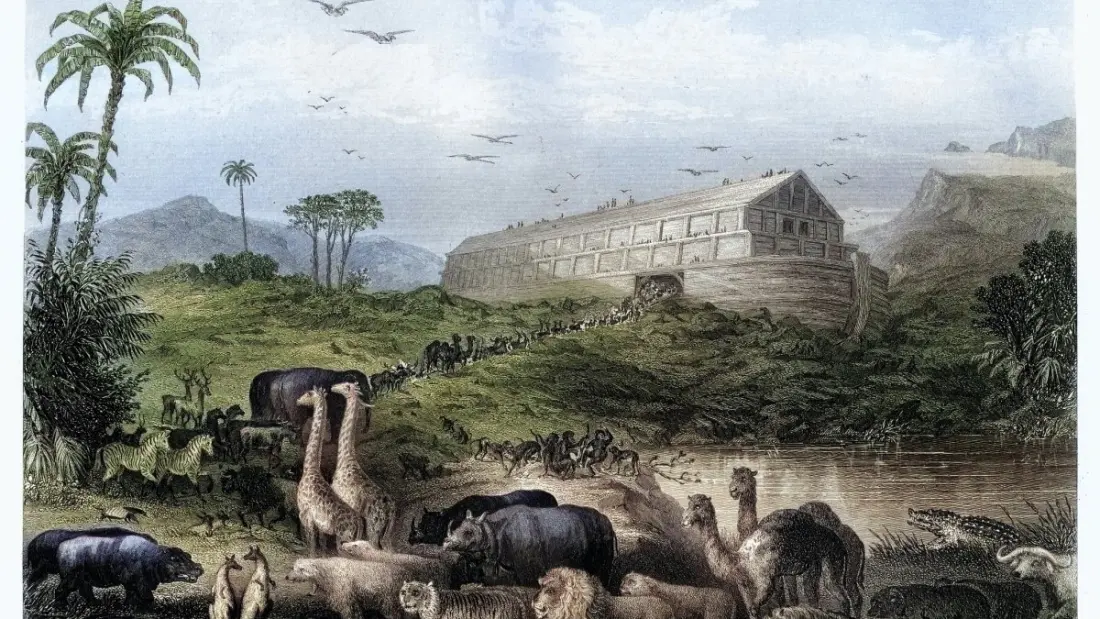
A thoughtful opinion piece by Zafer Duygu, a theology professor at Dokuz Eylül University, puts the excitement in context. The Torah places the ark's resting place on the "mountains of Ararat" — a region north of Mesopotamia, later identified with modern Mount Ağrı (5,137 metres), though the plural "mountains" doesn't pin down a single summit. The Quran says the ark settled on "Judi," traditionally associated with a mountain near Şırnak in southeastern Türkiye, though scholars caution that the identification isn't fixed. Neither text, the argument goes, provides coordinates you can map — so claims that the ark "must" be on Ararat or Cudi go beyond what the scriptures actually say.
The flood story itself is far older and broader than any one tradition. Mesopotamian versions — the Sumerian Eridu Genesis, the Atrahasis Epic and Tablet XI of the Epic of Gilgamesh — all feature a warned hero, a great vessel and a world reborn. Whether Genesis borrowed from these tales, or whether all preserve a shared memory of a real regional flood, remains an open scholarly question. A regional rather than global flood is also an interpretation many contemporary Islamic scholars find persuasive.
For travellers, the story is a good excuse to look at one of Türkiye's most dramatic and least-visited corners. Even without an ark, Ağrı Province delivers: the snow-capped volcano of Mount Ağrı dominates the skyline, the Persian and Silk Road crossroads town of Doğubayazıt sits below it, and the nearby Ishak Pasha Palace is one of eastern Anatolia's most striking buildings. Whether or not the 2027 lab results change anything, the debate itself is part of the region's pull — a landscape where scripture, archaeology and geology have argued for centuries.