Most down jackets are judged on two numbers: fill power and weight. A long-term test of Rab's Positron Pro, published by Alpinist, argues there's a third number that matters just as much — how many seasons of hard use the jacket can take before it falls apart.
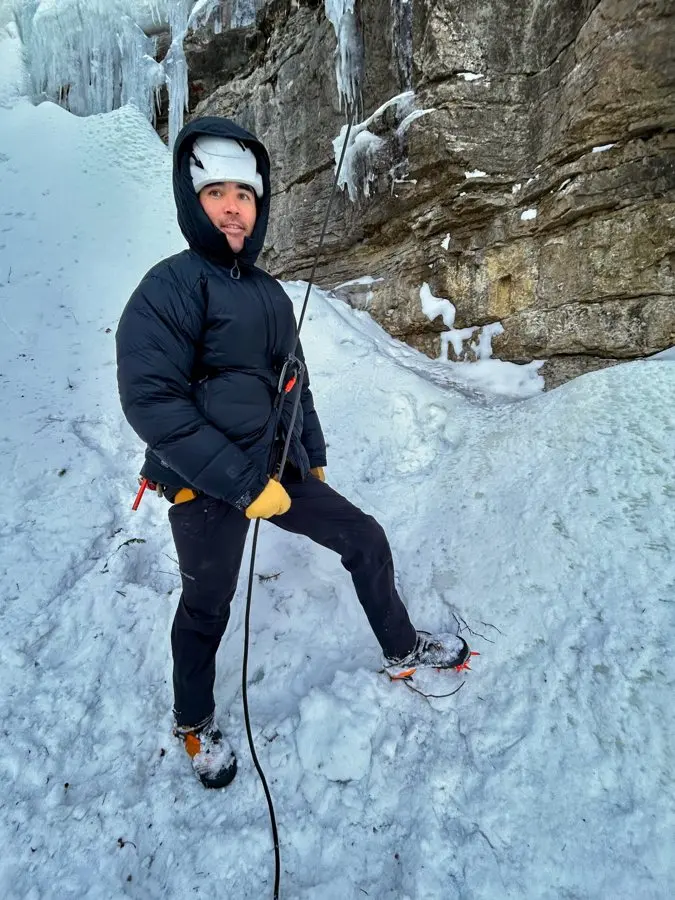
The reviewer, Montana-based IFMGA guide Akio Joy, put the parka through more than 20 days of guiding and personal missions: multi-pitch ice climbing, winter camping, backcountry skiing, snowmobiling and instructional days. His verdict after all that abuse? Virtually no signs of wear. For anyone whose winter kit gets scraped against ice, rock and machinery rather than pampered on a single holiday, that durability is the headline.
The specs back it up. The Positron Pro uses 800-fill hydrophobic down under a Pertex Quantum Pro shell, with a baffle layout designed to eliminate cold spots — useful when you're standing still at a belay for an hour. A size medium weighs 788 grams (about 1.7 lbs), which is substantial. Rab's own Mythic Ultra, built for fast alpine missions, comes in at 537 grams. That 250-gram difference is the whole trade-off: the Positron Pro is heavier and bulkier in a pack, but it shrugs off abrasion and light moisture far better than ultralight jackets, which tend to be fragile by design.
The feature list is long and practical. Six pockets swallow gloves, goggles and skins; the handwarmers sit above harness waistbelt height so they're usable while roped up. There's a two-way front zip with a snap backup, a helmet-compatible hood, and an integrated stuff sack pocket. The fit splits the difference between athletic and roomy — trim enough not to snag on tight terrain, roomy enough to layer over serious insulation on the coldest days.
Price is $495, which the reviewer considers strong value given the materials and build quality. Colour options: black, red and blue for men; blue and black for women.
Who should actually buy this? Not gram-counters. If the jacket lives in your pack as an emergency layer and only comes out at lunch stops, a lighter option makes more sense. But for winter camping trips, expeditions, ice climbing holidays, ski-touring weeks in cold ranges, or anyone who spends long days outdoors in genuinely sub-zero conditions, the extra weight buys warmth, toughness and features that ultralight jackets simply can't match. The reviewer even suggests it would suit a long off-season objective like El Capitan. Tested everywhere from Hyalite Canyon in Montana to Silverton, Colorado and North Conway, New Hampshire, it consistently performed in exactly the cold, static conditions where insulation failures hurt most.
The bottom line for travellers: if your winter trip involves being cold and stationary — belays, snow holes, long snowmobile rides — this is the kind of jacket you buy once and keep for years.
Review by Akio Joy for Alpinist.