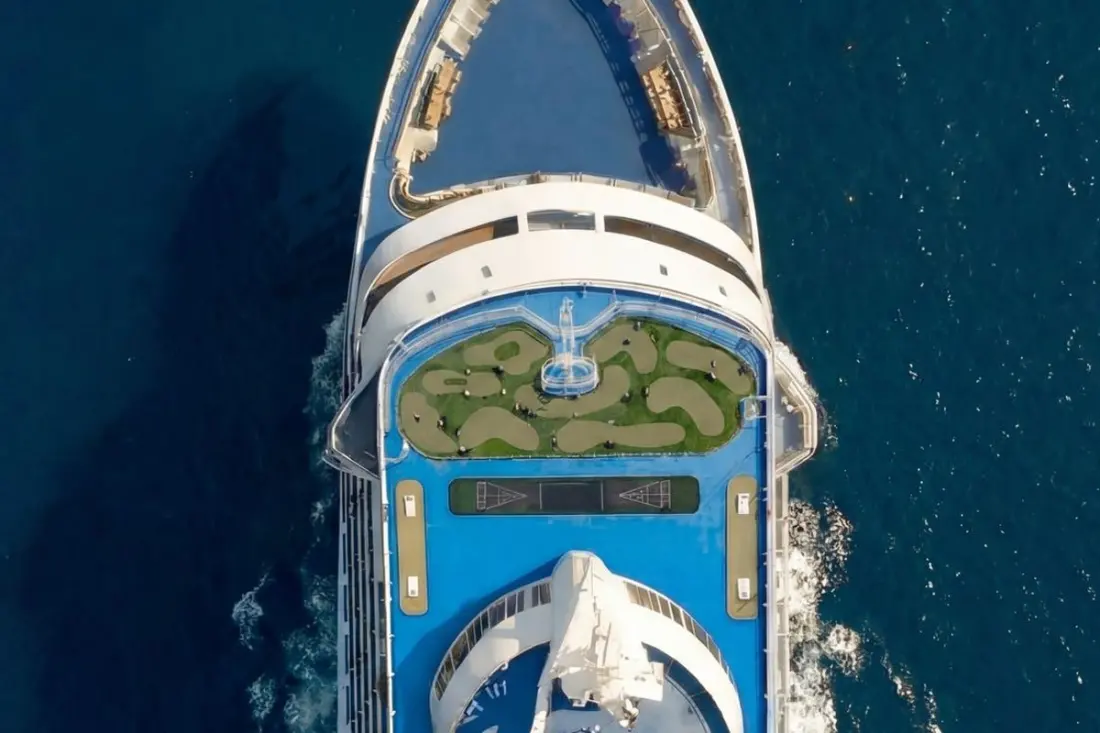
A luxury residential cruise line that was selling suites for as much as £3 million has filed for bankruptcy in the US, throwing its planned 2028 launch — and buyers' money — into doubt.
Avora Lumina lodged a voluntary Chapter 11 petition on 23 November in the US Bankruptcy Court for the Southern District of Florida. Chapter 11 doesn't automatically mean liquidation; it gives a company room to restructure debts or find a buyer. Court papers value the company's assets at between $10 million and $50 million, with liabilities of $1 million to $10 million, and state that funds should be available to repay unsecured creditors.
The company had ambitious plans. Founder and chairman Mikael Petterson — who also co-founded troubled residential operator Villa Vie Residences — said in May that Avora had agreed to buy the Seven Seas Navigator from Regent Seven Seas, with a view to converting it into a ship called Lumina. The idea was an endless world cruise, a floating home for well-heeled buyers. Cabins were priced from £400,000 up to £3 million, and by the time of that interview roughly 35 to 40 of the 250 cabins had been sold. Sailing was meant to begin from Lisbon in January 2028. What happens now to the Regent deal, and to the money buyers have already paid, is unclear. Neither Petterson nor Norwegian Cruise Line Holdings, Regent's parent, had commented at the time of the report.
The problems don't stop there. Lumina was pitched as a plusher version of Villa Vie Odyssey, and that ship's own story is messier. Villa Vie Residences abruptly suspended operations at the end of October, blaming rising fuel costs, and passengers had to disembark in Cambodia. The Odyssey was then detained in Singapore this month over the company's ongoing financial troubles and has yet to be released.
This is the second residential cruise failure to hit the headlines within a week. Gemini, the ship behind Miray Cruises' planned Life at Sea residential voyage — a project that collapsed in 2023 after investor funding fell through — was sold at auction to help repay creditors. The one clear success in the sector remains The World, which has been sailing since 2002 and charges from $2.5 million for a cabin plus annual fees running from $60,000 to $300,000 — a price point that may be exactly why it has survived where cheaper rivals have not.
Why it matters: the dream of living at sea keeps colliding with the economics of running a ship. Anyone considering buying into a residential cruise — or already holding a contract — should note how quickly these ventures can stall, how little protection buyers appear to have when they do, and how thin the track record is beyond The World. For everyone else, it's a reminder to treat 'own a suite on a ship' offers with a healthy dose of due diligence.