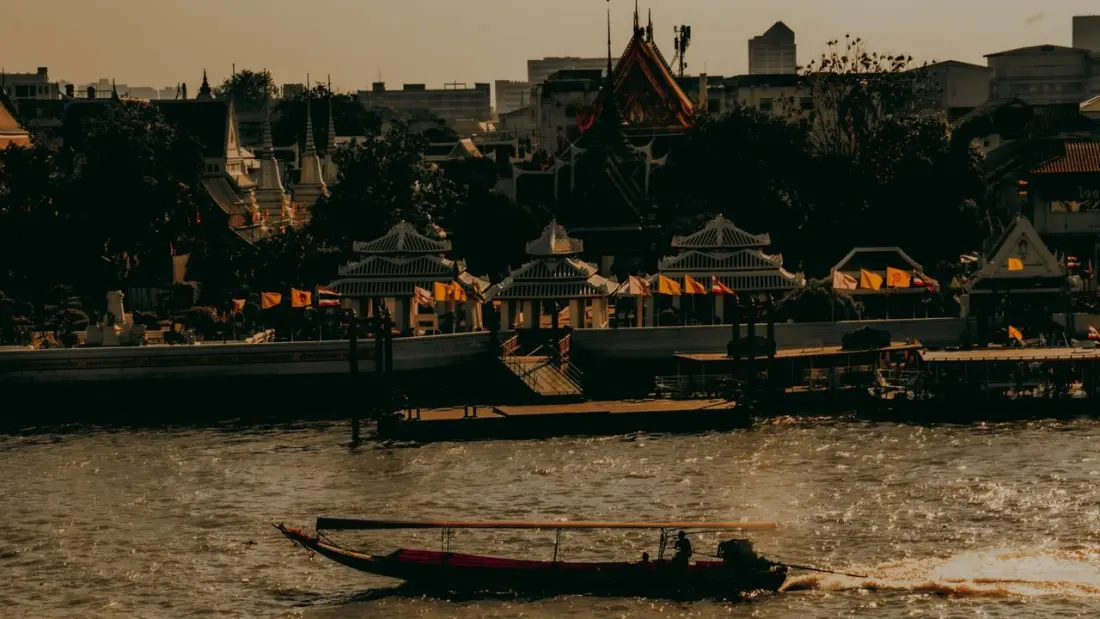
For decades Bangkok turned its back on the Chao Phraya, the River of Kings. From the 1950s the action shifted east to malls, neon and skyscrapers, and the historic waterfront slipped into neglect. Now locals and travellers are drifting back — new ferries, restored landmarks and a wave of young Thai creatives have made the river the most interesting part of the city again.
The revival is most visible in Talat Noi, the old commercial quarter where car-free alleys thread between fish markets, street vendors and repurposed relics: the 1940 General Post Office now houses the Thailand Creative & Design Center, WWII storehouses have become the Warehouse 30 shopping complex, and the 1897 Holy Rosary Church still anchors the maze. Small, personal projects are the charm here — a café-gallery called Timo and Tintin run out of a grandmother's shophouse, and Naam 1608, a creaky wooden restaurant hovering over the water, ideal for a Singha and red curry fish cakes as long-tail boats churn past.
Nearby Chinatown has seen the biggest transformation. Chef Pam (Pichaya Soontornyanakij) opened Potong, her Michelin-starred Thai-Chinese restaurant, in 2021 inside a 115-year-old herbal medicine store her family has owned for five generations. She and her husband Tor say they were "accidental pioneers" — friends thought they were crazy, and now more than a hundred restaurants cluster around them. Their casual 2025 follow-up, Khao San Sek, sits near Soi Song Wat, a once-sleepy riverside road now bursting with boutiques, coffee shops and perfumeries — the sidewalks were literally widened for the foot traffic. Old-school dumpling stalls and antiques dealers still hide down the side lanes, and Wanjai Cafe House does a stellar mango sticky rice.
Big hospitality is following: the 1888 Custom House is reopening as a Langham hotel, and the Mandarin Oriental marked its 150th anniversary (it opened in 1876, hosting Maugham, Coward and Greene) with a renovated Garden Wing — plus a cameo in The White Lotus season three.
The river itself remains the best sightseeing route. A private boat or a cheap ferry gets you past Wat Arun into Thonburi's quiet canals, past small temples tourists rarely see, and out to the floodlit 226-foot Big Buddha. For green space, cycle car-free Ko Kret, an island north of downtown reached by a 13-mile riverside ride, or Bang Kachao, the city's "green lung," a five-minute boat crossing away with shaded forest paths at Sri Nakhon Khuean Khan Park.
Why it matters: Bangkok's notorious traffic makes the river more than a pretty backdrop — it's now the fastest, most atmospheric way to move through the city, and the neighbourhoods along it reward slow exploration on foot or by bike. Anyone who last visited a decade ago will find a genuinely different riverside Bangkok waiting.