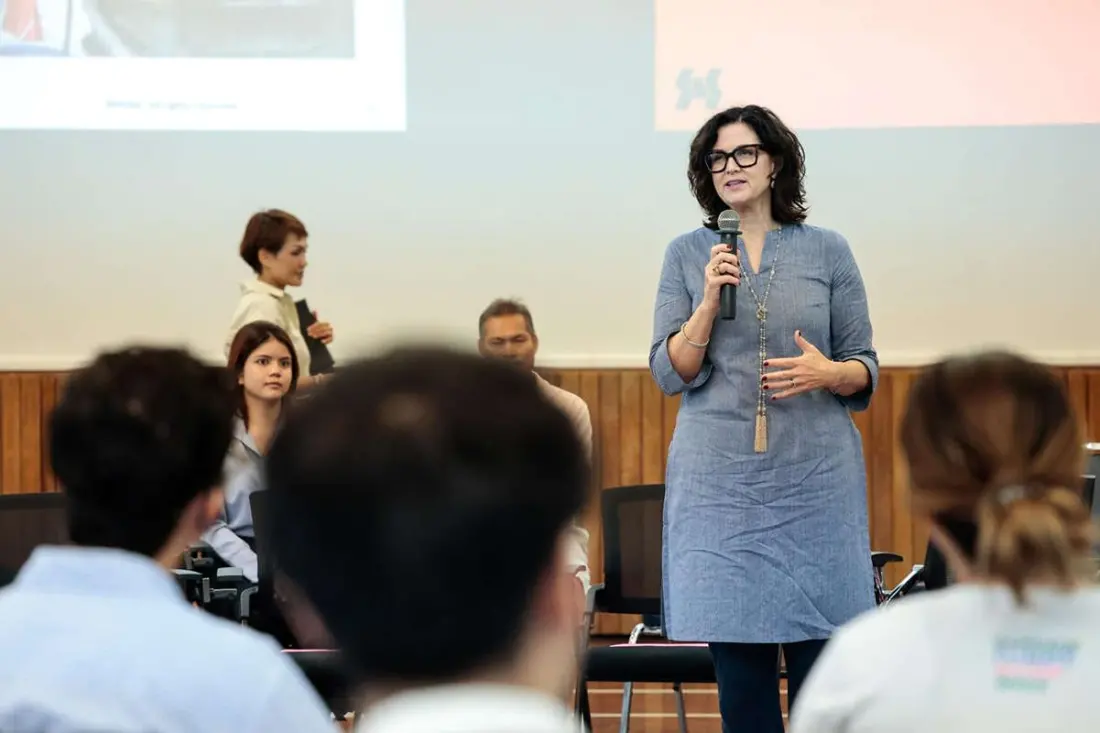
When Bangkok's heat index crossed into the dangerous 42–51C band in April, the city's Environment Department flagged it publicly — but for thousands of informal workers, the warning was already written on their bodies. A panel hosted by HARE, a women-led climate adaptation NGO, put real numbers on what extreme heat costs the people selling, sewing and sweeing through it.
Speakers included a street vendor, a BMA street sweeper, a market vendor and a motorcyclist rider, and their expenses list was startling: heat rash, headaches, misarriages, urinary infections, strokes, heart attacks, domestic violence, sleepless nights and lost income — totalling roughly US$7.5 billion (1.9 trillion baht).
The personal stories are grim. Kanokporn Husawat, a market vendor whose shift runs from 4am to 3.30pm, suffered a physical reaction to the heat because of her sweat allergy, fainting in April. Prahsong Chanthorn, a street sweeper working 5am to 1pm, is left with painful stinging and skin peeling around her eyes. Vendors like Kanokporn pay around 3,800 baht a month on electricity just to run fans and one air conditioner while trying to sleep through the heatwave — her usual bill is just over 1,000 baht.
A survey HARE ran with a foundation in Bangkok's Rat Burana district backs this up. Of 57 residents, 65% of them women, 88% had felt thirst during extreme heat, 97% sweated heavily, 71% reported fatigue and 75% headaches. Money took a hit too: 99% reported higher water bills, 79% higher electricity bills (some up to 500 baht a month) and 79% more transport spending.
Medical experts at the event stressed that heatstroke can kill once body temperature passes 41C, and that women may suffer irregular menstrual cycles and ovulation problems from heat — with mental health and family finances also strained. Simple tricks help: fans beat electric coolers above 35C, and wiping the skin with a damp cloth keeps moisture working to cool the body down.
For travellers, the takeaway is practical, not political. Bangkok's hot season is genuinely hazardous, not just uncomfortable: schedule outdoor sightseeing for early morning, carry water, and consider a damp cloth over ice-cold air-con blasting on sweaty skin. The same programmes emerging here — low-cost DIY evaporative fans that cut cooling costs by nearly 60%, and health monitoring devices that alert volunteers when heat indices hit dangerous levels — hint at how cities will cope. But as Poonpas Saengthalang of HomeNet Thailand put it, extreme heat is a structural issue that hits low-income communities hardest, and no single organisation can fix it alone. Bangkok Post Life