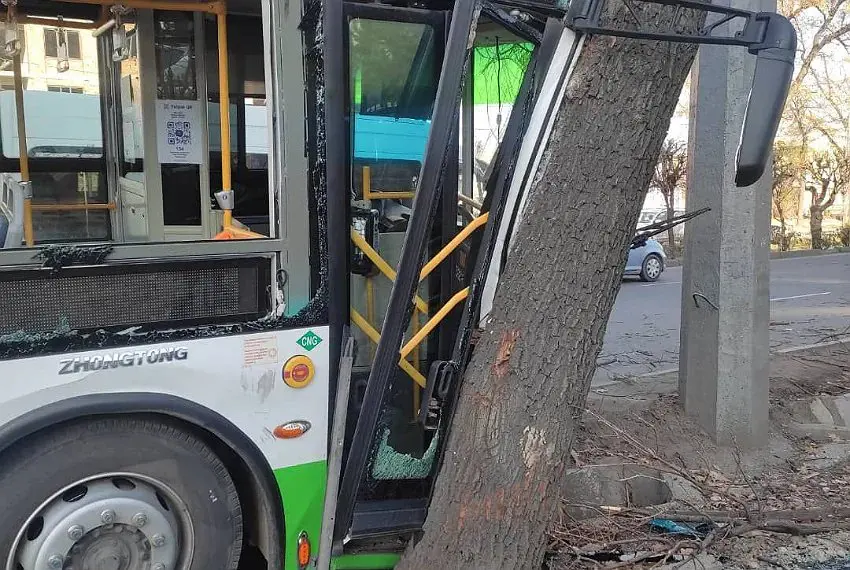
Bishkek's bus network has had a rough 2026. Since January, 521 traffic accidents have involved buses registered in the Kyrgyz capital, according to figures from Bishkek City Transport, the municipal company that runs much of the city's public transport. The breakdown is almost even: bus drivers were found at fault in 244 cases, other road users in 272.
Bakyt Tabaldiev, chief engineer at the city's second motor depot, told the Kabar news agency that drivers blamed for a crash have to compensate for the damage to the vehicle, and face penalties ranging from lost bonuses to reprimands or dismissal depending on how serious the violation was. Three recent crashes illustrate the range of problems: one driver was drunk at the wheel, one case is still under investigation, and in a third the driver is believed to have suffered a seizure behind the wheel.
Context for visitors: Bishkek runs 86 bus routes plus 26 minibus routes serving suburban destinations, so buses and marshrutka-style minibuses are how most locals — and most budget travellers — actually get around. The city sits on a broad plain at the foot of the Tian Shan mountains, and most tourists pass through it on the way to alpine lakes, gorges and trekking hubs like Ala-Archa or Karakol.
For a traveller, this isn't a reason to avoid the city's transport, but it is a nudge to stay alert. Stand well back from the kerb at bus stops, expect assertive driving at intersections, and consider taxis or ride-hailing apps for longer cross-city trips if you're uncomfortable with packed minibuses. If you do ride the minibuses, keep your belongings close and hold on — the driving style can be spirited even without an accident in the picture.