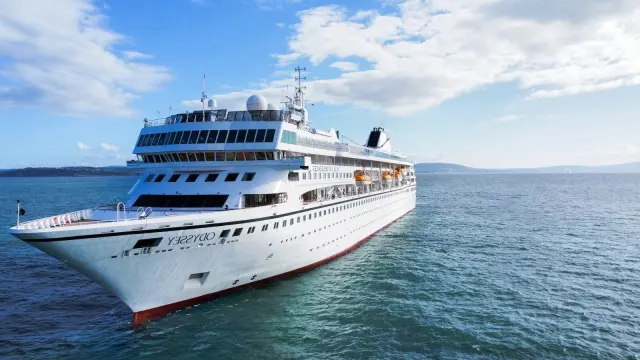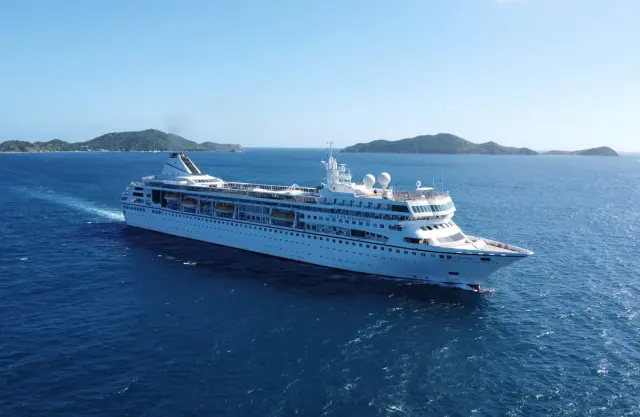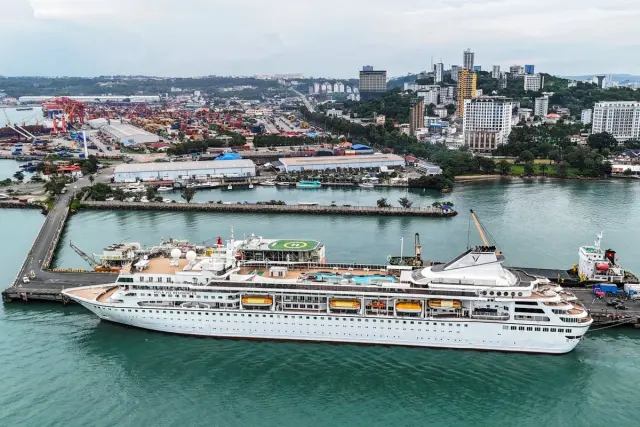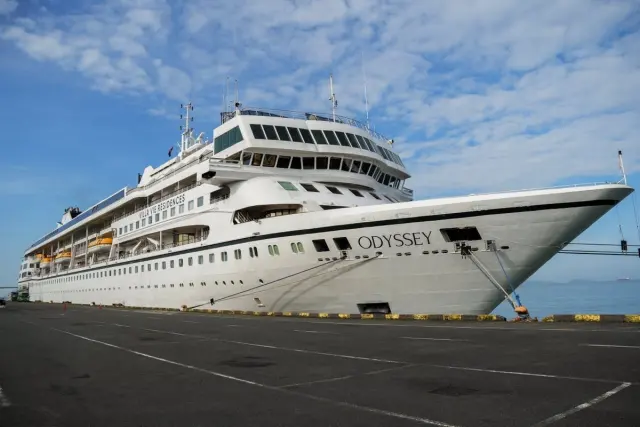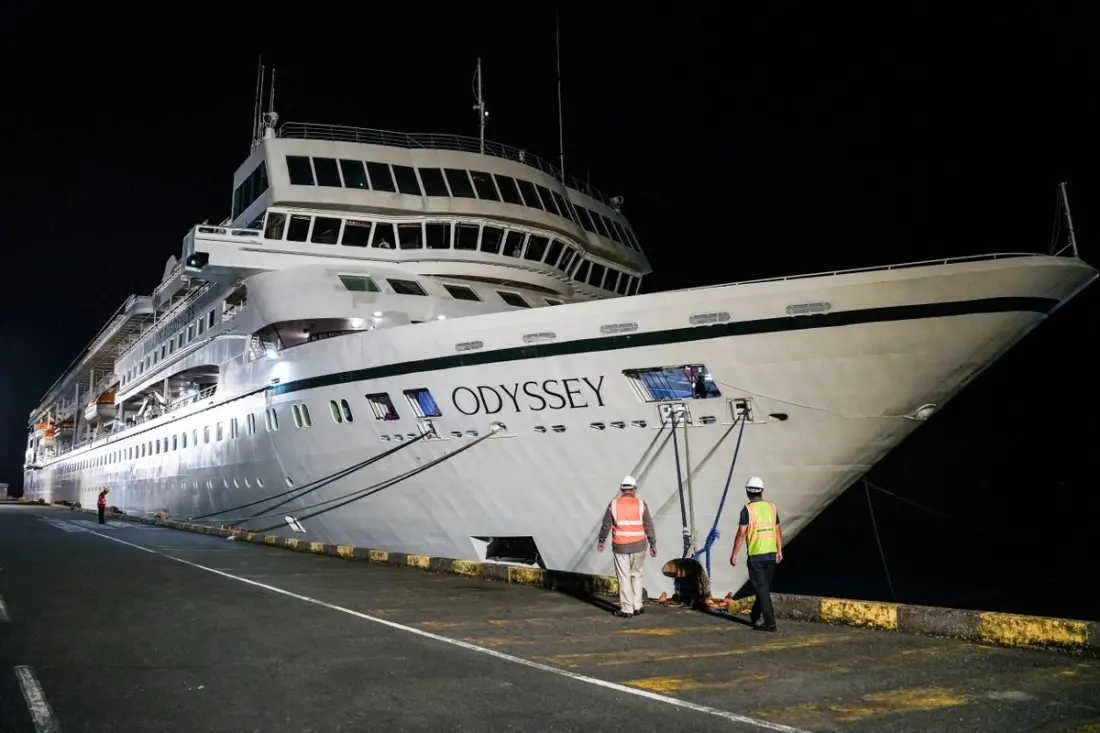
The Villa Vie Odyssey, a cruise ship that promised people the chance to live at sea indefinitely, has sailed out of Sihanoukville with nobody but a skeleton crew on board. Around 50 crew members were aboard when the vessel left early on Wednesday, according to Taing Sochitkrishna, head of the local tourism department. More than 200 passengers had been forced off the ship in the days before.
The Florida-based owner, Villa Vie Residences, suspended operations at the Cambodian port town and told passengers to disembark. Its stated reason: fuel price spikes linked to the Iran war had made running the ship too expensive to continue. Passengers spent their final day on shore collecting belongings, and few expected to return. Shirine Thomas, from Wilmington, North Carolina, said there were still things left on board she wished she could take with her.
For the passengers, this was not a holiday cut short — it was a home disappearing. The Odyssey had been sailing for at least 755 days and was one of the few vessels in the world selling long-term or permanent residences at sea. Some guests had bought cabins outright for six-figure sums. Lanette Canen and Johan Bodin, both 56, sold a business to fund a $100,000 cabin, then paid $3,500 a month in maintenance fees on top. Lanette even ran a windshield-replacement company from the ship, and the couple documented their life afloat on a YouTube channel called Living Life on a Cruise. They boarded in October 2024 expecting a new life at sea.
The aftermath has been chaotic. Roughly 100 passengers remained in Cambodia after the ship departed, while most others flew on to destinations around Southeast Asia. Mary Ann Demsar, a 67-year-old retired teacher from Ontario, said the owners had gone quiet — no word on whether the voyage would ever resume. In her view, the clearest information came from Cambodian officials, not the company. Villa Vie Residences did not respond to requests for comment.
Where the ship was actually going is unclear. Maritime tracking sites and some passengers suggested Singapore, but no destination was confirmed. For the hundreds who invested their savings in cabins, the future of both their money and the voyage is unresolved.
The story is a cautionary tale for anyone tempted by the growing market for residential cruises. These schemes typically require a large upfront purchase plus monthly fees, and unlike a conventional cruise booking, there is little in the way of consumer protection when an operator runs into trouble. Travellers considering a life-at-sea package would do well to scrutinise the operator's finances, insurance and refund terms before committing anything close to a house deposit.