Coffee and tea habits vary wildly once you leave the standard espresso machine behind. A recent roundup of the world's more surprising hot drinks shows how butter, salt, cheese and even orchid roots ended up in mugs across three continents — and several of them are reasons in themselves to plan a trip.
In Ethiopia, the birthplace of Arabica coffee, the traditional buna ceremony usually means sugar. But in some rural areas the beans are roasted, ground and boiled in a clay jebena pot, then served with salt — historically easier to find than sugar — and sometimes spiced butter, which softens the bitterness and adds body.
Vietnam's contribution is better known: cà phê trứng, or egg coffee, invented in 1946 by Nguyễn Văn Giảng, a bartender at Hanoi's Metropole Hotel, when fresh milk was scarce. Whipped egg yolks, condensed milk and sugar form a custard-like foam over strong robusta — regulars compare the result to tiramisu or zabaglione. It's still served at Café Giảng, the bar he opened, in a small cup set in hot water to keep it warm.
Cheese appears twice on the list. In Colombia's Andean region, chocolate con queso pairs hot whisked chocolate with chunks of queso campesino, doble crema or cuajada at the bottom of the cup, softened into a stretchy, salty-sweet bite. It's a breakfast and las onces (afternoon snack) staple in Bogotá, Boyacá and Santander, best with an almojábana or pandebono on the side. In northern Finland and among the Sámi, kaffeost works the other way round: cubes of leipäjuusto — a squeaky fresh cheese once made with reindeer milk — sit in a wooden cup while boiling coffee is poured over them.
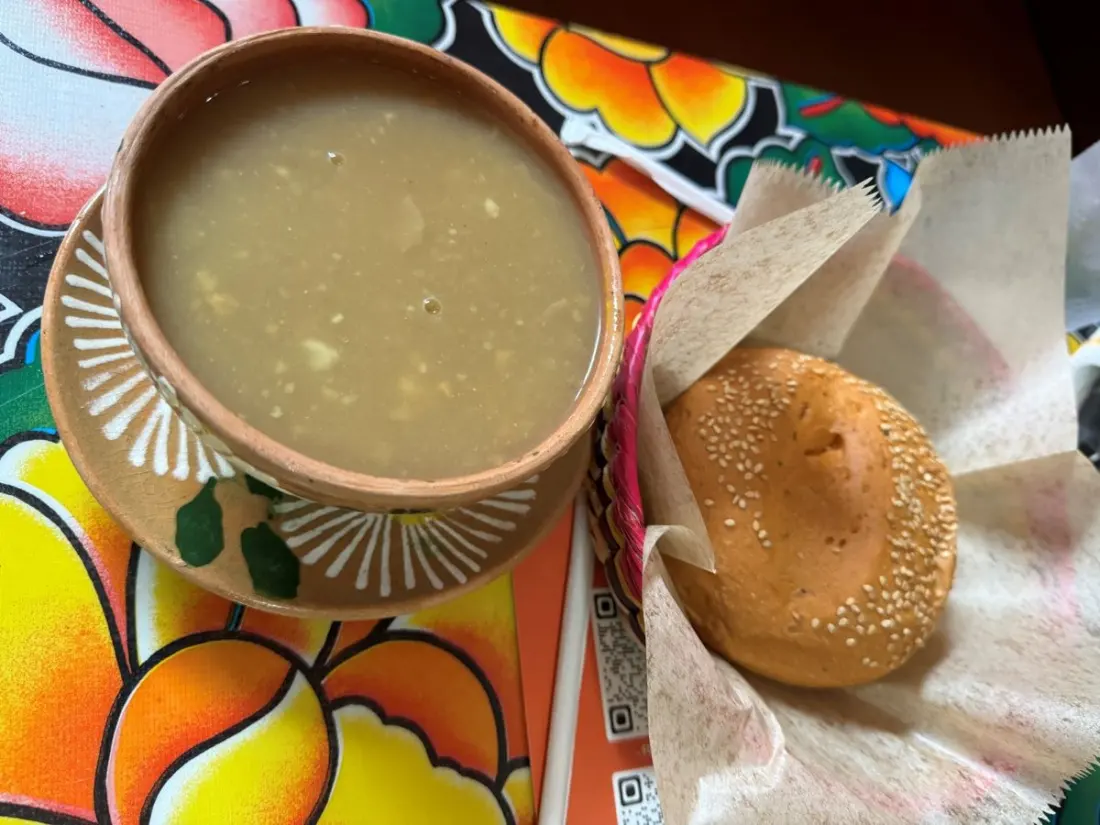
Two drinks are built for harsh climates. Tibetan po cha churns long-boiled black tea with yak butter and salt into a savoury, calorie-dense brew that doubles as hospitality — refusing a top-up can be tricky. Champurrado, Mexico's thick corn-and-chocolate atole sweetened with piloncillo and cinnamon, traces back to Mesoamerican staples and shows up at Christmas, Day of the Dead and anywhere tamales are served.
Turkey's salep is the sweetest oddity: a winter warmer made from flour ground from wild orchid tubers, whisked into hot milk and sugar and dusted with cinnamon — creamy enough to count as dessert. Rounding things out, Shunde in Guangdong serves ginger milk curd, where fresh ginger enzymes set hot sweetened milk into a spoonable pudding with no thickeners at all.
Why it matters: these drinks are cheap, deeply local experiences you can actually order. Hunt egg coffee in Hanoi's Old Quarter, salep from Istanbul street carts, champurrado at a Mexican morning market, or chocolate con queso in a Bogotá café — each one tells you more about its region than any museum plaque.