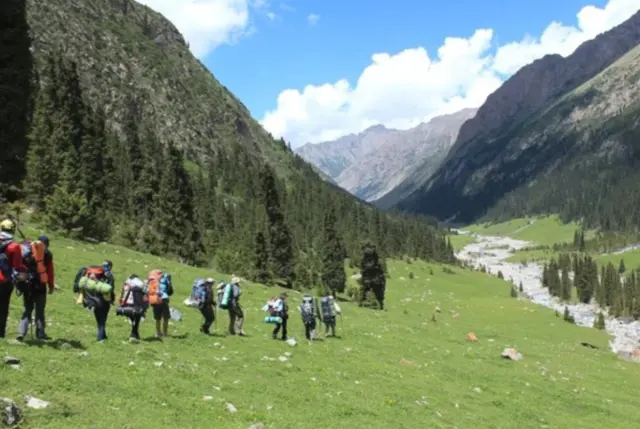
Kyrgyzstan remains one of Central Asia's most affordable mountain destinations — but how far your money goes depends almost entirely on how you travel. Independent travellers relying on public transport, hostels and local cafés can get by on roughly €30/$35 a day. Add a private room, restaurant meals and the occasional shared taxi, and you're closer to €75/$80 a day. The budget-breaker is transport: reaching remote spots like Song Kul or Kel Suu usually means hiring a private 4×4 with a driver, which gets pricey fast if you're solo.
Money basics first. The currency is the Kyrgyz som (KGS), currently around 87 to the US dollar and 96 to the euro. You won't find som outside the country, so plan to exchange cash on arrival — Bishkek has plenty of exchange offices, with good rates reported along Manas Avenue between Sierra Coffee and Chuy Avenue, and Osh has options near Kelechek Bazaar. Bring clean, undamaged €50/€100 or $50/$100 notes, as worn bills get worse rates. ATMs are common in cities and mostly take Visa; DemirBank and KICB machines also accept Mastercard. Cards work at larger urban businesses, but cash is essential in villages, markets and yurt camps.
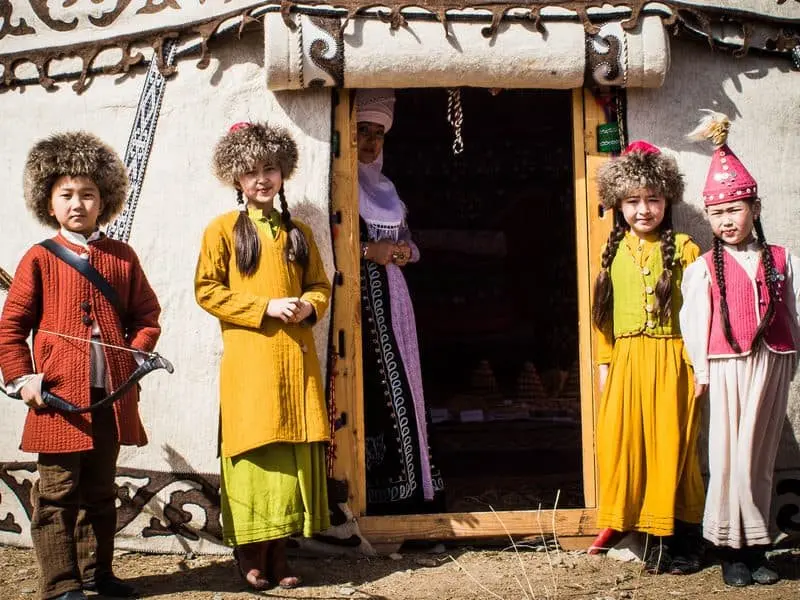
Accommodation is where Kyrgyzstan shines. Hostel dorms run about €12–18 a night, while guesthouse or homestay rooms cost €25–50, often with shared bathrooms and sometimes meals included. The signature experience is a night in a yurt camp — expect roughly €25/$30 per person with breakfast at a standard camp, more at famous spots like Song Kul. Yurts typically sleep four to six people; a private yurt for two, where available, costs around €30–35 per person. Facilities are basic: outdoor toilets, sometimes showers with an extra charge, and very thin walls — pack earplugs. Most camps operate June to September. In July and August, book ahead via Booking.com or Community Based Tourism offices rather than turning up and hoping. Camps worth a look on Issyk-Kul's southern shore include Agat (Kaji-Say), Asman Tör (Tong), Aisun Eco (Tosor) and Feel Nomad, which sits by the water with kayaking, horse riding and hiking nearby.
Tent campers have it even better: wild camping is legal almost everywhere and free, though high-altitude nights stay cold even in summer and you'll need to plan water, food and access. No gear? Rent tents, sleeping bags, stoves and poles in Bishkek (try the Trekking Union of Kyrgyzstan on Koenkozova Street or Visit Alay on Frunze Street), Karakol (Kyrgyz Life, Ecotrek, 4Rent) or Osh (Visit Alay).
One caveat for 2027 planners: inflation is running high — consumer prices were up over 11% year-on-year in late 2026 — so expect prices to creep up for the coming season. Even so, Kyrgyzstan's mix of alpine lakes, trekking routes and nomadic culture at these rates is hard to beat for adventurous travellers on a mid-range budget.