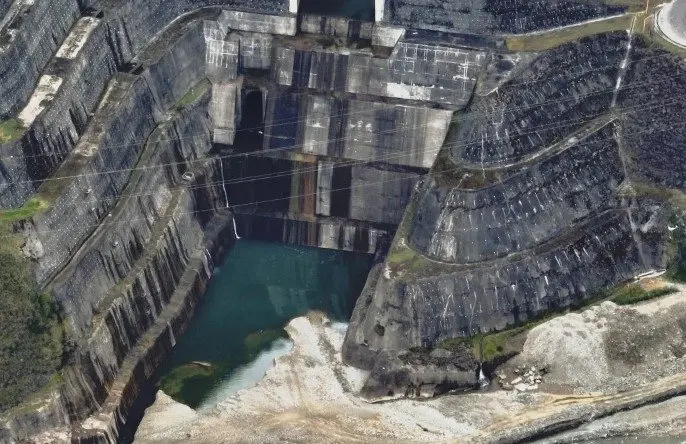
Ecuador's electricity crisis eased — briefly — over the weekend, when three hydroelectric plants downstream of the Mazar reservoir were switched off for most of Friday. After losing eight metres of water in just two weeks, the reservoir in the Andean province of Azuay actually gained about three-quarters of a metre by Saturday morning, standing at 2,120.6 metres above sea level. That's still only 5.3 metres above the critical operational threshold, and down from 2,153 in mid-August.
The catch, according to Jorge Luis Hidalgo, a hydropower expert and former director of CentroSur, is that the recovery was engineered rather than natural: the turbines were simply shut off. He calls it "small, temporary relief" and points out that the plants only stayed idle because the government cut power to major industries and large businesses — a move that saved an estimated 450 to 500 megawatts. In his words, industry is being used as the safety valve in the crisis. Those turbines will need to restart to meet demand, so the gain may be short-lived.
The underlying problem is a lack of rain. The Paute river, which feeds Mazar, is running at 35.5 cubic metres per second — less than half its optimal flow. Ecuador's biggest hydro plant, Coca Codo Sinclair in Napo province, is also hurting: the Coca river is at 139 cubic metres per second, around 60% of optimal. Unlike Mazar, Coca Codo is a run-of-the-river facility with no reservoir, so it has no buffer at all.
The forecast offers mixed news. Through November 25, light to moderate showers are expected on the eastern slope of the Andes, where most of the large hydro plants sit, while the coast and littoral region will keep getting heavy rain. For a real recovery, Hidalgo says, much more rain is needed on the Andean side.
Why should travellers care? Because Ecuador's grid is heavily dependent on hydropower, droughts translate directly into nationwide power rationing — scheduled blackouts in cities like Cuenca and Quito, disrupted restaurants, shops and traffic lights. If you're planning a trip in the coming weeks, build flexibility into your days: carry a charged power bank, check your accommodation's backup power arrangements, and expect evening outages. The situation is dynamic — if rains strengthen on the Andes' eastern slope, restrictions could ease quickly; if not, they may deepen.