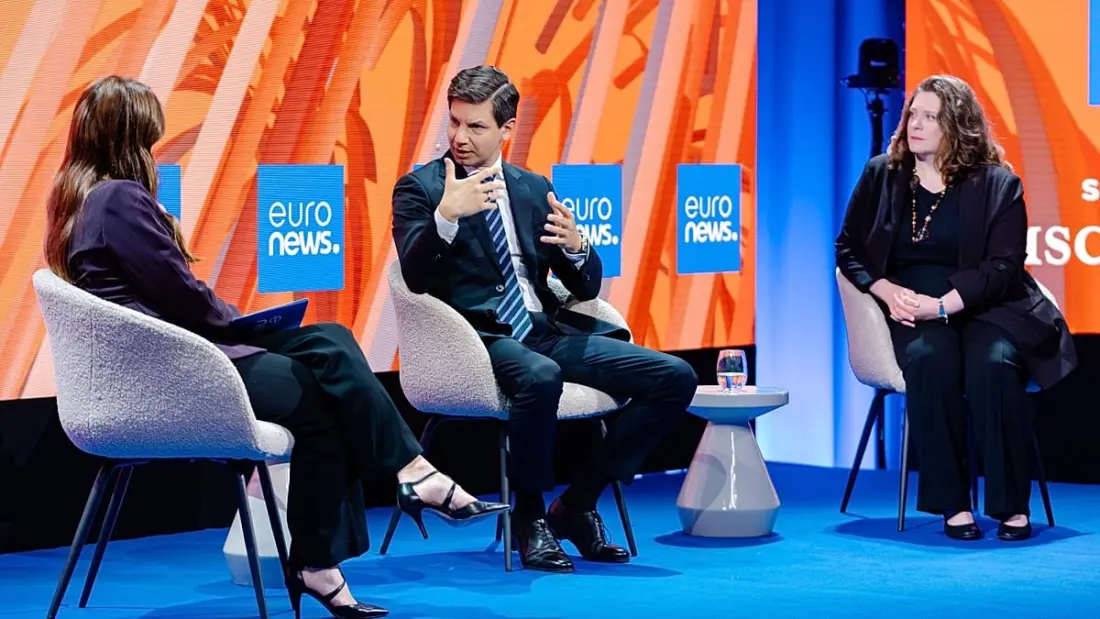
Hungary's top tourism official has a pitch: stop planning Central Europe country by country. Speaking at the Euronews Travel & Tourism Summit in Brussels, Olivér Csendes, President of the Hungarian Tourism Agency, argued that the region should be marketed and experienced as a single connected destination rather than a patchwork divided by national borders.
His case rests on geography. For someone flying in from the US or Asia, European distances feel tiny — as Csendes put it, you can cover 100 kilometres and pass through two or three Central European capitals. That makes multi-country itineraries easy in a way few other regions can match, and it chimes with the growing habit of travellers cramming several destinations into one holiday.
The Danube is his anchor idea. The river threads through multiple countries and has connected cultures for centuries, and Csendes wants it treated as an active part of the visitor experience rather than just scenery — a natural spine for cross-border routes linking capitals, river towns and landscapes.
Sandrine Buffenoir, who covers the Benelux markets for the French tourism board Atout France, backed the broader spirit of the idea. In her view, tourism is one of the main ways Europeans get to know each other — she called it "a classroom to learn about each other" — and a force for cooperation across the continent.
Two other themes came up alongside the one-destination pitch. First, data: Csendes pointed to the EU's emerging European data space for tourism as a way to manage visitor flows and, crucially, to warn travellers about dangers like wildfires or extreme weather in real time — something only possible when the right data reaches the right places. Second, nature. "There is no tourism without nature," he said, arguing the industry should actively support the resilience of the places it depends on rather than just extract value from them.
Why should a traveller care? Because if this thinking turns into real products, expect more Danube-based itineraries that string together Vienna, Bratislava, Budapest and beyond with smoother cross-border ticketing, and destinations nudging you toward less-crowded spots off the capital-city circuit. Even now, the practical advice stands on its own: Central Europe is one of the easiest places on earth to stack several countries into a single trip. Trains connect the capitals in a couple of hours each, budgets stretch further than in Western Europe, and you can mix river cruising, hiking and city breaks without ever taking a flight. Watch this space — the region's tourism boards seem to want you travelling across it, not within it.
Reporting: Euronews Travel