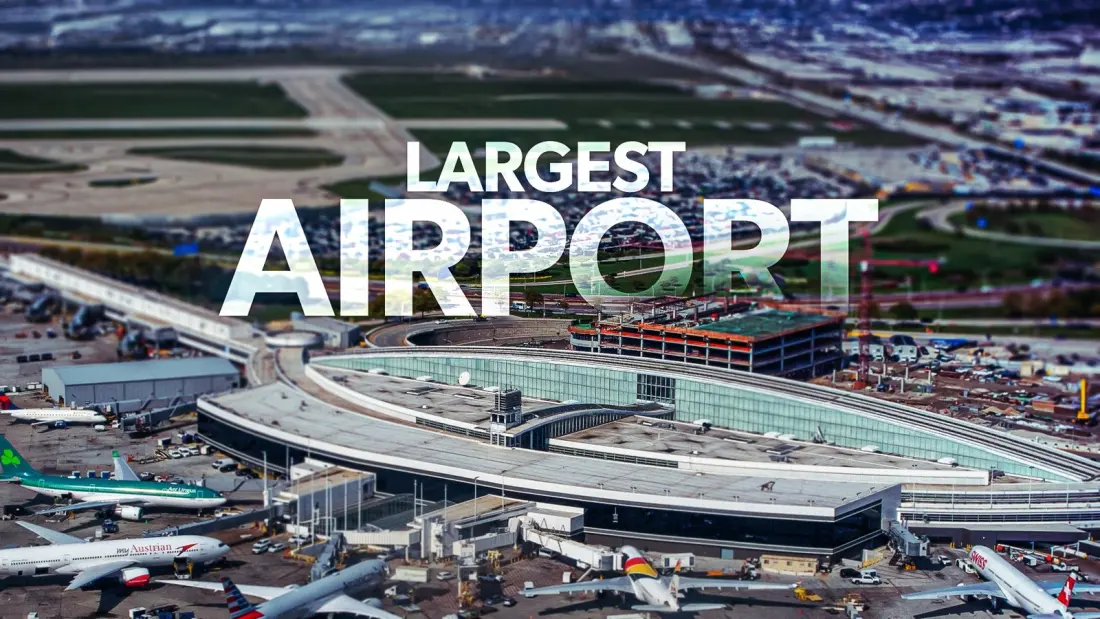
Chicago O'Hare now leads the world for passenger contact gates, with 199 active boarding gates spread across four terminal buildings, according to Chicago Department of Aviation figures. It edges out Hartsfield-Jackson Atlanta (192), Denver (172), Dallas/Fort Worth (168) and Los Angeles (161) in a ranking that counts only gates with jet bridges — those remote bus stands don't make the cut.
Why does gate count matter to you as a traveller? More contact gates generally means fewer tarmac waits, quicker boarding, and tighter minimum connection times at mega-hubs. O'Hare's total splits into Terminals 1 and 2 for United Airlines (91 gates, joined by its famous light tunnel between Concourses B and C), Terminal 3 for American Airlines (66 gates, its second-largest domestic hub), and Terminal 5 as the international gateway with 30 gates on Concourse M. A multi-billion-dollar redevelopment will replace Terminal 2 with a new O'Hare Global Terminal plus satellite concourses, so expect even more gates — and fewer waits on the taxiway — in coming years.
Atlanta is the runner-up, and its design is all about speed. Seven parallel concourses (T through F) sit along a three-mile underground loop served by the Plane Train every two minutes, letting passengers cross the entire 192-gate complex in about 15 minutes. Delta dominates Concourses A, B, C and T, while E and F handle international wide-bodies. Five parallel runways with end-around taxiways keep arrivals flowing without blocking departures.
Denver, third with 172 gates across three concourses, is the sprawler of the group at over 33,000 acres, anchored by the tented Jeppesen Terminal and an underground train. Concourse B alone has more than 70 gates dedicated to United, while Southwest runs a high-frequency operation from Concourse C. The airport is mid-way through a $1.3 billion renovation finishing in 2027, and its expansion program has already added 39 new gates — including double jetways for wide-bodies and outdoor decks. One quirk: at 5,434 feet elevation, thin summer air means longer takeoff rolls, so don't be alarmed by a little extra runway time.
Dallas/Fort Worth (168 gates) sticks to its 1970s semicircular blueprint across five concourses A-E, with the Skylink train connecting any two gates within 12 minutes airside. American Airlines rules here. New gates have been dropped in via modular construction, like the four-gate High-C expansion built offsite.
Los Angeles rounds out the list with 161 gates across nine terminals. Cramped by the coast and its neighbours, LAX grows inward — the West Gates at the Tom Bradley International Terminal added 15 contact gates reached by tunnel, and post-security connectors now link all terminals so you can transfer without reclearing security. Four big carriers (American, Delta, United and Alaska) share the airport, making it far more competitive than a typical single-carrier fortress hub.
If you're booking connections, the takeaway is simple: these five airports are built to move huge numbers of people between gates fast. Know your terminal and the transit system before you land, and a tight connection becomes far less stressful.