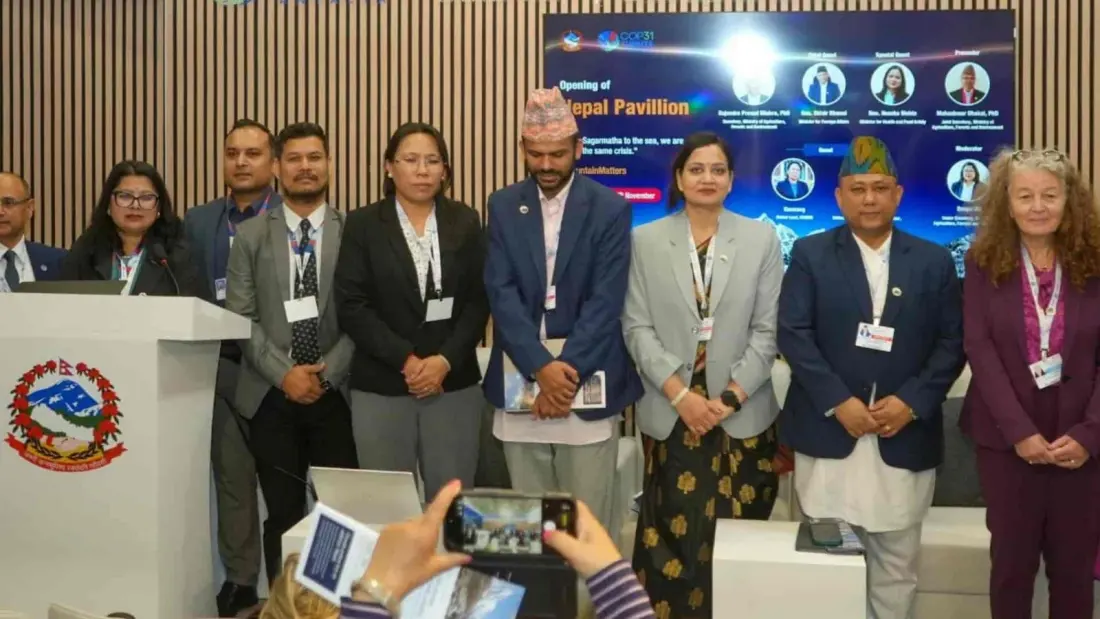
This year's climate summit in Antalya has already earned itself a grim nickname: the 'Overshoot COP'. Eleven years on from Paris, the world has warmed past the targets set there, and the countries feeling it first are the ones with mountains. That's why Nepal turned up loud, large and desperate to be heard.
Nepal had real reasons to shout. In 2025 alone it was hit by a deadly flood in the Trisuli Valley in August, disasters along the Budi Gandaki, and — just across the border — a glacial lake outburst in Bhutan. Add it up and roughly 7,000 people died, with damage across Nepal costing close to $5 billion. The country's mountain environment is visibly destabilising, and its government wanted the United Nations climate process to treat that as a global emergency, not a regional footnote.
So Nepal went big: five ministers and dozens of lawmakers flew to Turkey, alongside Bhutan, pushing a package of demands. They wanted dedicated research on how further warming will hit the Himalaya, an annual high-level dialogue on mountains, a formal work programme, and — the big ask — grant-based climate finance covering loss and damage. Kyrgyzstan tabled a similar standalone proposal on mountains and climate change.
None of it passed as a formal agenda item. UN consensus rules and the reluctance of wealthier nations to accept liability for climate damage got in the way, and back home the governing RSP party has taken flak for sending a jumbo delegation that returned with limited results. But it wasn't a total wipe-out. A broader mountain climate proposal from Nepal, Bhutan and Kyrgyzstan was partially folded into Paragraphs 31 and 32 of the draft cover decision: research, the annual dialogue and the work programme made it in. The money — loss and damage funding — did not.
That matters because everything now rides on the fine print. The mountain text still has to survive the final midnight horse-trading before COP31 closes on Friday, 20 November, and delegates from mountain countries have been warned to guard it closely. Unlike previous summits that set targets, Antalya was framed as an 'implementation COP' — which makes any surviving language about Himalayan research and dialogue more than just words.
For travellers, the stakes are easy to picture. Anyone trekking to Everest Base Camp, walking the Annapurna Circuit or crossing high passes in Bhutan is walking through the exact terrain this negotiation was about: melting glaciers, swollen meltwater lakes and rivers that now behave unpredictably in monsoon season. If the mountain agenda survives the final gavel, it should mean better science, better monitoring and eventually better-funded disaster warning systems in the ranges trekkers depend on. If it's stripped out in the closing hours, the Himalaya goes back to being an afterthought in global climate politics — until the next flood makes headlines.
Keep an eye on how COP31 actually closes. The difference between a draft and a final text, as Nepal has learned, can be everything.