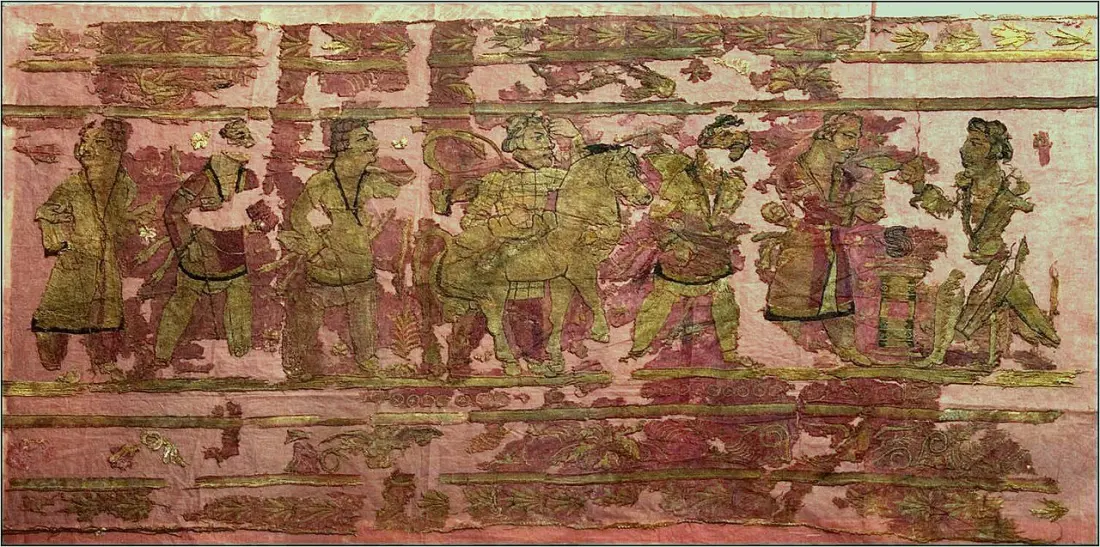
A joint Chinese-Kazakh archaeological project is underway to track down traces of the Yuezhi, an ancient people known almost entirely through Chinese historical records. The collaboration was announced by Wang Jianxin, a professor at Northwest University's Research Center for Archaeological Cooperation on the Silk Road in Xi'an, speaking at an international symposium in Astana.
The Yuezhi are a genuinely elusive bunch. Chinese texts describe the Greater Yuezhi, but no one has been able to firmly match archaeological remains to them. Wang has been chasing the mystery for 26 years. In 2000, Chinese excavations on the eastern edge of the Tianshan Mountains identified what is believed to be a major Greater Yuezhi settlement. After conflicts with the Xiongnu, part of the Yuezhi moved west into Central Asia, passing through Zhetysu toward the Amu Darya basin — a route that runs straight through modern Kazakhstan.
The new joint research focuses on two zones: the Altai area of East Kazakhstan Region and the Kazakh portion of Zhetysu. The first phase is survey work — comparing Kazakh sites with the already-studied Yuezhi-linked sites in China — with small-scale excavations possible later. Wang suspects some Yuezhi-era sites may already have been dug up in Kazakhstan without anyone realising what they were: 'excavated, but their identity was not recognized,' as he put it. Annual reports are planned, leading eventually to a monograph.
This isn't Wang's first Central Asia project. Since 1999 he has worked along the Silk Road, and in 2009 he led a Chinese team in Uzbekistan that identified the Sazagan site, with Kangju-era noble tombs, and the Rabat site, where remains possibly tied to the Yuezhi were found.
For travellers, the story is a good reason to look closer at eastern and southeastern Kazakhstan. Zhetysu — the 'seven rivers' region around modern Taldykorgan and Almaty — is stacked with Early Iron Age burial mounds, petroglyphs and later Silk Road monuments, while the Kazakh Altai offers mountain scenery plus the famous Pazyryk and Berel burial sites that have yielded astonishingly preserved Iron Age finds. Fresh research in both areas means new discoveries, museum displays and possibly accessible digs over the coming years. If you like your holidays with a side of archaeology, this is a region worth watching.