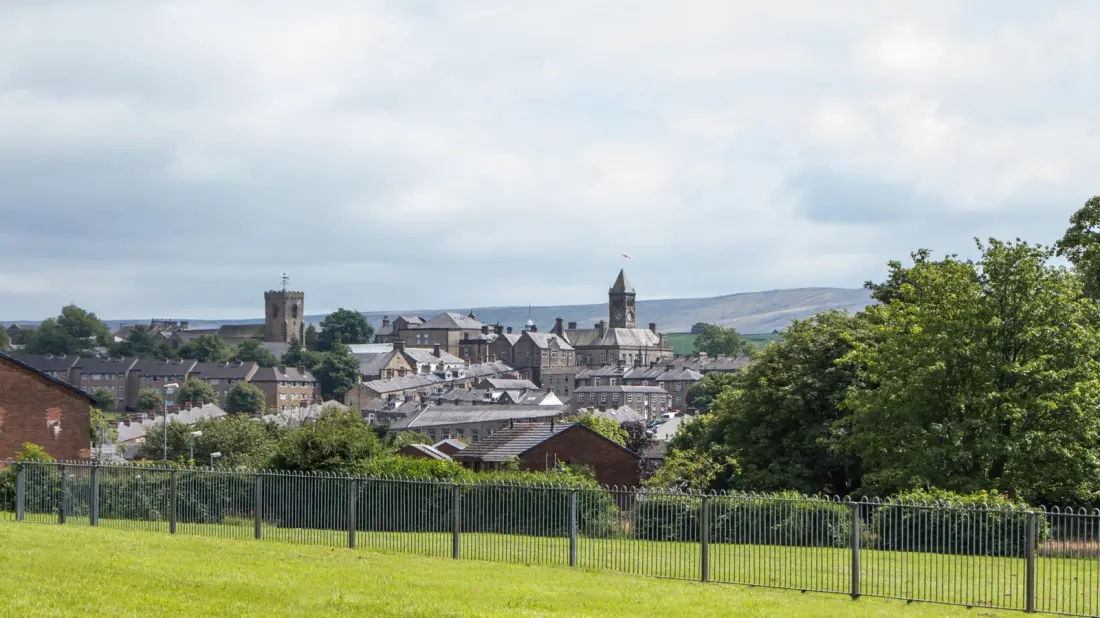
A hillside town of about 18,000 people in Lancashire, Colne has spent nearly a millennium doing one thing well: trading. Founded as a market settlement around 1120, it earned the nickname "Bonnie Colne Upon the Hill" for its setting and its Norman-era church — and today it's having a quiet moment as a food-and-drink stop between two much better-known cities.
The catalyst is Colne Market Hall. Around $6 million of recent investment has turned the covered market into a proper eating and browsing destination: indoor stalls selling books, tools, sweets and fresh produce, ringed by food vendors including Greek cooking at Agora, smash burgers at Jack's, and rolls at Panko and Sushi. The Trig Point sits inside pouring eight rotating craft beers. Outdoor trading happens Wednesdays and Saturdays, and on the second Saturday of each month an artisan market brings roughly 60 independent makers into and around the hall.
Beer is arguably Colne's real claim to fame. Unbound Brew Co. brews cask ales on site; Boyce's Barrel is a micro pub with a rotating line-up of real ales from across Britain and a landlord reviewers praise for both selection and banter. There's even a Titanic connection: local boy Wallace Hartley was the bandmaster who famously kept playing as the ship went down. You can visit his grave at Colne Cemetery, see his memorial in the town centre, or drink a pint in The Wallace Hartley, a pub set in a 1920s building a short walk from the statue.
The town itself rewards a slow wander — cobblestone streets, dozens of listed buildings, and St. Bartholomew's Parish Church, founded in 1122 and largely rebuilt in the 1500s, still holding services. Time a visit around the annual Colne Gala, with live music, food stalls and fairground rides, or the Great British Rhythm and Blues Festival each August.
Colne works well as an affordable base or a half-day detour. Leeds is 28 miles east, Blackpool's beaches 48 miles west, and Nelson — with parks, local eateries and its famous Pendle witch-trial history — is just down the road. Accommodation ranges from B&Bs to historic inns and farm stays.