
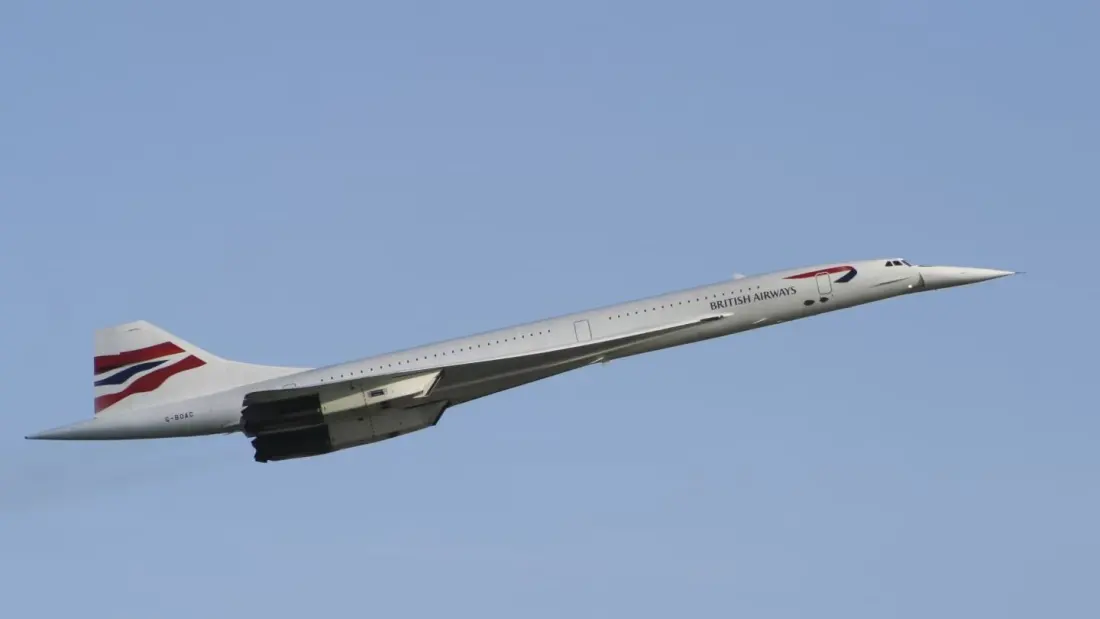
By September 2001, Concorde had been through the worst year of its life. The July 2000 crash of Air France Flight 4590 outside Paris — which killed 109 people on board and four on the ground, and was the aircraft's first fatal accident — had grounded both Air France's and British Airways' fleets. Engineers responded with Kevlar-lined fuel tanks and redesigned tyres, and by autumn 2001 the jet was ready to fly again.
Here's the coincidence that still stings: on the morning of 11 September 2001, British Airways ran its first post-accident passenger flight — a dress rehearsal with staff on board. The plane left Heathrow, looped out over the Atlantic, and landed back in London at roughly the moment the first aircraft hit the World Trade Center. Concorde had proved it was ready. The world it was built for was about to change.
Commercial service did resume on 7 November 2001, with British Airways back to New York and Air France restarting Paris–New York. Tony Blair even flew Concorde to Washington that day to meet President Bush. But the jet's business model rested on a narrow customer base: bankers, executives and celebrities willing to pay a huge premium to cross the Atlantic in about three and a half hours at twice the speed of sound. After 9/11, corporate travel budgets shrank, security fears kept people home, and premium transatlantic demand collapsed. Concorde returned, but many of its best customers never did.
To be clear, the attacks didn't kill Concorde alone. Only 20 were ever built, and maintaining such a tiny, specialised fleet was getting harder and costlier by the year. Air France struggled to make money on it even in good times; Airbus eventually judged that parts and engineering support for such a small fleet was no longer viable. On 10 April 2003, both airlines announced retirement. Air France flew its last commercial service in May 2003; British Airways' final scheduled flight arrived at Heathrow from New York on 24 October 2003.
Still, the timing mattered enormously. Without the 9/11 demand shock, British Airways — which had run Concorde profitably — might plausibly have kept it flying several more years. Instead, supersonic passenger travel ended, and more than two decades later nobody has crossed the Atlantic faster than the speed of sound on a scheduled flight since.
Why care about this now? Because it's a reminder of how aviation has quietly gone backwards. A passenger could once leave London after dinner and land in New York in time for a late lunch. Today's wi-fi, bigger screens and wireless charging are nice, but the London–New York run still takes roughly twice as long as it did on Concorde half a century ago. If you're curious about what was lost, Concorde airframes sit in museums on both sides of the Atlantic — including at Heathrow, Manchester, Bristol, the Intrepid Museum in New York, and the Smithsonian — and several are open to walk through. And with Boom Supersonic and others now chasing a supersonic comeback, the Concorde story is suddenly relevant again.
Full story via Live and Let's Fly.