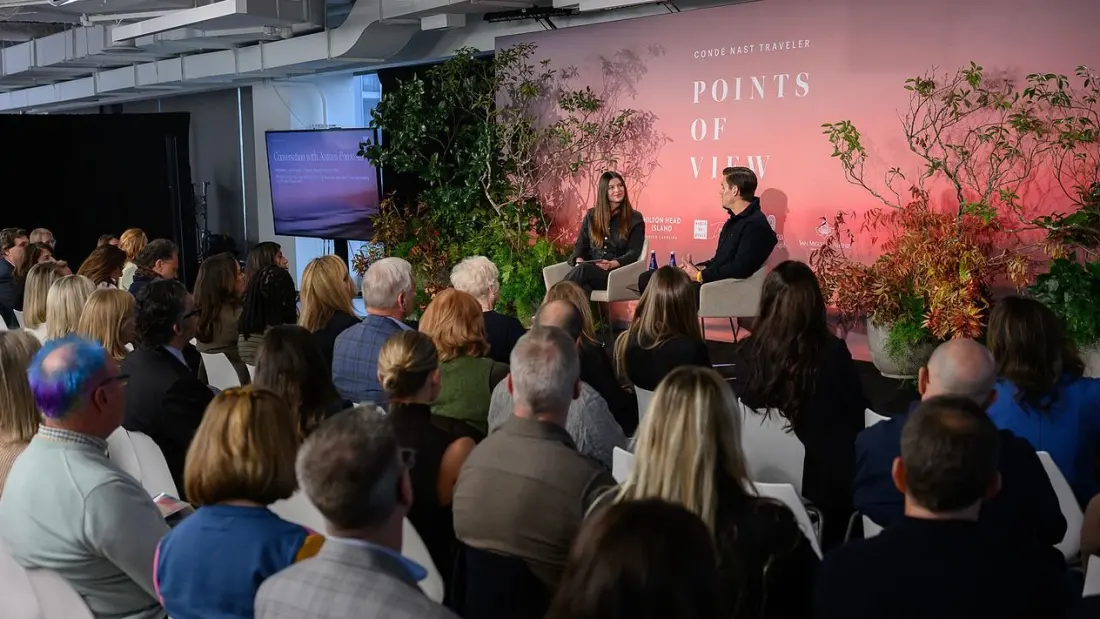
A rainy November day in New York City played host to the ninth annual Points of View Summit, where Condé Nast Traveler gathered luxury planners, trip designers and destination experts to size up where travel is heading. Behind the panels and tastings, a clear picture emerged of how holidays will look in the next couple of years.
Global editorial director Divia Thani set the scene with three big forces: American travellers powering the luxury market, a generational transfer of wealth, and a shift from buying things to buying experiences. That last theme ran through the whole day — the editors' roundtable concluded that 2027 coverage will focus on why people travel rather than simply where.
For trip inspiration, the juiciest preview was the early reveal of the Best Places to Go in 2027 list: the Albanian Alps for hiking, Memphis for a wave of museum openings, and China's Yunnan province for its cluster of new restaurants.
All-inclusives got a serious reappraisal. Hyatt Inclusive Collection's commercial SVP Eduardo Schutte noted the brand has grown from two resorts in 2013 to more than 120 today, expanding across Europe, the Middle East, Africa and Asia — driven by travellers who want a fixed price and zero planning stress.
Summer itself is being rewritten. With peak-season Mediterranean rooms hitting $4,000–6,000 a night, agents are pushing shoulder seasons instead: Amalfi in October for wine, December for Christmas markets. Delta is responding by extending seasonal routes — earlier flights to Porto, plus new service to Copenhagen, Sardinia and Prague. Meanwhile, Remote Lands founder Mei Zhang reported her clients aren't debating Europe at all; they're choosing between Japan and China, with 2025's surge in visitors to China credited to easier visas and a growing fascination with the Chinese way of life.
Two destinations made strong pitches. On Hilton Head Island, sixth-generation Gullah descendant Omolola Campbell discussed sharing South Carolina's Gullah culture on its own terms, through her shop Binya and its handwoven sweetgrass baskets and cookbooks — a model of community-led tourism. Morocco's tourism office made the case for looking past Marrakech: Atlantic surf beaches, Mediterranean coast, even skiing, with nonstop flights from North America on Royal Air Maroc, Air Canada, Air Transat, Delta and United, and high-speed rail extensions toward Marrakech and Agadir planned before the 2030 World Cup.
The closing conversation with Antoni Porowski tied it together: food as a way into people's stories, from a Big Ben clockmaker to a family cheese cave in Paris — and his own rediscovery of Polish heritage over soup in Zakopane.
Why does a summit recap matter to holidaymakers? Because these are the levers that will shape prices, routes and itineraries next year: shoulder-season Europe, easier access to China and Morocco, and all-inclusives that go beyond the beach. If your 2027 shortlist is still just Paris and Rome, the smart money is drifting elsewhere.