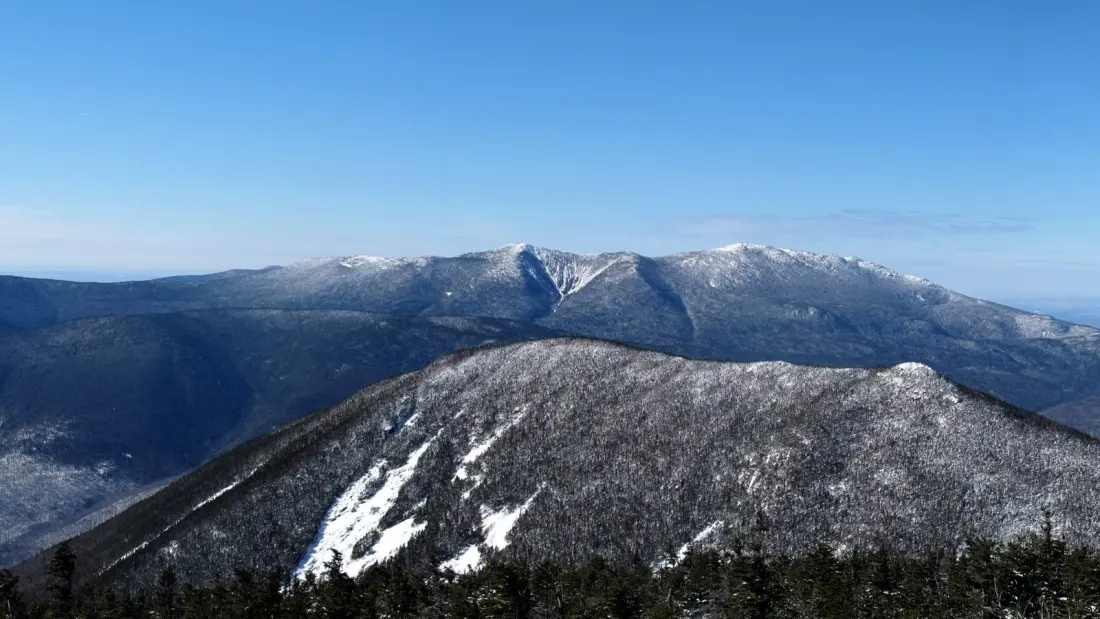
A late-season hike in New Hampshire's White Mountains turned into an overnight rescue operation when two young hikers hit deep, wet snow and freezing temperatures near the top of Mount Bond — without any winter gear.
Ethan Fena, 23, and Matthew Nakota, 21, were more than 10 miles into their hike in the Pemigewasset Wilderness when conditions deteriorated near the 4,698-foot summit. They had done some things right, carrying lights, food and water. But they had no overnight or winter equipment, and as temperatures dropped they struggled to stay warm, eventually building a makeshift shelter to try to dry out and conserve heat before calling for help.
New Hampshire Fish and Game sent conservation officers, who used ATVs to move volunteers from the Pemi Valley Search and Rescue Team into position. Rescuers reached the pair around 11:45 p.m. on Saturday, and the whole group made it back to the trailhead parking lot safely at about 2 a.m. on Sunday, November 15.
Mount Bond isn't a casual stroll under any circumstances. Most hikers take one of two long approaches: the Lincoln Woods Trail, a 19.9-mile round trip with roughly 3,959 feet of climbing (currently partially closed), or the Zealand Trail route, which runs 19 miles with up to 4,947 feet of elevation gain. Either way, you're committed to a full, demanding day — and in late autumn, that day runs out of daylight fast.
The rescue came just 11 days after another close call in the range, when two 18-year-olds got caught on Mount Washington without headlamps and found the Lakes of the Clouds AMC hut already shuttered for the season. They sheltered in the hut's emergency shelter until rescuers escorted them down.
Fish and Game's message afterwards was simple: check the daylight hours and the forecast before you go, and pack for the conditions you might meet, not the ones you hope for. In the Whites, that means treating any shoulder-season mountain day as a potential winter outing — insulating layers, a headlamp with spare batteries, extra food, and a plan for if the weather turns. These mountains sit close to Boston and other East Coast cities, which is exactly why so many people underestimate them: they look approachable on paper, but their weather behaves like the far bigger ranges to the north.
For anyone eyeing a fall or early-winter hike above treeline in New England, this story is a useful reality check. The trailhead may feel like October; the summit may already be January.