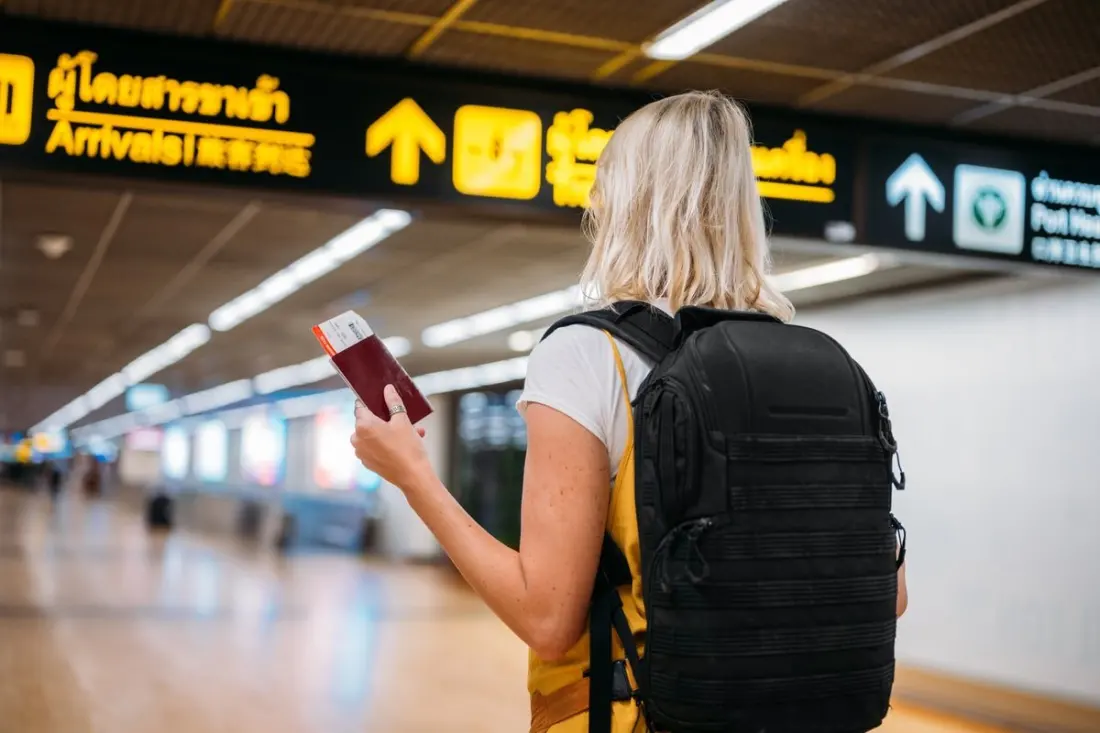
British holidaymakers could soon walk through airport border control without ever pulling out their passport. New "contactless border" technology is expected to roll out at Birmingham and East Midlands airports in the coming weeks, allowing facial recognition to do the work currently done by physically slotting a passport into an e-gate.
Here's how it works: each airline would send Border Force a gallery of passport photos of the British passengers arriving that day. When you step up to the gate, cameras match your face to that gallery. If the system recognises you, you walk straight through. If it doesn't, you'll be asked to scan your passport as usual, and if that fails, you're sent to a manned desk with a Border Force officer.
You'll still need your passport for the journey itself — check-in and boarding will be unchanged. The difference is purely at the border, where officials hope to cut queues significantly. Phil Douglas, director general of Border Force, told The Times the change could speed up border control by 25 per cent, calling it "quicker, more modern, more secure". The current system, ironically introduced to save time, is often slowed down by everyday hiccups: dirty passport chips, or travellers placing the document in the reader the wrong way.
If the Birmingham and East Midlands pilots go well, the plan is to extend the system to every e-gate in the UK by early next year. Those gates already operate at 13 airports including Heathrow, Gatwick, Manchester, Stansted, Edinburgh, Glasgow, Bristol, Luton, London City, Newcastle, Cardiff and Birmingham. For now it's expected to work for British passport holders only, though it may later extend to other nationalities whose biometric passports qualify them for e-gates.
The rollout isn't without controversy. Facial recognition has faced criticism from privacy groups, who point out there are no specific UK laws protecting citizens from misuse. Big Brother Watch reported that 80 per cent of people misidentified by facial recognition in London in 2025 were Black, and the technology has previously misidentified an innocent Sainsbury's shopper, prompting an apology. Even the government's own biometrics and surveillance camera commissioner warned in May that the system isn't foolproof. Expect that debate to run alongside the airport rollout.
Why it matters for travellers: if it works as promised, arriving home from holiday could mean a seconds-long glance at a camera instead of fumbling with a passport at a gate — especially welcome after a long-haul flight. But keep your passport handy regardless, and don't be surprised if you're occasionally routed to the fallback passport scan while the system beds in. For frequent flyers through Birmingham and East Midlands, the change will be the first and most visible.