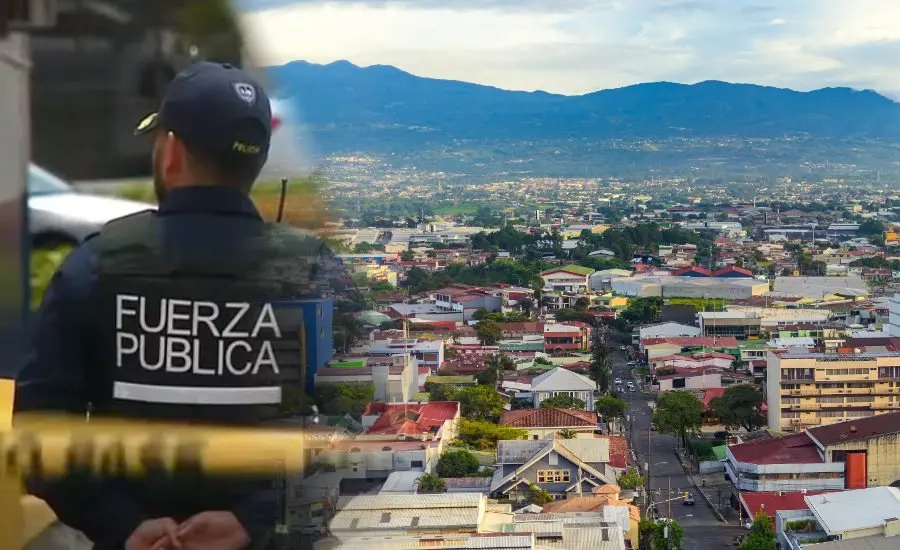
Costa Rica has spent decades marketing itself as the calm, green heart of Central America, so the crime spike of recent years caught everyone off guard. The latest numbers suggest the tide is turning. Through the end of September 2026, the country recorded 561 homicides — an average of 2.05 per day, or 14.4 per 100,000 people. That's a 14.7% drop compared with the same stretch of 2025, and well below the 16.8 per 100,000 rate the country finished with last year.
The context matters. Homicides climbed sharply to a record 907 in 2023, driven largely by drug trafficking and organised crime — pressures that chipped away at the country's reputation as one of Latin America's safest destinations. The decline started gently, with 880 killings in 2024 and 873 in 2025, but 2026 is shaping up as the biggest improvement yet. El Salvador has now overtaken Costa Rica as Central America's safest country by homicide rate, adding some competitive sting to the recovery.
Geographically, the picture is uneven. San José province still logs the most cases (150 so far this year), but that's down 30.6% year-on-year. Alajuela and Heredia posted even steeper falls — roughly half their 2025 totals. Guanacaste, home to many of the country's beach resorts, dropped 14.3%. The exceptions are Cartago, up 23.3%, and Limón on the Caribbean coast, up 9.8% — two provinces where caution is still warranted, particularly around towns affected by trafficking routes.
For holidaymakers, what does this actually mean? Costa Rica remains overwhelmingly a safe place to visit: violence is heavily concentrated in specific urban and port communities rather than in national parks, surf towns or the main tourist corridors. Still, the 2022–2023 surge was a genuine warning that the country's easy-going image couldn't be taken for granted, so this three-year decline is reassuring for anyone weighing it against other regional options. Standard city smarts — avoiding isolated areas at night in San José or Limón, keeping valuables low-key — go a long way, as they would anywhere.
If you've been putting off a trip because of headlines, the 2026 trend is a good reason to reconsider. The cloud forests of Monteverde, the volcano country around Arenal and the Pacific beaches of Guanacaste are business as usual, and the numbers suggest they'll stay that way.
Story sourced from El Salvador Info.