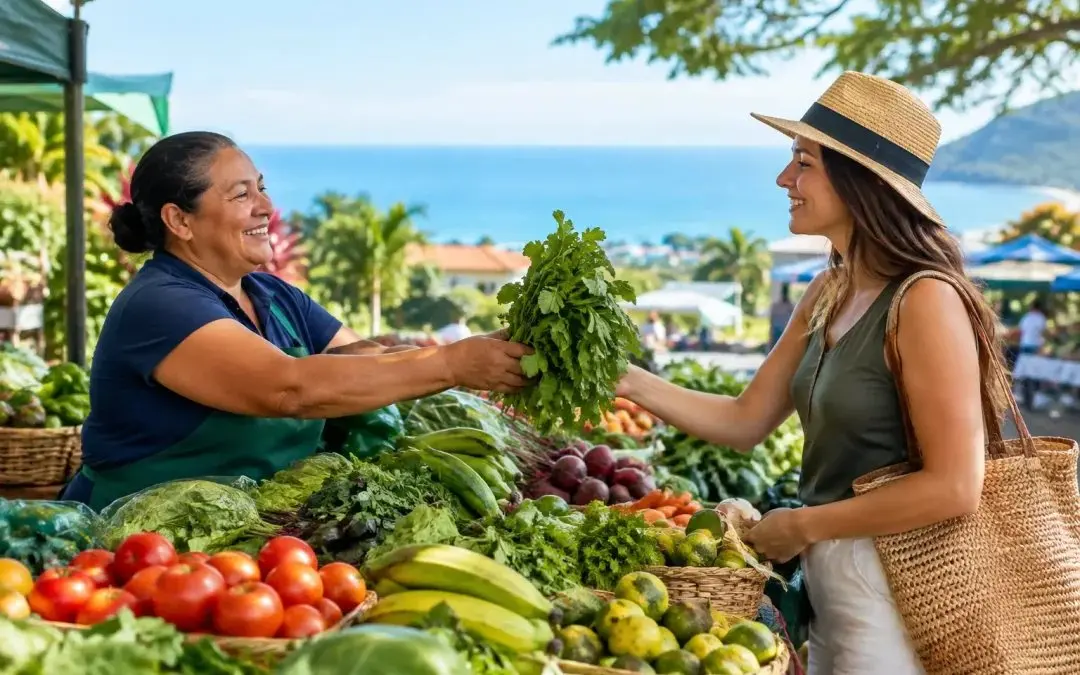
By 7 a.m. in a Costa Rican town, stalls are piled with mangoes, leafy herbs, warm tortillas and bags of fresh-roasted coffee. This is the feria del agricultor — the weekly farmers market — and it might be the single best place to understand how the country actually eats.
A feria is a working market, not a staging area for tourists. Most run once or twice a week, typically Friday afternoons, Saturdays or Sundays, outdoors or under municipal cover. Since the 1990s the format has been formally regulated: stalls are reserved for small and medium producers selling directly to shoppers, with middlemen excluded. That's why prices feel fair and the produce is often picked a day or two before it lands on the table.
Timing is a genuine strategy. Go early for the best selection of greens, berries, mushrooms and popular prepared foods — and to beat coastal heat. Arrive late morning instead and you'll find livelier conversation, flowing coffee and sometimes modest discounts on produce vendors would rather sell than haul home, though the perfect strawberries may be gone.
Shopping etiquette is refreshingly simple. Greet people — a "buenos días" goes further than fluent Spanish. Ask "¿Cuánto cuesta?" for prices, request items with "¿Me da…?", and let vendors pick their own tomatoes and herbs rather than rummaging. Haggling isn't the local custom; treat the market as a relationship, not a negotiation. Bring a reusable bag, small bills in colones, and expect vendors in bigger towns to accept digital payment.
The real fun is the unfamiliar fruit. Mamón chino looks like a hairy red pom-pom and hides sweet-tart flesh; granadilla is a fragrant pulp you eat spoon-first, seeds and all; pejibaye, a starchy orange palm fruit, is boiled and served with mayonnaise. Savoury shoppers should chase yuca, chayote, tiquizque, ayote and especially culantro coyote — a punchier cousin of cilantro that defines Costa Rican beans, rice and soups.
Where you shop shapes what you find. San José's big markets move fast and carry everything; Central Valley towns feel neighbourly and grower-led. Pacific beach markets in Tamarindo, Nosara, Santa Teresa, Dominical and Manuel Antonio mix local produce with wellness vendors and international goods — pleasant, but priced for the tourism economy. The Caribbean coast brings coconut, cacao and Afro-Caribbean flavours, while the dry north reflects cattle and grain country. Costa Rica's microclimates mean no single feria stands in for the whole country.
A few practicalities: wash everything raw in potable water and check whether tap water is drinkable at your specific rental. Pick the imperfect mango — it usually travelled less. And don't skip the food stalls: empanadas, tamales and chorreadas (fresh corn pancakes) are often the cheapest, best breakfast in town. Choose busy stalls and ask clearly about ingredients if you have dietary restrictions.
For holidaymakers, a feria morning turns breakfast into an adventure. For anyone weighing a longer stay, it doubles as honest reconnaissance on everyday costs and rhythms — useful, if incomplete, intelligence. Either way: buy the fruit, order the coffee, and let the stalls decide lunch.