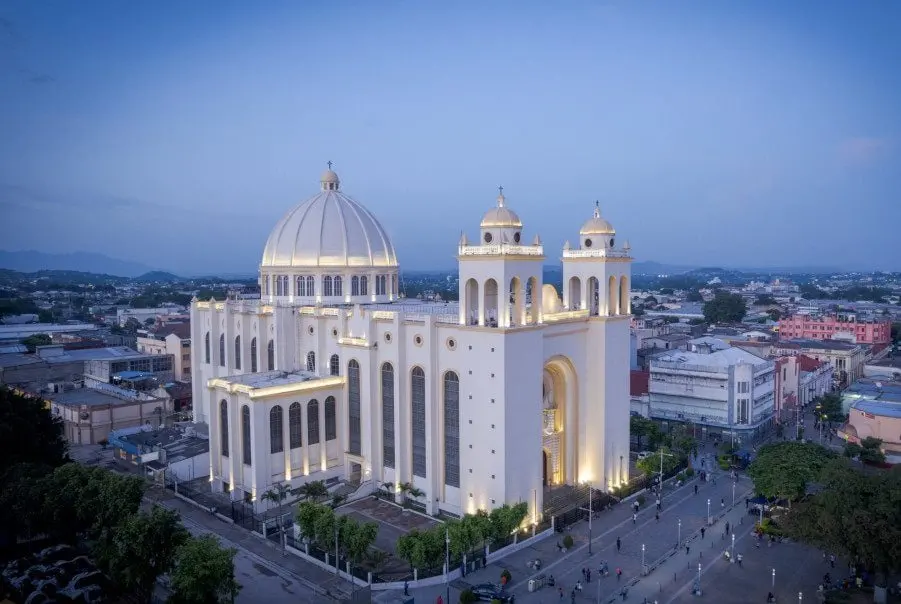
A fire, a decades-long build and a saint's tomb make the Metropolitan Cathedral of San Salvador one of Central America's most loaded religious landmarks — and an essential stop in the capital's historic centre.
The cathedral, officially the Metropolitan Cathedral of the Holy Savior, faces Plaza Gerardo Barrios in downtown San Salvador. A wooden cathedral stood here before it burned down in 1951; construction of today's building started in 1956 and dragged on through political turmoil until its consecration in 1999.
The site has seen real violence. On May 8, 1979, a demonstration outside the cathedral ended in deaths, and during El Salvador's civil war the church served as a refuge where people mourned and prayed for peace.
Its most famous figure is Saint Óscar Arnulfo Romero, Archbishop of San Salvador from 1977. He became internationally known for preaching against violence and injustice, and was assassinated on March 24, 1980 while celebrating Mass at the capital's Hospital de la Divina Providencia. The Church beatified him in 2015 and canonised him in 2018. His tomb sits in the cathedral crypt and is now one of El Salvador's top pilgrimage sites.
Architecturally, the building pairs twin towers and a central dome with a modern, light-filled interior. From 1997 to 2011, its facade carried a colourful ceramic mural by Salvadoran artist Fernando Llort celebrating national identity — removed in 2011, but still part of the cathedral's story.
Practically, entry is usually free and 30 to 60 minutes covers the sanctuary and crypt. Mornings are quieter, and it's a working church, so dress modestly and check Mass times and crypt access beforehand.
The location makes it an easy anchor for a walking tour of the Historic Center: Plaza Gerardo Barrios is directly outside, the National Palace sits beside the square, the 1917 National Theater is nearby, and the modernist El Rosario Church — famous for its rainbow stained glass — is a short walk away and a striking contrast to the cathedral's traditional design.
For travellers, this is the single best introduction to El Salvador's modern history and Catholic identity. August brings the city's festivities honouring the Divine Savior of the World, including the La Bajada ceremony marking the Transfiguration — a memorable time to see the cathedral at its most alive.