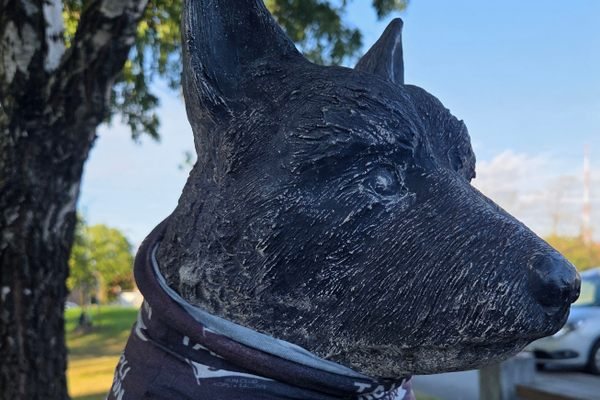
Tucked outside a modest shopping centre in northwest Tallinn stands one of the city's most touching memorials — a bronze dog with a small cat curled at his feet. It's Žorik, a stray who became the unofficial mascot of Kalamaja and the last of the neighbourhood's free-roaming harbour dogs.
Born in 2007 in Kalamaja, a former working-class fishing district that has since become one of Tallinn's trendiest quarters, Žorik lost his first owner as a puppy and spent nearly all of his fifteen years on the streets. He drifted between the harbour and the car park outside the Arsenal shopping centre, where locals fed him so generously that observers joked he ate better than some of them did. Animal control could never catch him — he'd vanish like a phantom — and residents suspected earlier mistreatment had left him wary of human contact.
What makes Žorik's story remarkable is who loved him. Russian-speaking pensioners kept him fed; Estonian hipsters later opened a café in his name. In a district where communities don't always mix, one shaggy black-and-white dog with a dark head — earning him the Russian nickname Ugaljok, or "little piece of coal" — became a genuine point of connection.
By 2020, an ageing, senile Žorik had started sleeping on tram tracks and roads. For his own safety, neighbours moved him to a foster family's countryside yard. Missing him, Kalamaja residents raised money for a statue: sculptor Kain Rezev created the bronze, funded by 61 small donations, and it was unveiled in October 2020 on the very spot where Žorik used to sit and greet passers-by. He lived a little over a year more before dying in January 2022, prompting a candlelight vigil by local fishermen and tearful flower-laying captured on national television.
For travellers, this is a five-minute detour that tells you more about Tallinn than most museums. The statue is accessible around the clock outside the Arsenal shopping centre; the Erika bus stop is steps away and the Angerja tram stop a ten-minute walk. Pair it with a wander through Kalamaja itself — colourful wooden houses, the seafront promenade at Noblessner, and hip cafés (including, of course, one named after a dog). It's the kind of low-key neighbourhood stroll that rewards slow travellers over box-tickers.
Credit: Atlas Obscura