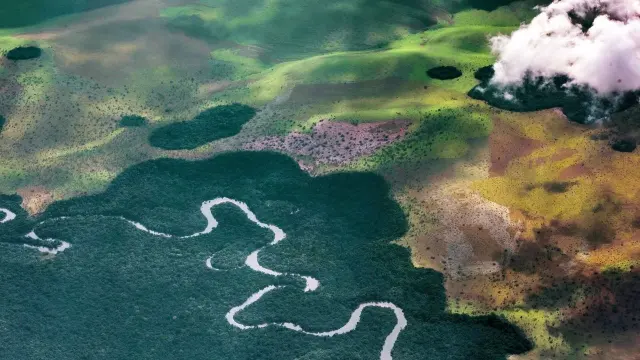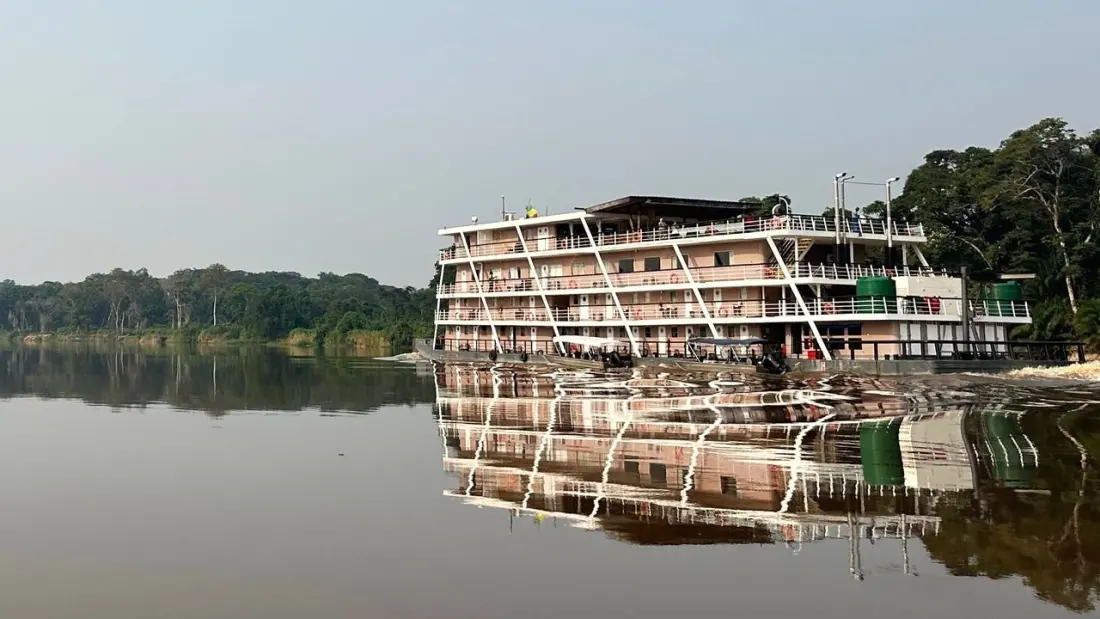
The Congo Basin rarely appears on holiday shortlists, but that is starting to change. Condé Nast Traveler's writer recently boarded the Princesse Ngalessa, a multi-level riverboat run by Ducret Expeditions and the only passenger vessel of its kind operating in the Congo Basin, sailing from Brazzaville, capital of the Republic of Congo, deep into a region the size of India that is home to around 150 ethnic groups and staggering biodiversity.
Over eight days and roughly 600 miles, the trip ran north to Ouesso on the Sangha River — a far cry from the daka-dakas, the crowded smoke-belching barges locals use between Kinshasa and Kisangani. Onboard meant air-conditioning, three meals a day and private bathrooms, with local guides handling languages and customs along the way. Villages greeted the ship as an event: it brings goods, news and support to riverside communities.
The itinerary mixes river life with rare encounters. There was an Ejengi ceremony in the village of Ngabe, where a forest spirit made of palm fronds spun and danced amid drumming and singing. Passengers watched an Indigenous Luma woman prepare twig-based medicinal paste, kayaked the flooded forests of the Alima River, and bartered with fishermen paddling up in slim wooden pirogues to sell smoked fish and fruit.
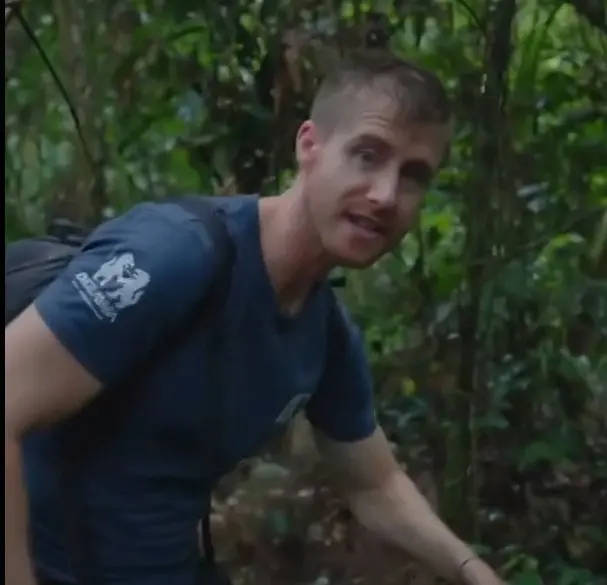
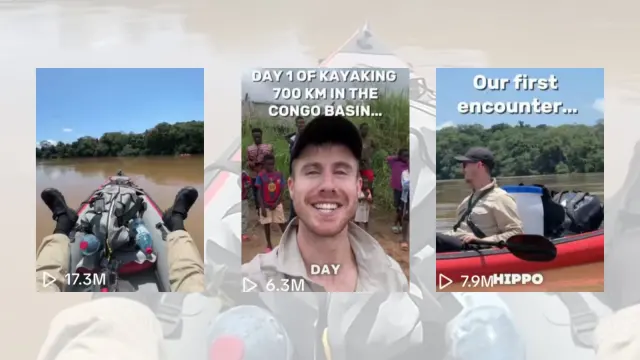
Some continued further, crossing into the Central African Republic to stay at Sangha Lodge, run by eco-tourism pioneer Rod Cassidy. From there, it's possible to join a Ba'aka hunting expedition using handmade nets, see forest elephants at Dzanga Baï, or track western lowland gorillas — experiences that, as the piece points out, are open to ordinary travellers, not just extreme athletes like Ash Dykes, whose heavily dramatised TikTok coverage of a 400-mile Sangha River paddle has drawn millions of views.
The writer's broader argument is worth hearing before you go: the Congo Basin is neither Conrad's 'heart of darkness' nor a viral stunt playground. It is a working region where communities still live largely off the forest and rivers, largely untouched by mass tourism — and visitors should arrive with humility rather than conquest in mind. Ducret Expeditions is currently the only operator running this kind of river cruise, so it is genuinely niche. But if you want one of the last great river journeys — one that supports conservation and local communities in a region chronically short of both — this is it.