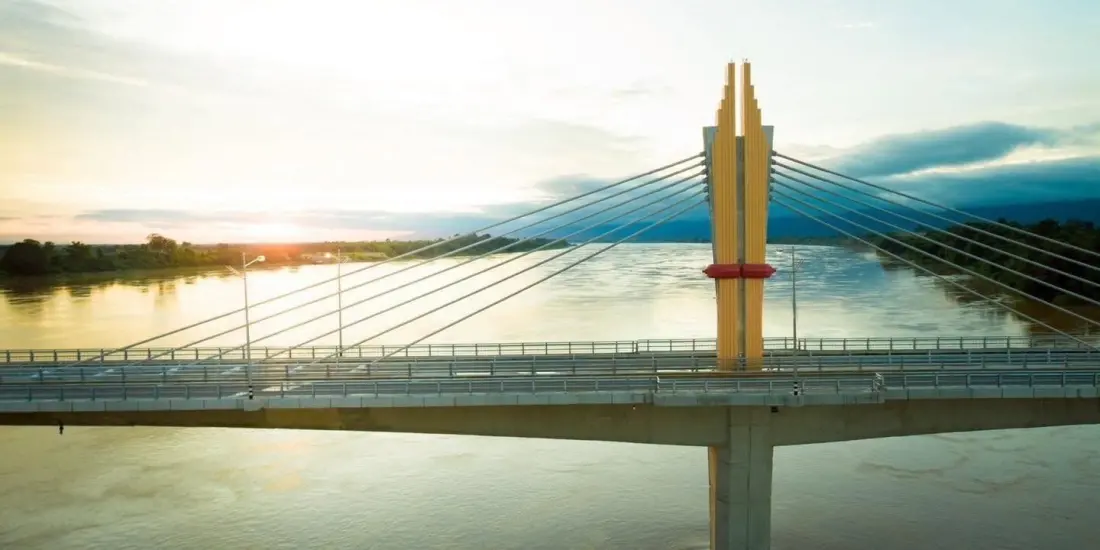
Crossing the Mekong by road between Thailand's Bueng Kan Province and Laos' Bolikhamxay Province is no longer free. From 1 December, vehicles using the Fifth Lao–Thai Friendship Bridge pay a toll of THB 50 (about USD 1.46) per crossing for standard passenger cars and small trucks, under a ministerial regulation published in Thailand's Royal Gazette on 20 November and announced by Bueng Kan District.
The fee scale rises with vehicle size. Passenger buses are charged THB 100 to 200 (USD 2.93 to 5.87) depending on seating capacity, and heavy freight trucks between THB 250 and 500 (USD 7.34 to 14.69) based on wheel count. Payment goes to authorised officials at the collection station on the bridge, and drivers get a ticket as proof.
There are a couple of useful exemptions. Scheduled international passenger buses running the Bueng Kan–Bolikhamxay route pay nothing, so if you'd rather not drive yourself across, the regular cross-border coach is the cheaper option. Officially flagged government vehicles from both countries — up to 50 Thai and 50 Lao vehicles with approved passes — are also waived.
The bridge itself is relatively new. It opened to public traffic in December 2025, making this toll rollout roughly a one-year anniversary measure for a crossing that was previously free to use. For road-trippers, the crossing connects a quieter corner of northeastern Thailand with central Laos, bypassing the busier Vientiane–Nong Khai corridor entirely.
More Mekong crossings are on the way, too. Thailand and Laos are planning a sixth bridge between Salavanh and Ubon Ratchathani, and there's a proposed crossing linking Vientiane Province with Loei Province — a sign both governments want to thicken the road network along the river and push cross-border trade beyond the existing bottleneck points.
Why should a traveller care? If you're planning a self-drive or motorbike loop between Thailand's Isan region and Laos, the Fifth Bridge is now your route of choice across this stretch of the Mekong — just budget a couple of dollars each way for the toll. It's cheap, but it's also a signal that the crossing is being treated as serious infrastructure rather than a novelty. And with regular international buses exempt, overland travellers relying on public transport won't feel any change at all. Keep an eye on the new crossings too: once the Salavanh–Ubon Ratchathani and Loei links materialise, they'll open up some of the least-travelled parts of both countries to anyone touring by road.