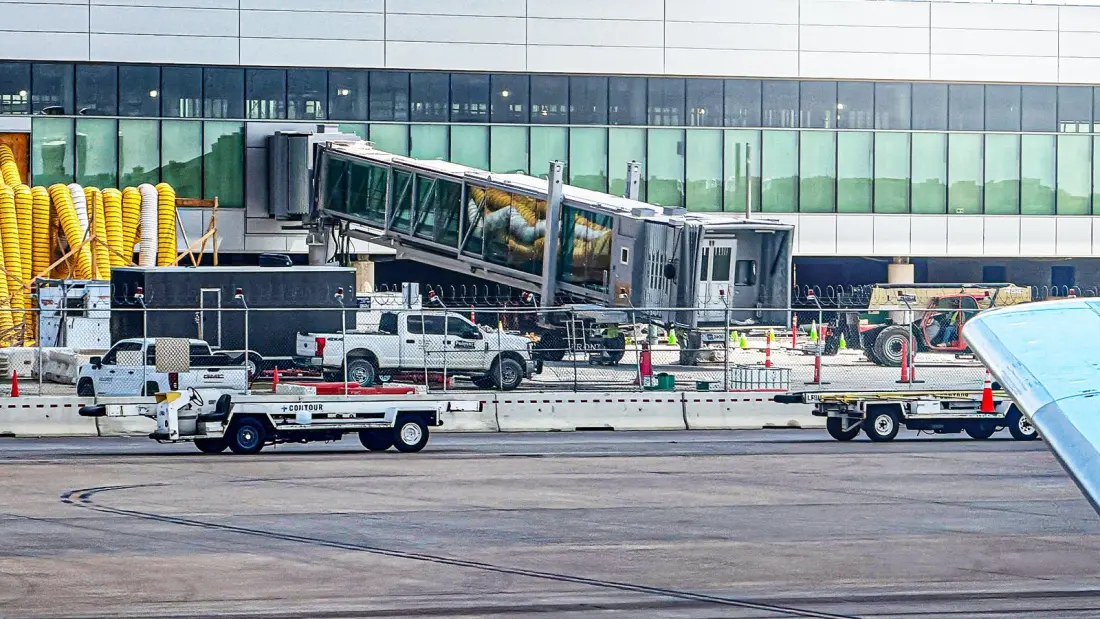
When Terminal F opens at Dallas/Fort Worth International Airport in 2027, it will mark the airport's first brand-new terminal in two decades — and possibly its most dramatic design upgrade yet. The headline feature under discussion: fully transparent, glass-walled jet bridges that let you watch planes and the airfield as you board, instead of shuffling through a windowless steel tube.
What makes this genuinely interesting is that for decades, US airports couldn't legally do it. A strict interpretation of the National Fire Protection Association's 415 standard kept transparent materials to a minimum, based on the worry that passengers would freeze or gawk at see-through walls during an evacuation. That argument collapsed once modern fire-rated laminated glazing proved it could hold up through the code's five-minute egress window, and the NFPA officially relaxed its stance in the mid-2010s.
A handful of airports had already blazed the trail. Killeen-Fort Hood in Texas installed the country's first so-called "crystal bridges" back in 2008 through a laborious variance process, followed by Amarillo. Santa Barbara pushed the case in 2011 partly because its design review board refused to accept what its architect called ugly metal tubes — passengers now get a first glimpse of the Santa Ynez Mountains on arrival. Wichita went big in 2015 with an all-glass lineup across its gates for just a 1.5% cost premium over steel. Kansas City then scaled things up with 39 glass bridges in its 2023 terminal rebuild, and Miami is converting all 126 of its boarding bridges to glass by 2028 as part of a $9 billion modernization.
The cost math is less scary than you'd think: early glass bridges ran roughly 10% above conventional ones, and later projects narrowed that gap to nearly nothing. Airport managers say travellers love them, and design teams from major cities routinely visit Wichita to study the setup.
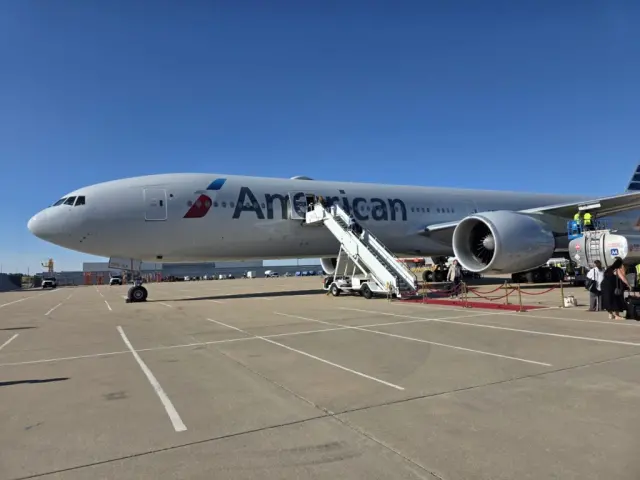
Back at DFW, Terminal F is a $1.6 billion project built with modular construction — components prefabricated off-site and moved across the airfield to cut disruption. Phase one brings a 400,000-square-foot concourse with 15 gates, a dedicated Skylink station and modernized baggage systems, all reserved for American Airlines, with the plan eventually growing to 31 gates. One open question: whether the curved glass imported from Germany for the terminal walls will extend to the jet bridges themselves. Aviation reports haven't confirmed it, but the odds look good — the manufacturer behind Miami's glass bridges, TK Airport Solutions, is based in the Fort Worth area, and the Terminal F design leans heavily on glass throughout.
Why should travellers care? Because boarding is the least pleasant ten minutes of most flights, and natural light changes that. If you've connected through Kansas City or flown out of Wichita, you've seen the difference. From 2027, American Airlines passengers at DFW — one of the busiest hubs in the world — may get the same treatment at serious scale. Even if the jetway question stays unresolved until an official supplier announcement, Terminal F signals where US airport design is heading: lighter, brighter and far less claustrophobic.