
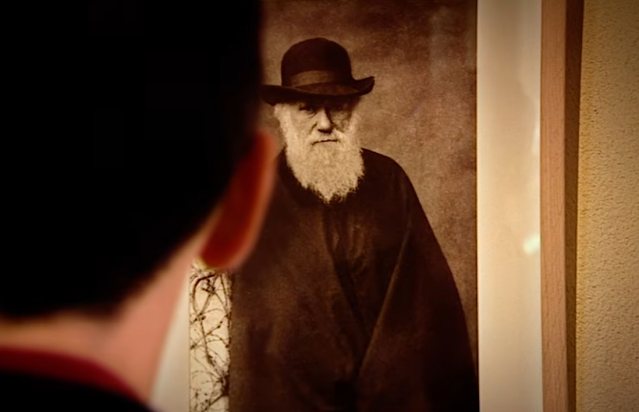
Charles Darwin spent his whole career tiptoeing. When On the Origin of Species appeared in 1859, he was careful to leave space for a creator at the very start of life — the moment a single first cell came into being. It was a strategic concession, and it worked well enough to keep the controversy within survivable limits.
But privately, Darwin kept thinking. In a later letter to his friend and fellow botanist Joseph Hooker, he dropped the divine framing entirely and speculated about how life's first cell might have arisen through chemistry alone. Scientists now sometimes describe this line of thinking as a bridge from evolutionary biology towards what you might call evolutionary chemistry — the idea that the origin of life itself can be explained without invoking a designer at all.
Why the silence in public? Darwin had watched the backlash to Origin firsthand and knew exactly how much further trouble a full rejection of creationism would have invited. The judgment call seems to have been deliberate: publish enough to change science, hold back enough to keep working. A recent BBC Science video explores this shift, arguing his final position amounts to a quiet but clear rejection of creationism.
For travellers, this is a reminder that some of the most rewarding trips are built around a single idea. Down House in Kent, Darwin's home for forty years, is where all of this happened — the sandwalk where he paced out his theories, the study where Origin was written. Pair it with Cambridge, where he studied, or Shrewsbury, his birthplace, and you have a proper Darwin itinerary across England. His family story runs deep too: the Darwins and Wedgwoods were a dynasty of scientists, thinkers and industrialists spanning generations before and after him.
Whether you're a science-minded traveller or just curious about how one man reshaped how we see ourselves, following Darwin's trail offers a genuinely different way to see southern England.