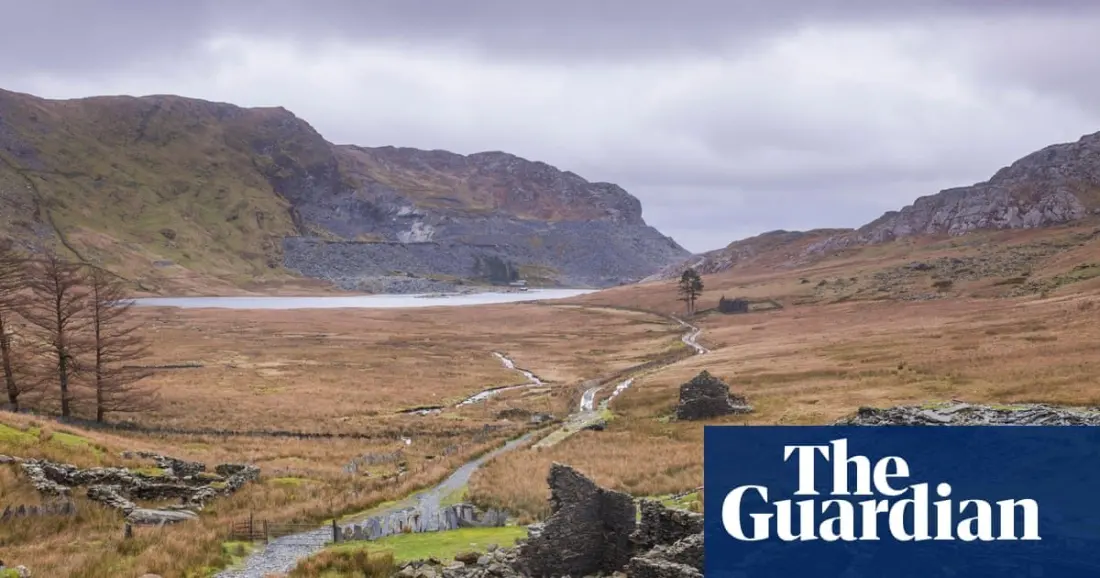
An abandoned slate quarry probably isn't the first thing you'd plan a hiking trip around, but the Llwybr Llechi Eryri — the Snowdonia Slate Trail — makes a strong case. This 83-mile loop through Eryri (Snowdonia) national park links derelict quarry workings with some of the best mountain and riverside walking in Britain, running from Bangor to Bethesda.
A writer for The Guardian walked three days of the route, from Llanberis to Betws-y-Coed via Beddgelert and Llan Ffestiniog, and the highlights tell you a lot about what makes this trail different. Two hours in, near the village of Y Fron, the path delivers you to the rim of a lake-filled crater at the old Dorothea quarry — a haunting complex of hand-built stone towers, tunnels and flooded chasms slowly being reclaimed by ash, birch and oak. Industrial slate production here kicked off in the 1820s and peaked in the 1870s; the site even housed the last Cornish beam engine ever built, pumping water from 500ft below.
Day two follows the River Glaslyn towards Beddgelert before climbing into Cwmorthin quarry, once grimly nicknamed "the slaughterhouse" by locals for its fatal accident record. It took ten tons of quarried stone to yield one ton of sellable slate, and the spoil heaps still dominate the valley. After a refuel at Burrito Blasus cafe in Blaenau Ffestiniog, the writer bedded down at Y Pengwern, a community-owned pub with basic rooms and a warm bar.
The final stretch is the wildest. A trail beside the River Cynfal runs through a mossy gorge of rushing water and ancient oaks — one midstream rock tower is supposedly the "pulpit" of Huw Llwyd, a magician of local legend. Higher up, on empty bog and crag, you pass an abandoned cottage where a jacket still hangs behind the door, a leftover from the era when striking quarrymen emigrated en masse to America. The route also drops past Rhiwbach quarry, where isolated miners lived in barracks that still stand, and the church of St Tudclud near Cwm Penmachno, home to inscribed stones including one thought to mark the grave of Carausius, the Roman commander who declared himself emperor of Britain in AD286.
What's striking is the solitude: on the third day the walker saw no one, despite Yr Wyddfa (Snowdon) and its crowds sitting less than ten miles away. For hikers who want Wales's mountain drama without the queue for the summit train, this is the alternative.
If you'd rather not navigate it yourself, Walkers' Britain & Europe runs it as a seven-day self-guided trip with luggage transfers, app-based navigation, breakfast and an emergency hotline from £890 per person, running daily from April to October.