One hiker's twelfth day walking the John Muir Trail — a 211-mile route through California's Sierra Nevada — makes a good case that the trail's drama isn't just in the passes. Between sunrise and twilight, this northbound walker descended 2,600 feet, regained nearly all of it, and nearly walked past the day's strangest landmark without noticing.
The morning began at 5:30 a.m. with a soggy tent and a two-hour turnaround, then dropped straight into the Golden Staircase — a famously relentless series of short switchbacks plunging down toward the Palisade Creek valley. Going down made the hiker's ears pop; the poor souls climbing up, he noted, looked genuinely demoralised. Once the trail levelled out, it became the smoothest, fastest stretch of the whole trip: seven easy miles along the river, past lizards, waterfalls and a deer, all the way to the Middle Fork Kings River junction.
That junction served as a rest stop and laundry day. There he finished a course of antibiotics (a hospital-treated infection earlier in the hike, now about 95% resolved), filtered water from the fast-flowing river, and washed socks and bandanas — briefly losing one liner, then finding it abandoned on the trail, already wearing holes at the toes.
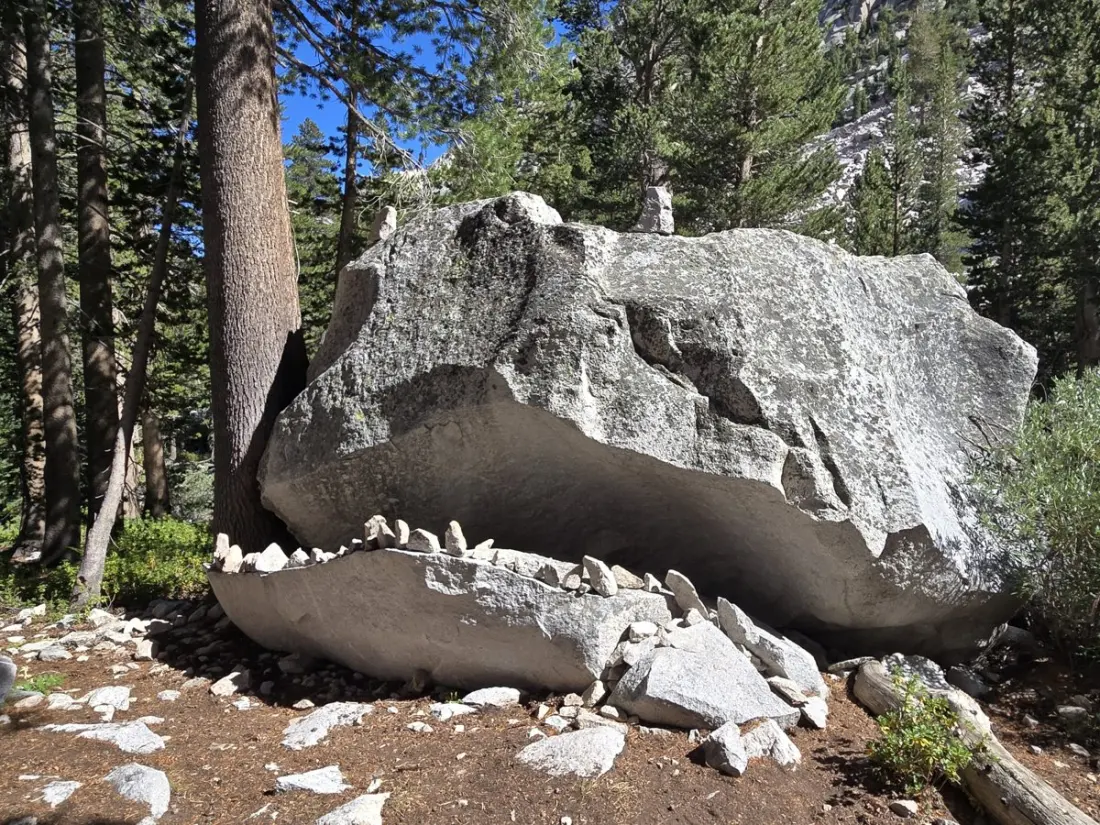
From the junction, the climbing resumed: 8,000 feet, the lowest point of his northbound route so far, with John Muir Pass almost 4,000 feet higher ahead. He aimed to bank most of that gain before camp. Just past the Bishop Pass turnoff, at a stream bridge, he stopped to photograph what turned out to be an iconic spot: a rock face eroded into a giant ogre's visage, complete with a gaping mouth where hikers have wedged rows of small triangular stones as teeth. A French hiker asked him to shoot a photo lying between the 'teeth' for his girlfriend, who'd posed there years earlier — and of course the favour was returned.
Camp wasn't straightforward. A tempting meadow was vetoed after he lifted a sitting stone and found toilet paper underneath, so he pushed on through thorny scrub and scraggly trees. Polling descending hikers about site availability produced wildly conflicting answers — one, six, five, possibly fifteen — proving, he concluded, that humans are hopeless witnesses. Eventually he found space for a fourth tent beside a trio playing cards, texted his wife via Garmin in the hope of a room at the Muir Trail Ranch in two days' time, and turned in at twilight, feet filthy and dreaming of a shower.
For anyone eyeing the JMT, this leg is a useful snapshot of what the trail actually feels like: brutal switchbacks offset by cruisy valleys, rinse-and-refill rituals at river junctions, fire restrictions above 10,000 feet, and campsites scarce enough that word-of-mouth scouting matters. It's the kind of day-to-day detail guidebooks skip — including the reminder to check beneath every rock before choosing your perfect pitch.