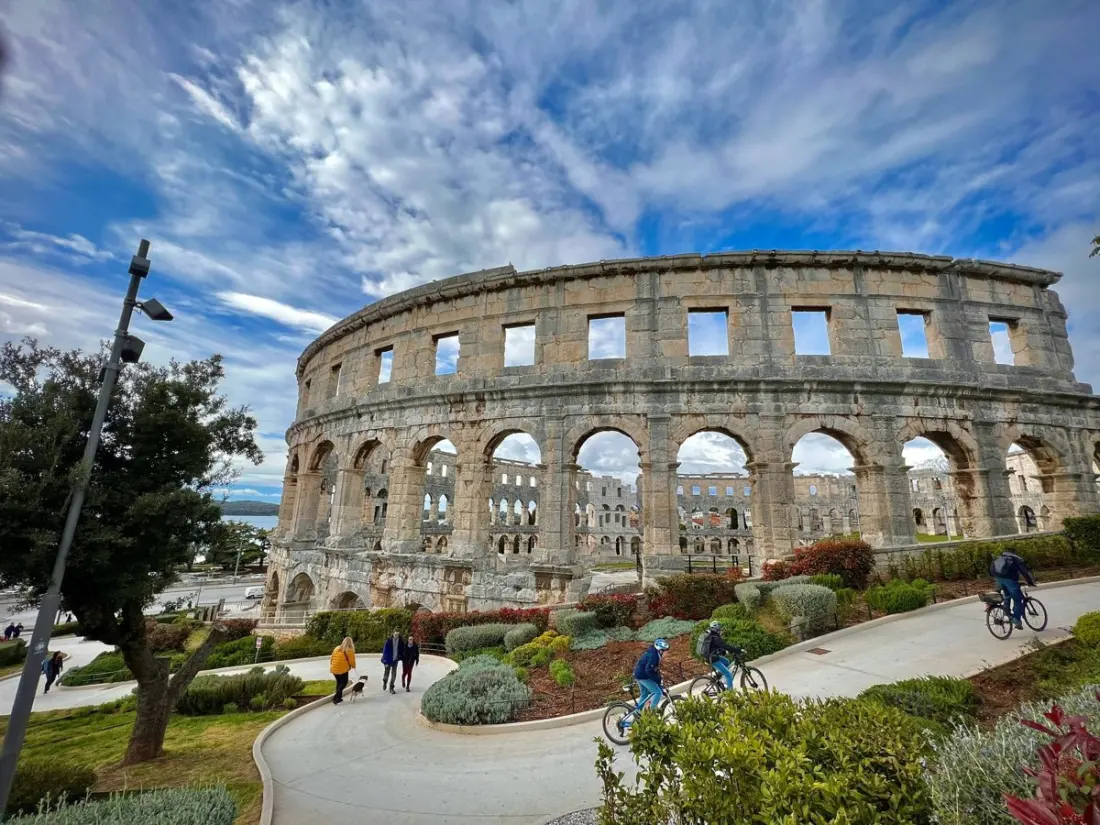
Istria's biggest city has quietly out-performed the region when it comes to getting around. Pula topped the Friendly City Index, a survey of 62 cities across 11 Central and Eastern European countries run by Syno International on Bolt's initiative, with roughly 60% of residents reaching their everyday destinations — work, school, shops, doctors — within 15 minutes.
The numbers elsewhere in Croatia make that result look even stronger. Zagreb, the capital, landed near the bottom of the whole ranking in 50th place, with just 18% of residents hitting the 15-minute mark. Zadar, last year's regional leader, slipped to ninth. Split and Osijek tied around 50%, while Rijeka managed 38% and Dubrovnik 23%. At the very foot of the table sat Bucharest, where only 6% of people can reach most daily errands in a quarter of an hour — meaning Pula's share is ten times higher.
Bolt's own ride data backs up the survey. Even during a packed summer season, when the Roman amphitheatre (the Pula Arena) hosts major concerts and hundreds of thousands of visitors pour in, the average ride in Pula lasted just 11 minutes, and nearly 80% finished inside 15 minutes. Part of the credit goes to urban design: the city favours roundabouts over traffic lights at many key junctions, keeping traffic moving without long waits.
For travellers, this isn't just a stat — it changes what a stay in Pula feels like. You can base yourself in the old town and walk or take a short ride to beaches, Roman ruins, cafes and the harbour without budgeting much time for transport at all. In peak July and August, when many Adriatic hotspots gridlock, Pula stays remarkably fluid. That makes it a good pick for visitors who want a city-plus-beach holiday without the stress of a bigger, car-choked destination.
The broader takeaway from the index is that shorter commutes, decent cycling infrastructure and close-by green space tend to go together — and cities built on that pattern are simply more pleasant to visit as well as to live in.
Reported by Total Croatia.