Ask most people where America's deepest limestone cave lies and they'd guess Utah's canyon country or Arizona's karst country. The real answer is far less obvious: a muddy, near-freezing fissure called Tears of the Turtle Cave, buried beneath the Bob Marshall Wilderness in northwestern Montana.
The numbers are genuinely staggering. First discovered in 2006 by cavers Hans Bodenhamer and Jason Ballensky, the cave wasn't properly measured until 2014, when a team spent nine days squeezing through chimneys and crevices to establish a depth of 1,629 feet — enough to steal the crown from Lechuguilla Cave in New Mexico's Carlsbad Caverns National Park, which bottoms out at 1,604 feet across more than 145 surveyed miles. Later expeditions pushed Tears of the Turtle's depth to 2,477 feet, and according to Ballensky, a 2026 mission finally reached the cave's true end.
This is no shimmering show cave. Explorers describe a long, mud-coated crack in the earth with passages so tight the rock presses against their chests, plus obstacles like the grimly nicknamed "slough of despond" — a 100-foot crawl through mud. Temperatures sit around 39°F, meaning even a minor delay underground could turn fatal. Getting there is its own ordeal: a 22-mile hike into a wilderness complex of more than 1.5 million acres, with pack mules hauling gear. On one trip, mules fell into a ravine and two died — a reminder that this is expedition territory, not a tour.
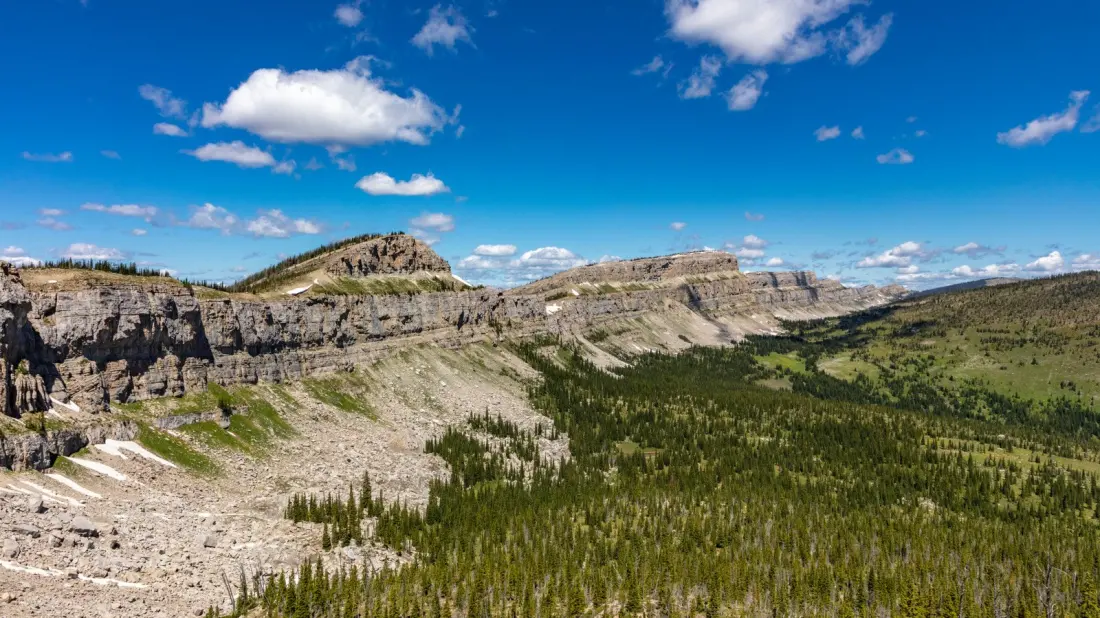
The Bob Marshall Wilderness is worth knowing about beyond this single cave. It holds over 80 known caves — nearly all of Montana's — formed by water slowly dissolving the limestone bedrock. It's also home to Bobsled Cave, the second deepest in the country at 1,842 feet, plus the Chinese Wall, a dramatic limestone cliff running through unspoiled backcountry.
Ordinary travellers can't visit Tears of the Turtle — access is closed to the public, and rightly so. But cave enthusiasts have a legitimate way in: the National Speleological Society's Caves of Montana Project, which coordinates surveying work around Turtlehead Mountain. It's real caving, not tourism, and it demands serious technical skill.
For everyone else, Montana offers friendlier underground options. Lewis and Clark Caverns State Park showcases the state's limestone geology with guided tours, camping and trails, while Carlsbad Cavern in New Mexico — accessible on guided tours — has the largest cave chamber in North America open to visitors.
Who should care about this story? Anyone drawn to the edges of the map. The "Bob Marshall," as Montanans call it, is one of the wildest tracts in the Lower 48 — no roads, no lodges, just grizzly country and big skies — and this cave adds a subterranean layer to its mystique. Most of us will settle for admiring Tears of the Turtle from a safe distance. But knowing the country's deepest limestone void sits under a Montana wilderness, not a desert park, is exactly the kind of fact that reshapes a road trip wishlist.
Story via Islands.