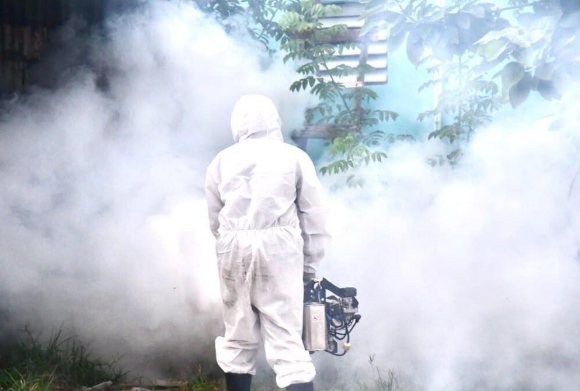
The Dominican Republic's Ministry of Public Health has ramped up dengue prevention across the country, with the heaviest push in La Altagracia — the province that includes Punta Cana, the country's biggest tourist hub.
The numbers, from the ministry's week 40 epidemiological bulletin, put 2026's total so far at 415 confirmed cases, with 15 added in the latest week. La Altagracia leads the count with 131 cases, ahead of La Romana (37) and Puerto Plata (33) — all three are areas travellers actually visit: Punta Cana's resorts, the La Romana and Bayahibe coast, and the north-coast beach towns.
On the ground in La Altagracia, health teams have been fumigating and running community interventions in Higüey and Verón-Bávaro, reaching 342 homes and 1,242 people. Door-to-door crews inspected water tanks, cleared 96 mosquito breeding sites, and handed out larvicide, chlorine, tank covers and mosquito nets. Nationwide, the response includes targeted fumigation, epidemiological surveillance, active case-finding, follow-up of confirmed patients, and extra training for healthcare staff, coordinated with schools, community groups and tourism businesses.
Officials stress that despite the headline numbers, the Dominican Republic currently has one of the lowest dengue incidence rates in the region, at 4.89 cases per 100,000 inhabitants.
Why should holidaymakers care? Dengue is spread by day-biting Aedes mosquitoes, which breed in standing water — a real consideration in the Caribbean's warm months. The practical takeaways are simple: pack a good DEET or picaridin repellent and use it during the day, not just at dusk; favour air-conditioned or screened rooms; and avoid leaving water sitting around your accommodation. If you develop a fever during or shortly after a trip, see a doctor rather than self-medicating — and take particular care if warning signs appear, such as severe abdominal pain, persistent vomiting, bleeding, drowsiness or unusual irritability. Aspirin and ibuprofen are best avoided for suspected dengue because of bleeding risk.
There's also some reassurance in the story itself: the fact that fumigation teams are working resort-adjacent areas like Verón-Bávaro, and that the ministry is coordinating directly with tourism businesses, shows the authorities treat visitor zones as a priority. None of this suggests travellers should change plans — dengue is a present-but-managed risk in much of the Caribbean — but it's a good prompt to add repellent to the beach bag and keep an eye on health updates before you fly.
Story first reported by Dominican Today.