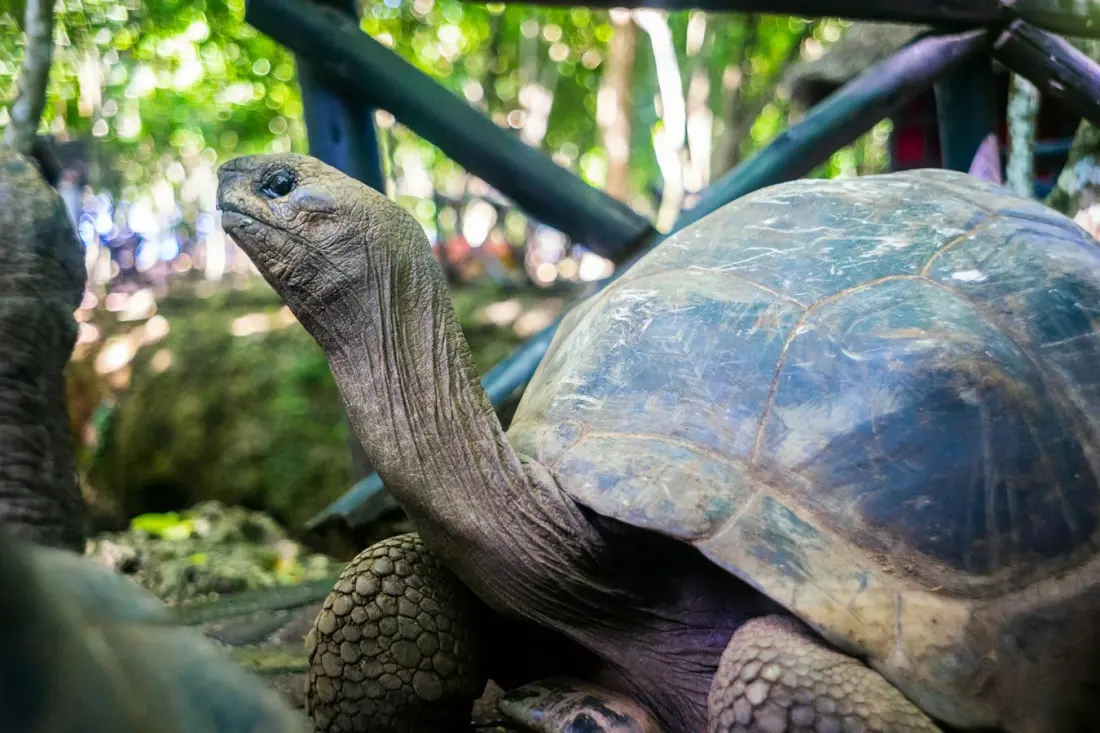
A single tortoise is credited with fathering up to 900 offspring — and in doing so, pulling his species back from extinction. Diego, an Española giant tortoise from Ecuador's Galápagos Islands, is one of conservation's most unlikely success stories.
Diego's story starts with an abduction. In the 1930s, as tortoise populations across the Galápagos were being wiped out by hunting and exploitation, he was taken from Española Island and ended up at the San Diego Zoo in California, where he spent more than 40 years.
Back home, things were dire. By the 1960s, researchers surveying Española found just 14 surviving tortoises — 12 females and two males — with no sign the population could recover on its own. Conservationists set up a captive breeding programme on Santa Cruz Island, but it needed more breeding males.
That's where Diego came in. Genetic testing in 1976 revealed he was an Española tortoise, and he was flown back to the Galápagos in 1977 to join the effort. Teamed with two other males and 12 females, he turned out to be remarkably prolific: research suggests he fathered nearly 60% of the captive-bred hatchlings, an estimated 800 to 900 offspring in total.
The programme ran for over five decades. Young tortoises were raised in captivity and released onto Española, and by the 1990s they were breeding in the wild on their own. In total, nearly 1,900 tortoises were reintroduced, and by the time the original breeding adults went home, more than 2,300 were living on the island.
Diego's own homecoming came in June 2020, after more than 80 years away, when he was released back onto Española alongside the other 14 original breeding tortoises.
Breeding alone didn't save the species. Hunting and egg collection were banned, and conservationists tackled one of the island's biggest problems: feral goats, introduced centuries earlier, had stripped the vegetation tortoises depend on. Removing them allowed native plants — and the tortoises — to recover.
Today the Española population numbers in the thousands and breeds naturally, though the species is still listed as Critically Endangered and needs ongoing protection.
For travellers, this is exactly why the Galápagos feels so special. Many of the giant tortoises you'll see wandering the islands are descendants of Diego, living proof of what decades of patient, well-funded conservation can achieve. Visiting supports the parks and programmes that keep it that way.