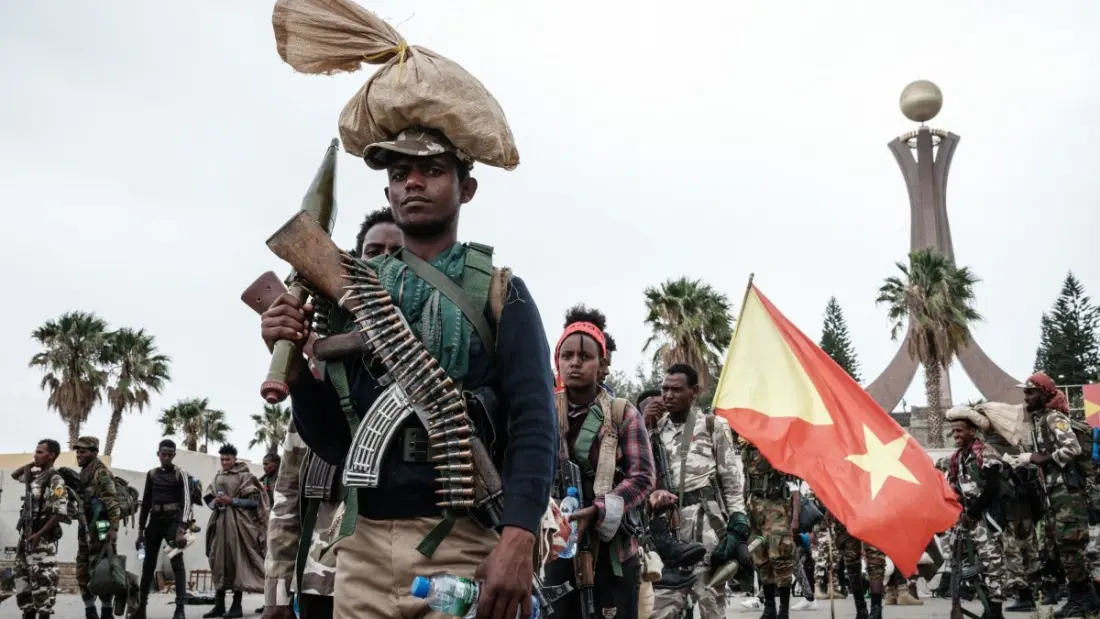
Three years of uneasy calm in northern Ethiopia are over. The Tigray People's Liberation Front (TPLF) announced this week that it is once again at war with Ethiopia's federal government, effectively tearing up the 2022 Pretoria Peace Agreement that ended a civil war estimated to have killed more than 600,000 people.
The escalation moved fast. On Wednesday, TPLF forces seized three airports from federal police and pushed into the neighbouring states of Afar and Amhara. By Thursday they were shelling the town of Yallo in Afar and had taken the border town of Abala, with clashes also reported around Weldiya in Amhara — a town on one of the few roads leading to Addis Ababa. 'We are in full-blown war now,' said TPLF vice president Amanuel Assefa. The Tigray side is now fighting alongside the Fano insurgent group in Amhara, part of a newly formed anti-government alliance — a striking reversal, since Fano and Eritrea fought on the government's side in the last war.
Analysts see a familiar playbook. Kjetil Tronvoll of Oslo New University College notes the offensive into Afar likely aims to cut the supply corridor from Djibouti, through which almost all of Ethiopia's international cargo — including fuel — passes. The stated end goal, he says, is the capital itself. The federal government, for its part, has been launching drone strikes on Tigray and massing troops at the border, and both sides blame the other for firing first.
The risk of regional spillover is real. Eritrea is believed to back the TPLF, fearing landlocked Ethiopia wants Red Sea access; Assefa said asking for Eritrean intervention is 'not yet' on the table. Sudan is already angered by Ethiopia's alleged support for the Rapid Support Forces, and tensions simmer with Egypt, Somalia and Türkiye. The timing is awkward for Washington, which lifted sanctions and arms embargoes on Ethiopia and Eritrea only this month — the US Embassy has since come out squarely behind Addis Ababa.
Why it matters for travellers: Ethiopia has been off most leisure itineraries since 2020, and this removes any realistic prospect of a comeback soon. Tigray, Afar and Amhara — home to destinations like the rock-hewn churches of Lalibela and the Danakil Depression — are now active conflict zones, and about a million people from the last war remain displaced. Foreign ministries are already warning against travel to northern Ethiopia, and even the capital could feel the effects if supply lines through Djibouti are disrupted. Anyone with trips booked to Ethiopia should check their government's latest advice, contact their operator, and expect cancellations across the north. This is a story to watch closely, not one to plan around — for now, Ethiopia's extraordinary historic sites will have to wait.