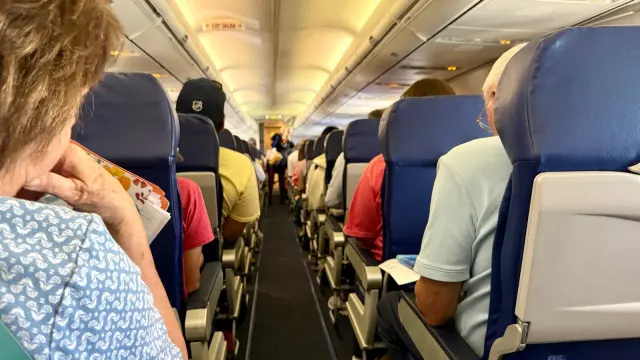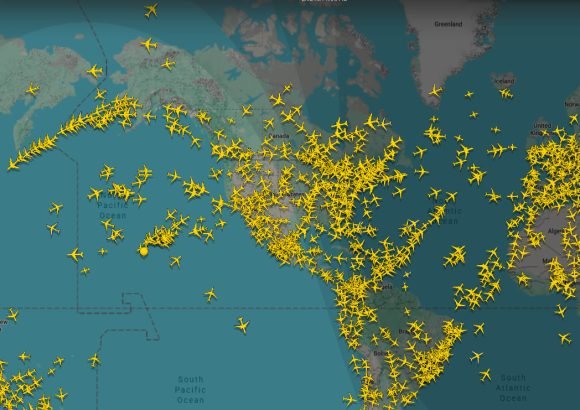
Travellers across the United States faced major disruption on Friday after the Federal Aviation Administration ordered a nationwide ground stop, pausing departing flights at every airport in the country. The cause: a telecommunications failure affecting the air traffic control centres that manage aircraft in flight.
Transportation Secretary Sean Duffy confirmed the problem, saying communications issues were hitting all 22 regional air route traffic control centres — the facilities that coordinate planes between airports. In its official notice, the FAA invoked "extraordinary circumstances and for reasons of safety" to justify the unprecedented halt, which was set to run until at least 11 p.m. Eastern Time, with possible extensions depending on how repairs went.
Crucially for anyone mid-trip, this was not an emergency landing situation. Aircraft already airborne were accounted for and continued to their destinations under normal safety procedures, and inbound international flights were being assessed case by case. Homeland Security Secretary Markwayne Mullin also moved quickly to rule out foul play, stating there was no sign of an attack behind the outage.
The impact was felt everywhere. Hartsfield-Jackson Atlanta, Dallas/Fort Worth, Chicago O'Hare, Denver and Los Angeles International — the busiest hubs in the country — all reported significant disruption, as did JFK and LaGuardia in New York, Boston Logan, Orlando and San Francisco International. With thousands of departures frozen, airlines warned that knock-on delays and cancellations would continue well after the ground stop itself was lifted.
The incident reopens an uncomfortable question about the age of America's air traffic control technology, and it is not without precedent: the last nationwide suspension came in January 2023, when an FAA computer failure disrupted the distribution of critical safety notices to pilots.
If you were flying to, from or within the US during the outage, the practical advice is simple. Check directly with your airline rather than relying on airport screens — carriers have the most current rebooking options, and US rules typically allow fee-free changes for significantly delayed or cancelled flights. Build buffer time into any connecting travel, and expect residual delays for a day or two as airlines reposition aircraft and crews. Anyone mid-itinerary with a tight onward connection — a cruise departure, a tour start, a long-haul leg — should contact the operator proactively to explain the disruption.
For holidaymakers, the takeaway is less about panic and more about planning: US air travel remains huge and generally reliable, but a single systems failure can ripple across the entire country in minutes. Travel insurance that covers delay expenses, plus flexibility in your first-day itinerary, is cheap protection against exactly this kind of event.