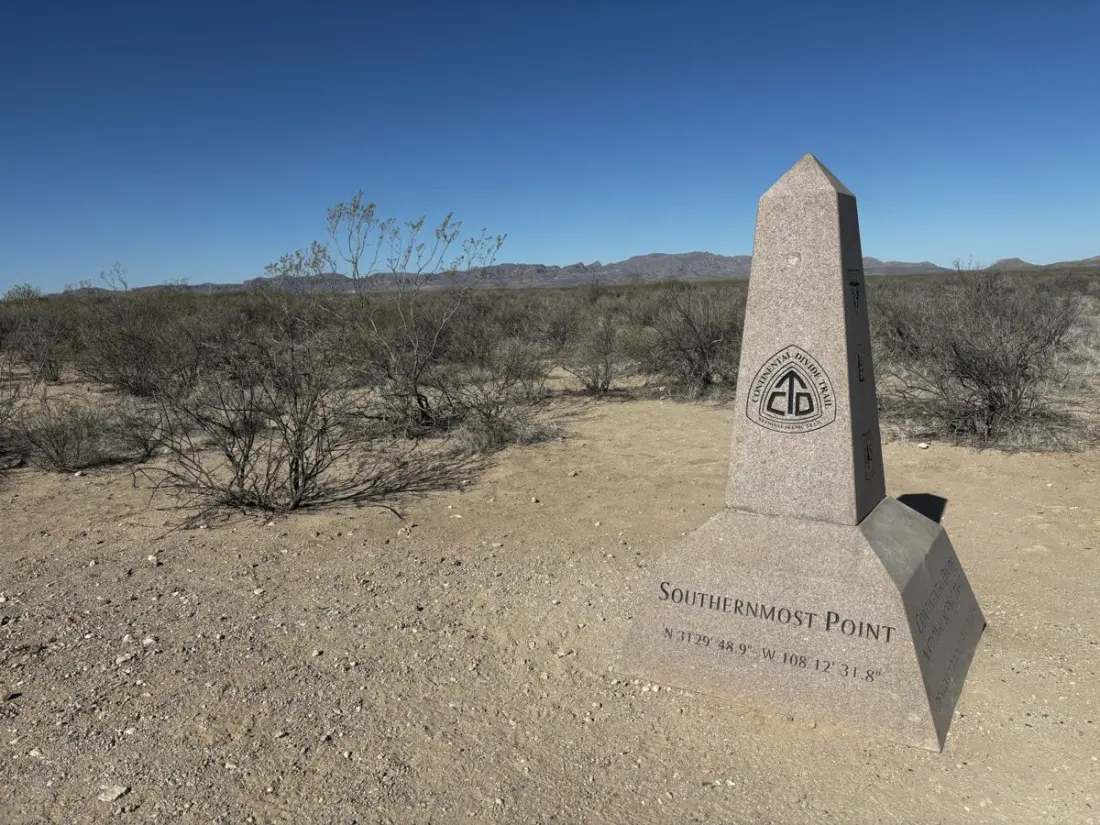
Hikers can once again stand at the southern end of the Continental Divide Trail. The Continental Divide Trail Coalition (CDTC) confirms the trail's southern terminus and its first mile have reopened after a closure in late October, when crews widened an access road and built a second border barrier right at the terminus.
There's a catch, though. The iconic southern terminus monument now sits inside the footprint of the new border wall, so the Army plans to relocate it to a spot outside the barriers. Nobody knows exactly when that move will happen, and access to the monument could be cut off again while the work is underway. Construction traffic and temporary road closures are still possible in the area.
Getting to the start of the trail isn't as simple as parking up and walking either. The southernmost mile lies inside the Fort Huachuca New Mexico National Defense Area, a military zone created in spring 2025 when roughly 110,000 acres of former Bureau of Land Management land along the US-Mexico border were handed to Army control. Hikers need to pass a background check and hold an Army access permit. Noncitizens face an extra hurdle: they must be accompanied through the zone by a US citizen who also carries a permit.
The CDTC has called the situation unprecedented for America's trail system — a national scenic trail segment transferred to the Department of Defense, its southern terminus turned into a large-scale military and construction zone, and the US military now part of trail management alongside land agencies and state governments. For southbound thru-hikers, the timing of the autumn closure was particularly painful, since many set off from the border at the start of a 3,100-mile trek that takes most of a year to finish.
For anyone planning a CDT start in the near future, the practical takeaway is to sort the Fort Huachuca permit well ahead of your hike, build in buffer time for delays near the border, and check CDTC updates before you go — both for construction conditions and for news on where the terminus monument will end up. If photographing the monument at the border is part of your thru-hike ritual, you may need to wait until it has a new home.