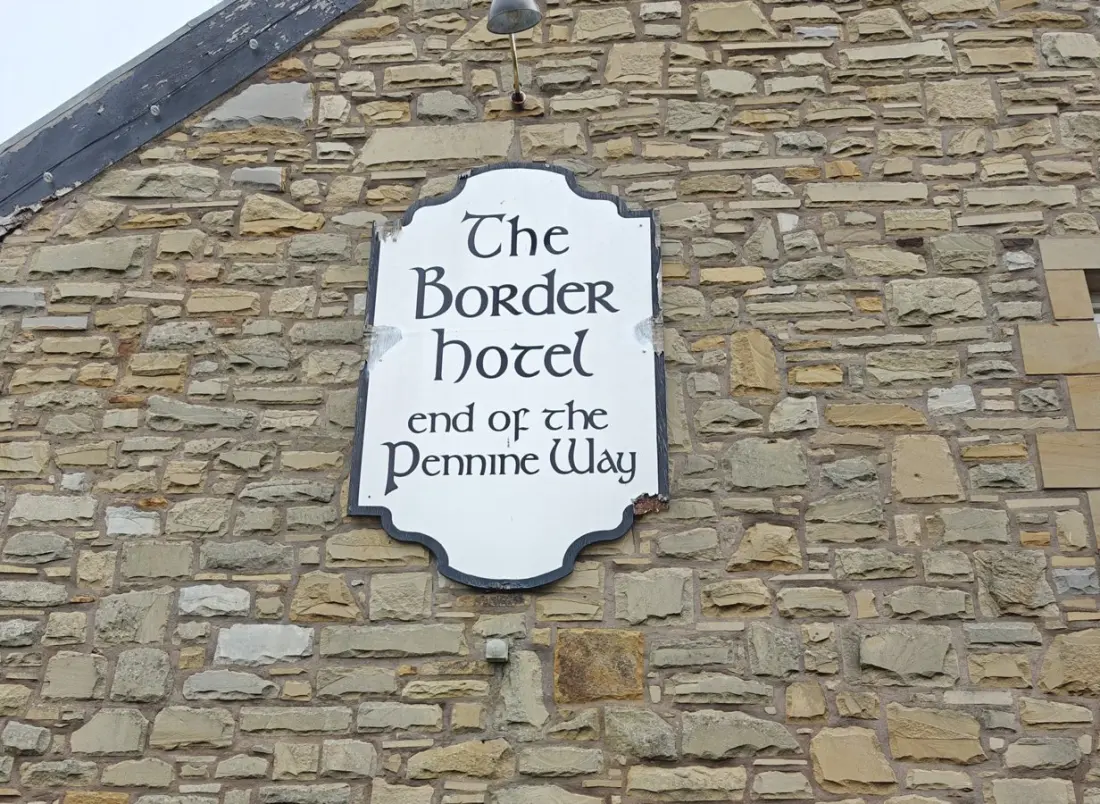
Kirk Yetholm, a village of essentially one pub, one church and a handful of houses on the Scotland-England border, is where the Pennine Way officially ends. Reaching it is a rite of passage: finishers get their names entered in a register at the Border Hotel that stretches back to 1968, plus a certificate and, by tradition, a free half pint from the pub. One hiker writing for The Trek arrived at that finish line on day 20 of a walk cut short — his ankle gave out after 117.5 miles, and he was there mostly to greet friends Graeme and Rachel completing the full route.
His account is a handy preview of what the trail's end actually looks like. Kirk Yetholm has no shops or cafés at all; residents bus to nearby Kelso to shop, so finishers should stock up before arriving or plan meals around the Border Hotel. Rooms there book up months in advance, and hikers who mail resupply boxes ahead should expect to repack everything into their bags for the journey home.
There's also a small walk worth doing even on a rest day. Just beyond the village the trail forks into a paved "low road" and a hill path. The higher option climbs past sheep and pony pastures to Green Humbleton, roughly two miles out, where the writer found winds strong enough that he had to lean into them just to stay upright — classic Cheviot hills weather, and a good reminder to pack layers and a windproof shell even for a short out-and-back.
The real highlight was the celebration that evening. Graeme and Rachel, UK-born but now living in the US, rolled in with a crowd of local friends who'd joined them for the final stretch. The landlord kept the party going past closing, sharing the pub's history, his favourite jokes, and an unsolicited round of limoncello. It captures the Pennine Way's finish-line culture: a small inn that has been greeting weary walkers for over five decades, and treats every arrival like an occasion.
The writer's injury adds a cautionary footnote worth heeding. He rolled his ankle on a rocky descent a month before starting the trail, felt fine, then hit an overuse threshold at around 100 miles. A podiatrist's advice: ligaments heal more slowly than bones, and "no pain" doesn't mean fully recovered. For anyone eyeing a 268-mile, three-week route like the Pennine Way, building in rest days and taking old ankle injuries seriously isn't optional — it's the difference between finishing and limping off at the border.
For walkers planning the trail, the last day into Kirk Yetholm delivers exactly the reward the guidebooks promise: a proper pub, a signature in a 1968-vintage register, and a certificate for the shelf. Add a night or two in Kelso or Edinburgh afterwards to decompress, and consider a shorter sampler section — even 20 miles of the Pennine Way gives you the hilltops, the history, and, if you're lucky, half a pint on the house.